Green hydrogen strategy ignites new optimism among investors
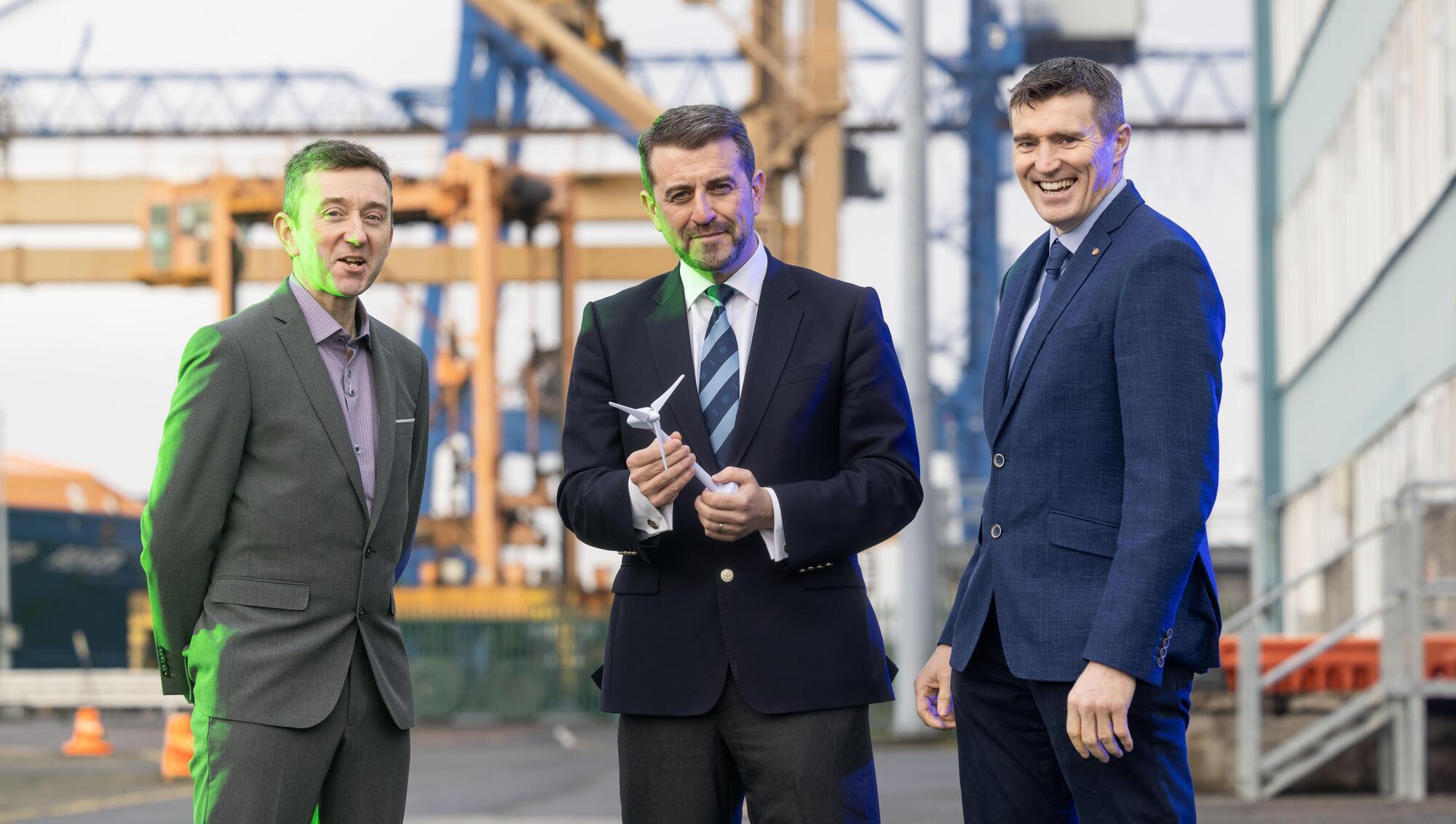
Kevin O' Donoghue, hydrogen manager, ESB, and Conor Mowlds, chief commercial officer, Port of Cork Company, at the official signing of a new memorandum of understanding between Port of Cork Company (PoCC) and ESB, which aims to support the development of Ireland’s renewable energy sector. Photo: Cathal Noonan
The annual Hydrogen Ireland conference that will take place at the end of this month in Belfast has taken on new importance, following a landmark moment in the summer for the burgeoning green hydrogen industry.
Following years of stalling and delays, finally the Government published its long-awaited national hydrogen strategy for Ireland in July.
Although said to be in prime position as the infant industry takes shape in the coming decades, Ireland is one of the last countries in Europe to actually publish a national plan.
Put very simply, green hydrogen produces energy through the electrolysis of water, while eliminating emissions by using renewable energy.
Its supporters say it could completely revolutionise clean energy, while its detractors say it is too cumbersome and costly to achieve on a mass scale — however, it has turned even the heads of sceptics in recent years as costs come down.
In January 2022, the Government said it would kickstart the national strategy before July of that year, after a major report said Ireland was lagging behind other countries, despite enormous potential.
Some 18 months later, it has finally come.
The delay is not necessarily a bad thing, according to Hydrogen Ireland director Paul McCormack.
“We were one of the last countries in Europe to come out with a strategy, this is true. Obviously that was a disadvantage in some respects, but also an advantage because it gives us an opportunity to learn from others’ mistakes.
“Germany came out with a strategy for hydrogen two years ago and it was green hydrogen at all costs. Now they realise because of the blockages in the system and the shortages in the supply chain, you can’t get everything in place.
“Ireland’s strategy is a starting point, not a fait accompli, it’s not a destination, but the start of a journey. Like any strategy, at the start of a journey, it can be refined, modified, and changed but at least we have a strategy.
“It's not over-prescriptive, it allows enough room for latitude within the energy equation for Ireland to take availability of the opportunities that are there for both onshore and offshore, but also what I call transition fuels.
“Hydrogen may be the ultimate destination but there will be other transition fuels in that journey and the strategy allows for that, in both technical application but also importantly in social applications, as Ireland moves towards net zero between 2030 and 2050. It’s a balanced pathway,” he said.
That pathway allows for those who should benefit most to do so — the consumer, both at home and in work, by bringing cleaner energy access to those who need it most, according to Mr McCormack.
There have been 21 short-term actions identified within the national hydrogen strategy to enable the development of the hydrogen sector in Ireland, according to the Department of Environment.
These actions aim to remove any barriers that could inhibit early hydrogen projects from progressing today, and to enhance our knowledge through targeted research and innovation across the hydrogen value chain, laying the groundwork to deliver on our long-term strategic vision for hydrogen in Ireland, the Dept said.
“Ireland will focus its efforts on the scale up and production of renewable green hydrogen as it supports both our decarbonisation and energy security needs. Prior to 2030, hydrogen production will target grid-connected electrolysis from surplus renewables.
“A 2GW target to produce renewable hydrogen sourced from offshore wind is also set to be in development by 2030, which will help to provide greater certainty for investors and create the scales needed to enable greater infrastructure deployment,” the Dept said upon its publication.
Mr McCormack said Ireland coming from behind is not a bad strategy.
“As the saying goes, the early bird may catch the worm but it is the second mouse that gets the cheese. If you look at the cost of new technologies, sometimes it is better to be a leader but sometimes it is better to be a follower, because the technology isn't there yet, and the uses aren't there yet.
“But importantly, the skills aren’t there yet. We need to skill up the workforce, we need to transition the workforce, and work with the people to make that clean energy journey. As my good friend Mark Welsh from Energia has said, green hydrogen is not a silver bullet but a silver buckshot.
“Each part of Europe will use it differently, and will develop it separately for their own uses. We don't have heavy industry like steelmaking that other parts of Europe have, but we have great mobility, and we need to transform our mobility to greener solutions. We also need to provide greater public mobility if we are going to meet our targets, and hydrogen will be part of that catalyst for change,” Mr McCormack said.
Ireland has a number of advantages when compared to other countries, according to Mr McCormack.
“One is the offshore and onshore renewables we can tap into. The offshore potential is 10 times the size of the land mass – we have a great energy sink off our coast. While Ireland may not be the biggest country in Europe, it could become the test base for new renewable technologies.
“We develop them, we produce them, and then grow them at scale for other countries. Ireland could develop a full hydrogen supply chain as part of a balanced pathway that meets our social needs, our environmental needs, and our economic needs. Ireland can become the testbed for Europe – to become the green capital of Europe for hydrogen.” It is not hyperbole to think that Cork could become the Aberdeen of green hydrogen if the industry scales to the potential that its proponents think it can.
Mr McCormack said: “If we look at the hydrogen value chain, if we can change the energy equation where we import 85% of our energy, we will have hydrogen hubs and hydrogen valleys throughout the island, networked and linked. Those will be placed at the areas of greatest need and the greatest opportunity, and Cork is perfectly placed.”
Hydrogen Ireland is an all-island organisation working to raise awareness of green hydrogen’s potential when it comes to energy and power in the years to come.
Hydrogen Ireland Conference 2023, with the theme: “Hydrogen - delivering a balanced pathway to net zero’ is taking place with the support of ESB, CATAGEN, Gas Networks Ireland, and Energia.
The conference takes place at Titanic Belfast on November 28 and 29, and it is expected to see a range of industry professionals, technical and academic partners, research collaborators, policymakers, and Government officials in attendance.
The guest lineup includes Jorgo Chatzimarkakis, chief executive of Hydrogen Europe, and other well-known figures from the worlds of politics, energy, and industry.
At the conference, delegates and speakers will address a wide range of topics including an all-island approach to energy, climate, technology and supporting investment in the future.
The conference will map out the three key stages in Ireland’s Green Hydrogen journey: “Where we are now? What are we targetting? And how do we get there?” Paul McCormack says the stakes couldn’t be higher as global heat records tumbled during the summer.
“Cutting back on energy produced by fossil fuels is a massive part of how we can hope to deal with climate change. As an island off Europe, we have the natural resources, an ambitious, skilled workforce and now the National Strategy to chart the way forward on clean energy. We need to grasp that opportunity for all our futures.”

CONNECT WITH US TODAY



Be the first to know the latest news and updates