Fears persist despite record corporation tax take
Higher-than-expected corporation tax receipts drove a record Government tax take in 2019, but have stoked fresh fears of a continued over-reliance.

Fears persist despite record corporation tax take

Higher-than-expected corporation tax receipts drove a record Government tax take in 2019, but have stoked fresh fears of a continued over-reliance.

Figures show the Government took in a record €59.3bn in tax in 2019, nearly 7% up on the previous year, and €1.4bn, or 2.4%, ahead of expectations.

This produced an exchequer surplus of €647m for the year, up from €99m a year earlier, and is set to result in an overall general Government surplus of 0.4% of GDP, or around €1.5bn, up from the Government’s previous guidance of 0.2% of GDP.

The strong growth across all the major tax heads was as expected, with most also beating expectations.

Income tax receipts totalled €22.9bn, 8% up on the previous year and €29m ahead of target. The only exception was Vat, which was 6.2% ahead at €15.1bn, but 0.1% below target.

The near-€11bn taken in through corporation tax was not only almost 5% up on 2018 levels, but also €1.4bn (15%) more than expected.

“The Vat figures need to be viewed in the context of the ongoing Brexit uncertainty that prevailed in 2019. In the circumstances... [they] represent a very solid result,” said Grant Thornton tax partner Peter Vale.

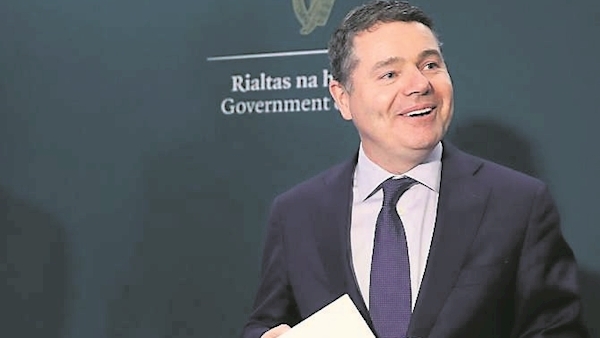
Finance Minister Paschal Donohoe said the strong returns highlight the need to continue the policy of successive surpluses to safeguard against a reduction in corporate tax receipts.

“Running budgetary surpluses is the first line of defence when it comes to our over-reliance on corporation taxation receipts. Our aim is to build on this, achieving a surplus of 1% of GDP by 2022 and maintain that over the medium-term.

“In other words, ‘excess’ corporation tax receipts are not being used to finance day-to-day spending, but to reduce debt,” he said.

Corporate tax receipts are set to remain high this year, but beyond 2020, there is less certainty.

“While global tax developments to date have been positive for Ireland, the latest proposals represent more of a threat. A move to allocate a portion of a group’s profits to where customers reside would remove a portion of profits from the Irish tax net. Further proposals to introduce a global minimum effective rate of tax could also dilute the benefits of Ireland’s low corporate tax regime,” said Mr Vale.

“Clearly, any future corporate tax receipts volatility will put pressure on other tax heads to balance the books. With personal tax and Vat rates already high, there is no obvious candidate for future rate increases, other than perhaps property taxes. However, this is likely to be seen as politically unpalatable.”

x

More in this section

The Business Hub

Newsletter

News and analysis on business, money and jobs from Munster and beyond by our expert team of business writers.

Cookie Policy Privacy Policy Brand Safety FAQ Help Contact Us Terms and Conditions

© Examiner Echo Group Limited