Medtech sector predicts a year of major investment and job creation
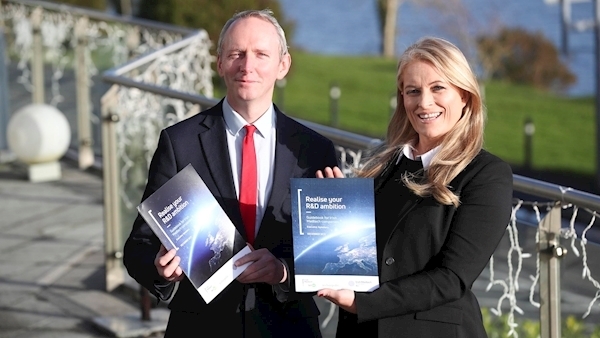
A survey conducted by the Irish Medtech Association (IMA), an Ibec group, has found that 74% of medtech businesses plan to increase R&D in Ireland during 2020.

Medtech sector predicts a year of major investment and job creation

Medtech continues to be a huge success story for Ireland, with more than 40% of the global contact lenses, 80% of global cardiovascular stents and 75% of global orthopaedic knee products manufactured here.

A survey conducted by the Irish Medtech Association (IMA), an Ibec group, has found that 74% of medtech businesses plan to increase R&D in Ireland during 2020.

The IMA has published the survey findings in a report entitled ‘Realise your R&D ambition: Guidebook for Irish medtech companies’. The industry now has the ambition to leverage its success as a global medtech hub with a vision to grow the level of R&D in Ireland.

The report’s authors summarised the survey respondents’ view that Ireland is one of the best locations in the world for manufacturing with 450 medtech companies here employing 40,000 people. The medtech sector in Ireland has added more than €527m in investment and financing in the past 12 months.

“The sector has grown by 11,000 jobs in the last three years, from 29,000 up to 40,000,” said Sinead Keogh, director, IMA. “Our surveys show the sector will add at least 2,000 more high-value jobs in the next two years.

The sector is also very positive in terms of the huge investments in the sector. The Government’s focus on promoting STEM careers and supporting skills training have also been very important in supporting the talent pipeline.

Sinead also points out that medtech companies in Ireland last year filed some 13,000 patents to the European Patent Office, making Ireland by far the most innovative country in this sector in the EU.

She says the IMA survey’s finding that 74% of Irish-based medtech companies have plans for further R&D investment is very welcome news for the people developing innovative new products and treatments in the sector.

Similarly, she notes that investments in R&D centres of excellence by Boston Scientific, Stryker, Depuy Synthes, Cook Medical and others have been invaluable in underpinning the nationwide optimism within the sector.

Irish Medtech Association Board Member and Stryker Neurosurgical VP R&D, David Tallon, said: “New products and processes can help companies position themselves for success. The Irish Medtech Association’s goal is to help companies increase the level of sophistication and complexity of their R&D activities, and expand their mandate to include R&D ownership for complete market segments and global product portfolios. We are very proud to publish the ‘Realise your R&D ambition’ report to guide companies on their R&D journey.”

Of course, the optimism of those working in the sector is also fuelled by the knowledge that their work is contributing to advancements in healthcare.

“It is a great industry to work in,” said Sinead. “You know you are playing your part in a sector that is saving and transforming lives.

“Every year, we are seeing companies in Ireland coming out with new innovations that are helping people live longer, healthier lives. There is a huge sense of purpose for people working in this industry.”

The Irish Medtech Association’s report notes that medtech is expected to grow by 4.1% annually, reaching €477.5 billion by 2020. The report states: “Ireland is a great location to welcome such growth and we need to continue working together in order to position Ireland as a mature, high value-added economy, with innovation at its core.”

With more than 40,000 people employed across some 450 medtech companies in Ireland, it is one of the richest medtech ecosystems per population in the world. Of these companies, 60% are indigenous and 40% are Foreign Direct Investment (FDI) enterprises.

The sector directly exports to over 100 countries with annual exports of €12.6 billion. As many as nine of the world’s top 10 medical technology companies have a base in Ireland, and many of its indigenous companies have secured significant financial investment, over €125m over the last 12 months.

Sinead Keogh added: “Investment in R&D is a driver of innovation, supports competitiveness, and helps medtech businesses achieve their potential. To support R&D uptake, the Irish Medtech Association brought members together through a series of workshops, in-depth interviews and surveys with senior professionals with responsibility for R&D.

The companies which participated represent over 75% of people employed in the medtech sector. The results revealed that in the last five years R&D activity has increased for over 73% of medtech companies in Ireland.

The IMA also promotes a very successful skillnet for the industry. This skillnet hosts around 300 workshops annually, covering Lean, regulatory frameworks, robotics, cobotics, 3D printing, reskilling and much more.

Skillnet Ireland chief executive, Paul Healy, said: “Medtech is amongst the most innovative sectors in Europe constantly developing new disruptive technologies that are transforming lives. The Irish Medtech Association and Irish Medtech Skillnet R&D survey shows that Ireland performs well in factors such as skills availability, political environment and market access.

“Expanding Ireland’s R&D capabilities within medtech will not only provide a boost to further innovation of the sector, it will also open up new career opportunities for medtech professionals and help attract more talent to Ireland.”

More in this section

The Business Hub

Newsletter

News and analysis on business, money and jobs from Munster and beyond by our expert team of business writers.

Cookie Policy Privacy Policy Brand Safety FAQ Help Contact Us Terms and Conditions

© Examiner Echo Group Limited