UK economy shrinks as Brexit, global woes rise
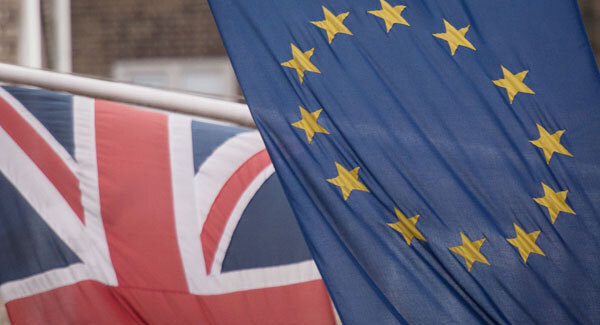
Britain’s economy appears to have shrunk for the first time since late 2012 between April and June, as worries about Brexit were compounded by global trade tensions, according to a closely watched survey.

UK economy shrinks as Brexit, global woes rise

Britain’s economy appears to have shrunk for the first time since late 2012 between April and June, as worries about Brexit were compounded by global trade tensions, according to a closely watched survey.

A day after Bank of England Governor Mark Carney warned of the growing risks from a no-deal Brexit and protectionist trade policies, a gauge of Britain’s huge services industry — the IHS Markit-CIPS services Purchasing Managers’ Index (PMI) — slipped to just above the no-growth level. Equivalent surveys for UK manufacturing and construction published earlier this week showed those sectors contracted in June, meaning Britain’s economy overall probably shrank by 0.1% in the second quarter, IHS Markit-CIPS said.

British GDP last shrank from one quarter to another in the last three months of 2012, according to official data. The last time GDP shrank for two or more quarters in a row — the widely accepted definition of a recession — was in 2008-2009, during the global financial crisis.

“The latest downturn has followed a gradual deterioration in demand over the past year as Brexit-related uncertainty has increasingly exacerbated the impact of a broader global economic slowdown,” said Chris Williamson, chief business economist at IHS Markit.

Risks also remain skewed to the downside as sentiment about the year ahead is worryingly subdued, suggesting the third quarter could see businesses continue to struggle.

UK government bond yields fell further after the survey, with the yield on 10-year gilts hitting its lowest level since the months after the 2016 Brexit referendum.

Investors see more chance of a cut to British interest rates after Mr Carney’s speech this week, in which he said the economy might need more support to cope with the shock of a no-deal Brexit or an escalation of global trade tensions. The yield curve between two- and five-year British government bonds inverted for the first time since 2008, suggesting investors see a risk of recession. The Bank of England says Britain’s economy probably flatlined in the second quarter after strong growth early in the year when companies were rushing to get ready for the original March 29 Brexit date.

That deadline has since been pushed back to October 31. Andrew Wishart, an economist with consultancy Capital Economics, said the pre-March 29 rush accounted for some of the second-quarter weakness.

“But the fact the surveys have not picked up toward the end of the quarter, and global manufacturing is slowing, means the risk is that the economy fails to bounce back in the third quarter,” he added.

Many businesses are alarmed by the prospect of a no-deal Brexit, something both candidates to replace Theresa May as UK prime minister have said they are prepared to do if necessary. Mr Williamson said the weak reading of Britain’s economy should put pressure on the Bank of England to add stimulus.

“For policymakers to not loosen policy with the all-sector PMI at its current level would be unprecedented in the survey’s two-decade history,” he said.

The risk of Britain leaving the EU without an agreement has risen, but Britain has prepared the financial sector for it, Bank of England deputy governor Jon Cunliffe said.

Reuters

x

More in this section

The Business Hub

Newsletter

News and analysis on business, money and jobs from Munster and beyond by our expert team of business writers.

Cookie Policy Privacy Policy Brand Safety FAQ Help Contact Us Terms and Conditions

© Examiner Echo Group Limited