Zero Waste leads to plenty of opportunity
China’s ban on the importation of our waste gives us the chance to develop new ways of dealing with it, write Mary O’Leary, Stephen Thornhill, and Brendan Richardson.

Zero Waste leads to plenty of opportunity

Recent Irish Examiner editorial rightly raised the issue that we need to do much more to address the problem of waste.The editorial referred to a recent decision by the Chinese government to implement a ban on the importing of Western waste/recyclable material to China.

While China will continue to strategically import certain types of recyclable materials for use in their reuse industries, this partial ban, along with the fact that landfill capacity is no longer a viable option, highlights the urgency of our situation. We need a proper

strategy to address the mixed waste we generate as a community.

We understand the leader writer’s frustration with regard to the waste problem and agree wholeheartedly that the community needs to do much more, much more urgently, to face up to it.

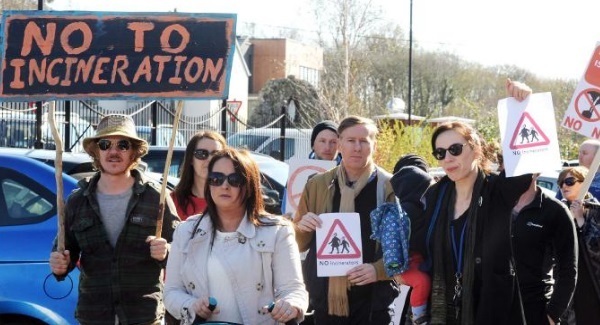
The editorial also referred to the ongoing controversy around the proposed siting of an incinerator in Cork Harbour. As researchers on sustainability and, as members of Cobh Zero Waste, we agree with the EU Commission that incineration is an undesirable solution, and we believe that far less divisive methods than incineration exist, as a means to address our waste management problem right away.

We agree that, as a modern society, we must find an alternative way forward for us all — a means to manage our resources sustainably and make the best possible use of them for everyone. This alternative way forward already exists; to embrace it, we simply need a change of perspective.

Far from seeing the things we throw out as waste, we need to learn to see our waste as a reusable resource. In short, we need to move from a linear approach to our economy to a circular approach, where products are designed with recycling or re-use in mind, organic material is recovered, and overall consumption is reduced.

The use of any materials that do not fit into these categories, such as unrecyclable plastic, should be phased out.

This new perspective is often referred to as Zero Waste.

This terminology in itself can at first seem naive or idealistic. How could there possibly be such a thing as zero waste? How could we hope to achieve a situation where there was no waste?

Our bins are full when we put them out; how can we move away from having full bins, whether they are destined for landfill or an incinerator — two equally unsustainable destinations at the bottom of the waste management hierarchy?

The answer to these questions lies partly in that phrase, to ‘move away from’. Zero Waste is a journey towards sustainability, not an overnight solution. It takes time to implement; just not as much time as you might think. It also saves money and creates clean, green jobs — jobs in what we now call the circular economy.

That’s why it is already being used by companies like Apple, who have begun to roll it out among their international suppliers. Apple was very concerned that the waste being produced by one of their suppliers in China was going to incineration and landfill, so they

partnered with this supplier to develop processes for separating this waste. It now goes to recycling or composting (depending on waste type) instead. This has move eliminated this supplier’s need for incineration and landfill, and they have since moved on to help their suppliers begin the move towards Zero Waste.

But we shouldn’t make the mistake of thinking that Zero Waste is some form of high-tech process, that only successful multi-national companies and their suppliers can implement.

Instead, it is something that has also been successfully adopted by a rapidly growing number of towns and cities worldwide, including cities such as San Francisco and Ljubjana, the capital of Slovenia, large towns such as Capannori in Italy and Roubaix in Belgium, and modest towns such as Kamikatsu in Japan, where the community built an incinerator, then shut it down and are now moving to eliminate all waste by 2020.

What these towns and cities all share is their observance of the proximity principle; they have taken responsibility for their own waste and are managing this waste as a resource for the benefit of their own communities; citizens, local authorities, and local businesses are working together for a sustainable future.

So, in learning from these examples, rather than burning valuable economic resources, we should improve the sorting and separation of our so-called “waste” to reduce contamination and provide resources for reuse.

Most of us already sort our recyclables, but brown bins for organic material have only recently been introduced in many areas, whilst many plastics used for packaging are unrecyclable and need to be phased out.

We have an opportunity in this country to build a national resource recovery industry that could employ many thousands, whilst reducing greenhouse gas emissions and providing the manufacturing and farming sectors with home-produced resources such as organic fertilisers, thereby reducing imports of fossil fuel-based synthetic fertilisers.

The EU has already signalled legislation in this area following the launch of the Circular Economy Package in 2014. Ireland is also a signatory to the 2015 Sustainable Development Goals and Paris Climate Change Treaty, which bind us to actions that conserve and recycle resources whilst reducing greenhouse gas emissions.

All of this points us away from incineration, which of course generates additional greenhouse gas emissions rather than reducing them.

In stark contrast to the Zero Waste approach, incinerators provide no incentive to conserve resources or reduce waste.

Instead, waste management companies are typically contracted to deliver sufficient quantities of materials as mixed waste, whether recyclable or not, to incinerator corporations, in order to avoid penalties for under-delivery. Incineration also destroys resources requiring more to be extracted or produced, thereby creating additional greenhouse gas emissions.

That is why the EU Commission clarified its position on incineration at the beginning of this year, placing it at the bottom of the waste hierarchy alongside landfill.

The Commission has warned that the increased separation and recycling of resources over the coming years will significantly reduce the material available for incineration (some EU countries are already at over-capacity)

risking stranded assets.

The Commission has therefore recommended:

  • A moratorium on new incineration facilities;
  • The decommissioning of older ones;
  • The phasing out of any support schemes for incineration;
  • Introducing and increasing taxes on incineration.

We should follow the European Commission’s advice and invest in recovering resources rather than burning them.

Where and when can we start? Well, there is no time, as they say, like the present. So, local community groups in Cobh, in conjunction with Chase, Cork Environmental Forum, South East Cork Area Development, Cork County Council and local waste management companies, recently established Cobh Zero Waste in order to encourage reduced household waste and advise on better separation of recyclables to avoid contamination.

Since its establishment, Cobh Zero Waste has embarked on a range of activities. We have begun consulting with retailers, locally and nationally, jointly discussing ways to reduce food packaging and to reduce the use of unrecyclable materials.

To help and encourage the community to engage in a practical way with the proximity principle, we have launched a series of repair, reuse, and composting workshops and other

public events.

Last month, we welcomed Bea Johnson (dubbed the ‘Queen of Zero Waste’ by the New York Times) to the Rochestown Park Hotel, where she gave a fascinating talk on Zero Waste to a very enthusiastic audience.

As part of national Reuse Month, we are co-hosting an Upcycling and Pre-Loved Clothing Event in Cobh Community Centre (Saturday October 28, 12.30-3.30 pm). Our alternative, sustainable, approach to waste management, our journey towards Zero Waste, has begun.

For more details please feel free to get in touch with us via Facebook or our website, www.cobhzerowaste.com. New members are always welcome.

Mary O’Leary is chairwoman of Cork Harbour Alliance for a Safe Environment (Chase). Dr Stephen Thornhill and Dr Brendan Richardson are both with Cobh Zero Waste.

More in this section

The Business Hub

Newsletter

News and analysis on business, money and jobs from Munster and beyond by our expert team of business writers.

Cookie Policy Privacy Policy Brand Safety FAQ Help Contact Us Terms and Conditions

© Examiner Echo Group Limited










