Banking sector again attracting graduates with a 10% increase in finance courses
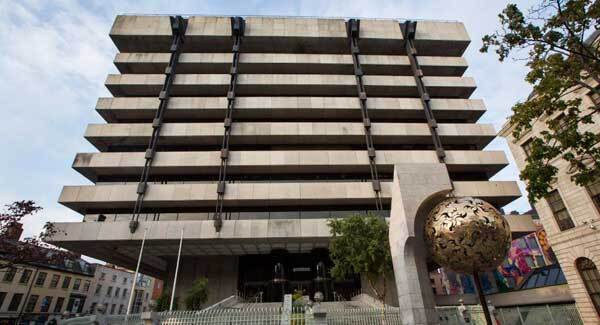
Allied Irish Banks Plc said that it will restart its graduate-recruitment programme this month, while Bank of Ireland Plc plans to expand graduate recruitment to 2008 levels next year.
More students are seeking careers in finance, with Trinity College Dublin spending €70m on a new business school to meet demand and University College Dublin reporting a 10% increase in applications for finance-related courses over the last four years.

While it was about politicians in Greece and Portugal, Irish ire during the European debt crisis was honed more on the financial industry that was crippled from lending to property developers and needed €64bn of taxpayers money.
They were spat at, egged, and vilified for starting the worst banking crisis in the eurozone.
“You have to be responsible for yourself and your own career, rather than listening to people ask why you want to be a banker,” Jamie Hennessy, 25, who joined Bank of Ireland’s graduate training programme last year, said in a room off the bank’s sprawling dealing room in Dublin.
“Well, I did and I’m definitely going to stay in finance.”
Back during the crisis, some customers threatened bank employees and executives from Bank of Ireland were egged at shareholder meetings.
The numbers working in finance have yet to recover fully.
About 62,000 people work in the industry, from back-office clerks up to top executives, statistics office figures showed last week.
While that is up from the beginning of the year, it is still 10% below the peak in 2009.
As well as the next generation of would-be traders, dealers, and fund managers, older hands also are arriving in Dublin, undeterred by a marginal tax rate exceeding 50% for top earners and a 30% jump in rents in Ireland since 2011 as the economy picks up.
The Financial Times reported that Credit Suisse Group AG is asking employees to consider a move to Dublin as it weighs opening a trading unit there.
The bank declined to comment on the report.
“The perception of Ireland was of a small economy that had overheated and imploded,” said Alan Werlau, an American in his 50s who moved to Dublin a month ago to work as a strategist at Davy, the country’s largest securities firm, after stints on Wall Street.
“I was amazed at the speed of the recovery in Ireland. The reaction from friends and family in the US was amazingly positive.
"No one said: ‘Are you crazy?’ Only Irish people asked that!”
Employers ranging from Citigroup Inc to quantitative trading firm Susquehanna have operations in Dublin on the banks of the River Liffey.
In all, about 35,000 people work for international financial companies, and the Government is aiming to add another 10,000 jobs in the industry within five years.
“We have come through to the other side now,” said Andrew Burke, who heads the business school at Trinity.
“If anything, internationally, it’s seen as a plus to have transformed from an economic crash to high economic growth. Banking is probably still not as glamorous as it was, but it’s seen as a viable career option.”
Mr Hennessy joined Bank of Ireland as it expanded its graduate programme.
Intake will be back to near 100 in 2016 and there were more than 2,000 applications, the bank said.
The starting salary is about €28,000.
The unfolding crisis “certainly crossed my mind”, said Mr Hennessy, who started studying finance in 2008, just as the crisis hit.
“But I was convinced, that if I wanted it enough, I would be good enough to find something.”