Ebay split opens ‘huge opportunities’ for PayPal as a standalone company
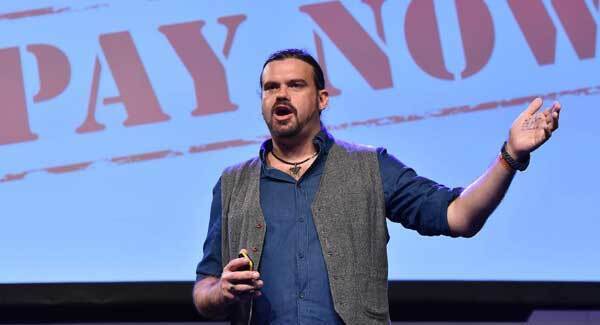
Earlier this year, PayPal was spunout of its former parent company after an internal review and apparent pressure from activist investor, Carl Icahn.
Competition in the online payments sector is fierce with the likes of Stripe and Square gaining increasing traction in the market while tech powerhouses Apple and Google are moving into the same field of play too.
It is a time of change in the whole area of financial technology and one within which PayPal is better equipped to challenge as an independent company, according to its senior global director of development and startup relations, John Lunn.
“It’s a really exciting time to be in FinTech. There’s a lot of startups in this area [and] lots of banks having to change how they’re doing stuff,” said Mr Lunn.
How Ebay's Spinoff Of PayPal Can Be A Model For Crisis Management via @forbes https://t.co/rYr8p1fJjb
— Greg Satell (@Digitaltonto) November 9, 2015
“So far, [the eBay split] hasn’t changed us at all. We were always relatively separate as a culture and a group from eBay. What it does is we no longer have the constraints of working only with eBay in certain areas, we can work with anyone.
“It basically opens up a huge opportunity for us as a company and the same for eBay; it opens up a huge opportunity for them. So, not being constrained by your sibling is fun!”
The initial signs are that the PayPal executive may be correct about the future of the company.
Its first set of quarterly results since the spinout were encouraging with strong year-on-year revenue growth and more active account users.
Revenue for Q3 2015 grew by almost 20% to $2.26bn (€2.12bn) while the number of active customer accounts climbed 10%, or by 4m, in the year to 173m.
By comparison, PayPal added 3.5m new customer accounts in the previous quarter.
Attempts to remain ahead of the curve include PayPal’s purchase of payments startup Braintree in late 2013 and a heavy investment in mobile in which Braintree is the market leader, according to Mr Lunn.
“If you look at what we’ve done in the technology area with things like One Touch, which is our mobile payment experience, it is completely seamless and invisible and that’s why companies like Uber and Airbnb use us rather than others,” said Mr Lunn.
“Braintree leads on mobile payments by a long way over everyone else.
“Mobile is an area that needed a lot of help. Literally, most people took the web experience and just try to bolt it into a mobile and it was horrible, it really was.
"Mobile conversion rates were really low, people just didn’t want to fill in long forms and do all that sort of stuff. Bringing in One Touch as a solution, you don’t do anything now it just happens.”
CONNECT WITH US TODAY



Be the first to know the latest news and updates








