Eyes of the world all focused on what Greece does next
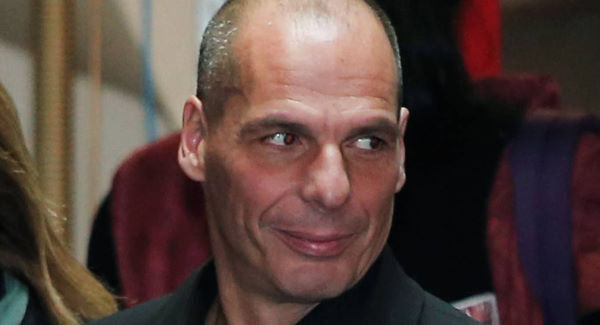
If Greece’s new left-wing Syriza government had any illusions about its opponents at the heart of the eurozone political and financial establishments, these will surely have been put to rest following an extremely difficult few days, writes Kyran Fitzgerald.

Eyes of the world all focused on what Greece does next

On Wednesday, the ECB flexed its muscles with an announcement that it would no longer be accepting Greek government bonds and state-guaranteed debt as collateral, though the country remains eligible for other forms of lending.

The move brought to a halt a rally in Greek share prices and an easing in yields on the sovereign, a development that followed a statement from finance minister Yanis Varoufakis that his government would not be insisting on a partial debt default.

This apparent climbdown on a key election campaign commitment is underpinned by an ambitious plan to swap debt for equity in a move seen as opening a path towards a compromise between the warring factions in this latest eurozone stand-off.

When the central bank made its move, the colourful leather jacket-wearing finance minister was on a whistlestop tour-cum-charm-offensive across European capitals which came to a juddering halt in Berlin, following a distinctly frosty encounter with Germany’s wily old finance minister, Wolfgang Schäuble. The pair knew that they disagreed, but couldn’t even agree on the exact detail of their disagreements, apparently.

At this stage, the Greeks do not appear to have been offered much in the way of support from softer EU countries such as Italy, Spain, and France, where popular sympathy for the parlous Greek position is considerable.

The last thing these countries want to see is a spread in nervousness in the financial markets.

But has the European establishment overplayed its hand, and are they in error in not giving the Varoufakis compromise plan, details of which are due to be revealed in the next couple of days, a fair hearing?

Certainly, the noose on Athens is tightening. According to Standard & Poors, “the liquidity constraints weighing on Greece’s banks has narrowed the timeframe during which the new government can reach an agreement. We believe that its limited cash buffer and approaching debt redemption constrains its negotiating flexibility”.

It continues: “A prolongation of talks with financial creditors could lead to further pressure on financial stability in the form of deposit withdrawals and, in the worst case scenario, the imposition of capital controls.”

There is considerable anger at the ECB. According to a headline in the Greek publication Ekathimerini.com, the move amounts to a “kick in the teeth, the immediate effect of which is to raise borrowing costs, squeeze banks, and increase market instability.

The central bank move is regarded as a “deliberate attempt to undermine the government”, according to Mark Weisbort, director of the Centre of Economic & Policy Research in Washington DC.

The US is looking on nervously, afraid of a Greek exit from the eurozone and of events spinning out of control at Nato’s soft south-east European underbelly.

Syriza added to this nervousness with its recent pivot towards the Kremlin — ties between Greece’s communists, a group close to Syriza, and Moscow have traditionally been close.

Barack Obama said: “You cannot keep squeezing countries that are in the midst of depression. At some point, there has to be a growth strategy.”

However, ECB board member Erkki Liikanan on Saturday defended the bank’s move, claiming it had no choice as it had warned that acceptance of the government bonds depended on a successful inspection of the reform programme.

The horses in Frankfurt have clearly been scared by Syriza moves to ease austerity in Greece and roll back on privatisation. The new government could hardly renege on core campaign promises.

The government has opened a possible path towards compromise with its creditors by unveiling some details of a swap of new growth-linked bonds for outstanding debt. Syriza has also committed itself to running a permanent primary surplus while targeting wealthy Greek tax evaders.

A minister of state for combating corruption has been appointed. The man, Panagiotis Nikoloudos, is said to be targeting 100 high-rollers holding deposits in places like Luxembourg worth €200m. Such debt for equity swaps are often seen in corporate restructurings, less so in the case of sovereign states. Under the Varoufakis plan, Greece would replace interest-bearing bonds with bonds linked to economic growth.

If Greece does not grow, it does not have to pay up.

Greg Ip of the Wall Street Journal argues that while the idea has merit, it is also problematic. “It aligns the creditor more closely with the economic success of the debtor, relieving some of the hardship on the indebted.” The idea is supported by economists such as Robert Shiller and Nassim Taleb.

It has been used in the case of Argentina. Interestingly, in 1946, heavily indebted Britain was given a the option of a break on interest payment by its creditor, the US, in the event that its foreign currency income fell short of targets set. But the WSJ warns that key obstacles remain.

Could the Greek statistics be trusted? The figures have been fiddled before on a heroic scale by Athens. Brazil and Argentina also fiddled their figures to dupe bondholder creditors.

An even more fundamental problem is that, typically, equity investors studying such swaps demand a risk premium. The Varoufakis bonds would have to pay out more to investors . But the WSJ accepts that the idea could still run if there was sufficient will behind it.

Few suggest that Greece’s current situation, with public debts of 175% of GDP, an economy probably back in contraction, and a social crisis at fuse burn stage, is sustainable. The establishment has what is termed a ‘powerful non-pecuniary motive’ — that of holding the eurozone together.

For this to happen, the likely cost to the credibility among the electorates of all the other governments, including those of Germany, Italy, Spain, Portugal, and Ireland, must not be such as to deter them from reaching out towards Athens.

A simple debt default that would empower radical forces such as Podemos, or Sinn Féin, while enraging hard-pressed taxpayers across the continent will not wash. Greece’s finance Minister appears to have accepted this reality.

The diplomatic poker game across Europe may be only getting going.

Should Europe and the US give Greek finance minister Yanis Varoufakis time to implement his ambitious plans, asks Kyran Fitzgerald

The Greeks do not appear to have been offered much in the way of support from EU countries

More in this section

The Business Hub

Newsletter

News and analysis on business, money and jobs from Munster and beyond by our expert team of business writers.

Cookie Policy Privacy Policy Brand Safety FAQ Help Contact Us Terms and Conditions

© Examiner Echo Group Limited