Irish jobless rate beats EU average
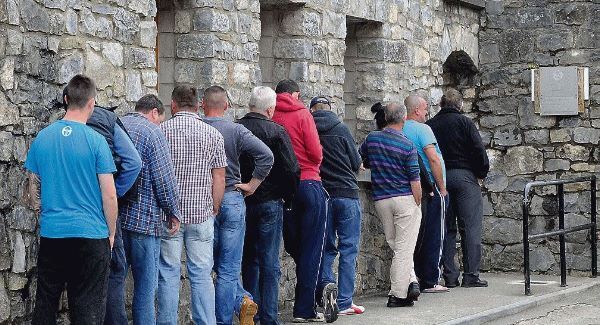
The number of young people out of work, at 26%, is still higher than the average but half what it is in Greece and Spain.
But while the figures show that the percentage out of work in the euro area at 12% has not increased over the past three months, employment commissioner László Andor described it as “dire”.
He was particularly scathing about the scale of youth and long-term joblessness, and said the figures showed just how little progress the EU had made towards it target of having 75% at work.
“January’s unemployment data unfortunately confirm continuing stagnation in Europe’s labour markets, with vast numbers of people still jobless and facing enormous difficulties to improve their lives.
“The jobs crisis in Europe is no longer getting worse, but still remains dire — overall unemployment exceeds 26 million, youth unemployment is still over 5.5m and around half of the unemployment have been without a job for more than a year,” he said.
Mr Andor, who is also responsible for social affairs and inclusion, said that working conditions have also worsened in recent years.
Ireland has seen one of the fastest declines in unemployment in the EU since it hit a high of 14.7% in 2011, when it had the fourth highest rate in the EU. It had the third lowest in 2001 at 3.9%.
There is still a significant difference in the rates for the sexes, with that for men at 13.3% — higher than the EU average of 10.7% — and lower for women at 10.3%, close to the EU average.
Eurostat estimates that 26.231m people in the EU were unemployed — 19.175m in the euro area — in January 2014. The seasonally adjusted figures showed an increase of 17,000 compared with December, but compared with January last year, a drop of 449,000 in the EU28, and 67,000 in the euro area.
Commissioner Andor said Europe needed to take bold monetary policy and structural measures to strengthen domestic demand and create more jobs.
As well as stepping up reforms identified for each country by the commission, countries also needed to use their EU funds to support such reforms, such as facilitating business development or adaptability and to put the youth guarantee schemes in place.












