Fishermen fear that their days are numbered as Croatia set to join EU
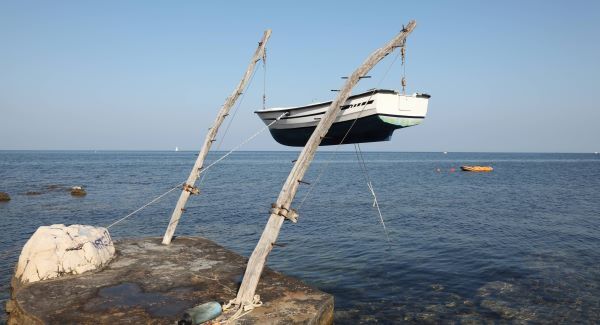
An English-language sign at the fishermen’s pier in the northern Adriatic town of Umag reads: “This fishing port was rebuilt with the support of the European Union”.

Fishermen fear that their days are numbered as Croatia set to join EU

But most of the 3,700 fishermen who ply their trade in Croatia’s eastern Adriatic fear that the country’s accession to the bloc on Monday, and strict new laws and regulations that come with it, may drive the last nail into their coffin.

“I’m afraid we’re in for a lot of unpleasant surprises,” said Danilo Latin, whose family have been fishermen for four generations. “We’ll lose the subsidies, we’ll have to change our nets, fish further from the shore, there will be more competition and new restrictions, so we’re looking at harder times.”

The morning’s fishing foray was cut short by a summer storm and yielded only a couple of crabs and small octopus.

Croatia’s Adriatic is small and relatively shallow and fishermen use traditional nets that are not compliant with the Common Fishing Policy, modelled mostly on fishing in the Atlantic.

“The transition will cost me at least 100,000 kuna (€13,500) because of all the tools I will no longer be able to use. And I’ll get no financial compensation,” said Latin.

His complaint echoes the fears of most local fishermen, who say that successive Zagreb governments who negotiated EU entry from 2005 to 2011 did nothing to protect their interest.

“There were no negotiations whatsoever, we gained nothing through the process, we only found out that there is no alternative but to accept what had been offered,” Latin said.

On top of specifying everything, from the depth of trawl nets to the size of meshes, the EU entry will open the eastern Adriatic to any fishing vessel from the EU. Most concerns are about the vastly superior fleet from EU neighbour Italy, whose boats often poached in Croatian waters in the past.

“There is still three to four times more fish on this side of the Adriatic. So the Italians’ interest is huge and we need to work with Italy to protect the Adriatic’s resources,” said Miro Kucic, fishing expert and assistant minister of agriculture.

Croatia’s territorial waters will remain off limits to foreigners, but even that can be circumvented.

“All an Italian fisherman needs to do is find a Croatian counterpart ready to close the shop and sell his license, open a company in Croatia and they’re good to go,” said Latin.

Kucic said Croatia can start fighting for its fishermen only now, as an EU member.

“You couldn’t possibly expect that the EU would accept our laws during the negotiations. But now we can be an equal partner and start working with Italy and Slovenia, with whom we share similar problems in the Adriatic, to present our case,” he said.

The aim, he said, was to make exceptions to the Common Fishing Policy, taking into account the specifics of the Adriatic, which is shallow in the north and deep in the south.

But it may come too late for many.

Tonci Trevizan, who heads the fishermen’s guild for the northern Istrian peninsula, said: “Now we have new norms, new taxes, book keeping. We are treated as real companies, whereas we are really only small family trades and we just cannot keep up with all the demands. I don’t see any future in this.” His gross annual revenue amounts to €30,000 at most, he said.

— Reuters

More in this section

The Business Hub

Newsletter

News and analysis on business, money and jobs from Munster and beyond by our expert team of business writers.

Cookie Policy Privacy Policy Brand Safety FAQ Help Contact Us Terms and Conditions

© Examiner Echo Group Limited









