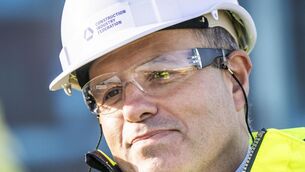
The right man at St James’s Gate
IT was one small sip for Barack Obama — and one hell of a marketing coup for Diageo Ireland and its Irish-American managing director John Kennedy.
When the US President and his wife, Michelle, opted for Guinness as their afternoon refreshment of choice, Diageo bosses will have jumped with joy whereas their rivals, Heineken, must have wondered when their products, Murphys and Beamish, will be given a decent break by the international image makers.
This coup followed an earlier visit by Queen Elizabeth and the Duke of Edinburgh to the Guinness Storehouse in Dublin. Much was made of the Duke’s supposed attempt to snatch a morning gulp of the black stuff.
The tale of the Queen’s wifely, booze-blocking move has been milked for every ounce of its product promotional worth. This media story was home-crafted and spun finely.
But commercial reality soon reared its ugly head.
Barely had the presidential plane taken off and Diageo was warning of job losses to come at the old Guinness heartland in St James’ Gate.
Diageo Ireland will have €8m taken out of its cost base under the move, which is aimed at shaving back management overheads.
The speculation is that 70 jobs will go. This follows a similar cost reduction exercise on the administration side in 2009.
The timing of the announcement left a bitter taste in some people’s mouths, coming so soon after the Obama visit. However, the global drinks business is not a place for the sentimentally inclined.
Diageo is a global organisation based in central London and run since September 2000 by a bluff Lancastrian, Paul Walsh. He took over soon after the completion of the merger between Grand Met and Guinness, leading to the creation of Diageo.
The new name attracted plenty of critics. But the merger has made business sense. The company is the world’s largest maker of premium liquor.
Annual sales amount to £10 billion across 180 countries. A total of 24,000 work for the group. In essence, Diageo is a spirits company, with a large beer add-on. Its leading brands include Johnnie Walker whiskey, Smirnoff and Baileys, as well as Guinness. Its portfolio is very broad, giving the group “tremendous global diversity” in Walsh’s words.
Walsh has since reoriented the group in the direction of emerging markets, expanding in Africa, China and Latin America.
Africa now accounts for almost 40% of total beer sales — Africans are also fond of a particularly high strength version of Guinness.
A growing middle class on the continent could underpin sales growth here. In 2002, Diageo offloaded the Burger King chain.
Profit growth has been sluggish since 2007, but most of this growth has come outside the traditional heartland of Europe and the US which still accounts for almost three-quarters of operating profit.
Nevertheless, Diageo is less hard up than most of its customers, generating around $3bn in free cash in its 2010 financial year.
The group is currently eyeing up Moet Hennessy, the spirits company in which it currently holds a 34% stake.
At St James’ Gate, John Kennedy is seen as a rising star within the Diageo organisation.
Managing director of Diageo Ireland since 2008, the 46-year-old Irish-American is due to take over as chief operating officer of western Europe, shortly. He will remain based in Dublin, where he lives with his wife and three daughters.
The son of Irish parents — his father is from Stoneybatter, his mother from Mayo — Kennedy grew up in the Bronx and cut his teeth in marketing with the US cereals giant Quaker Oats. His first job was as an encyclopaedia salesman.
He joined Guinness in the mid-1990s, moving to St James’s Gate as a brand manager. He introduced the Guinness-in-a-can concept. along with a redesign of the brand. His second sojourn has been altogether more challenging, but Kennedy has appeared up for it.
Even before the downturn, the pub trade was in crisis, and the decline has accelerated. The shift to the off-license business has hit margins at Diageo, but the company has benefited from a growth in spirits consumption, particularly among young females.
In the 1990s, Guinness enjoyed a declining share of a growing drinks market in Ireland. These days, under Kennedy, Guinness has managed to recover market share in a declining business.
The going has certainly been tough. A report prepared for the drinks industry by DCU academic Tony Foley makes for grim reading. In 2010, bar sales by volume were down 25% on 2007, declining by over 10% in 2010 alone.
Employment in Irish pubs has plunged from 65,000 in 2008 to 47,000 last year, with another fall of 3,000 expected this year.
Some believe that as a multinational, Diageo has not the same feel for the Irish beer trade.
However, insiders pin much of the blame on the publicans, arguing that Diageo has tried to encourage more aggressive price cutting, though others respond that the brewer continues to take too large a cut. Cynics would suggest that the shift to alcohol consumption at home and then in clubs actually suits Diageo, a spirits conglomerate, quite nicely.
The downturn, ironically, came just in time to save the St James’ Gate brewery. Diageo was well advanced with plans for a €650m plant in Leixlip on land owned by Desmond Guinness, son of Lady Diana and Lord Moyne, stepson of the British fascist leader, Oswald Mosley.
The project would have been funded through the sale of land near Heuston Station. But the property collapse put paid to that and the project has been on hold since 2009.
However, job cuts have been implemented both on the production, or ‘supply’ side of the business, and on the ‘demand’ side in sales, marketing and admin. .
Kennedy has been centrally involved in this reorganisation and has won praise for his handling of it. Already, one-fifth of the back office employee compliment has gone, with another 20% due to go under the latest reorganisation.
The three breweries have already shed 130 jobs, the blow softened by pretty generous redundancy terms.
Kennedy was tapped as the top leader in a survey of firms carried out by an international survey group called Great place to Work, earlier this year. The survey is largely based on responses from employees within the various companies surveyed.
His motivational skills will, once again, be tested as the parent group embarks on a new phase of its global restructuring, involving a reshuffle of main functions and a shift of emphasis towards emerging markets.
The country’s food and drinks exports have begun to rebound strongly and one of the big Irish export success stories of recent years has been R&A Bailey, the leading global cream liqueur brand.
There could well exist considerably greater scope for growth in exports of the drink, which draws heavily on product supplied, in particular, by Glanbia.
Kennedy and other senior Dublin-based Diageo executives such as Michael Patten, head of global public affairs, will have to fight hard to ensure that Irish products remain at the forefront of Diageo’s global strategy.
His job will be to consolidate Diageo’s position in its most mature market.
Patten, too, is a canny operator, with political skills. One of his key tasks will be ensuring that key markets such as India and Brazil are opened up.
Kennedy and Patten could pick up a few tips from their boss, Paul Walsh, an enthusiastic hunter and co-owner of a large South African game ranch.
Hunting the right quarry in business, too, requires patience and nerves of steel.
Friends say that Kennedy will be able to home-in on his target with ease.