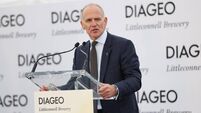
David McNamara: Irish growth hangs on foreign direct investment

The big picture is the multinational sector has contributed to nearly 50% of economic activity (in gross value added terms) since 2020, a level shift from the 35% average of the previous decade. File picture

The latest set of national accounts data for Ireland provide further evidence of the volatility of GDP growth on paper, masking more moderate trends in the domestic economy.
As ever, a small number of very large multinationals continue to drive the headline trends and highlight the growing interdependency of Ireland with the US economy.
GDP growth surged 10.2% quarter on quarter in Q2 2026, albeit still down -0.4% year on year. This quarterly rise was driven by a renewed uptick in goods export growth (+17% in the quarter, +13% year on year), almost entirely driven by the pharma sector.
Specifically, the export sales of weight-loss drug ingredients manufactured in Ireland has contributed to the exceptional volatility in both domestic stocks and exports/GDP over the past year.
This was also demonstrated in the 11.2% quarterly rise in multinational sector output (+4.6% year on year), while domestic sector output rose 0.7% on a quarterly basis and 1.8% on an annual basis.
Read More
The big picture is the multinational sector has contributed to nearly 50% of economic activity (in gross value added terms) since 2020, a level shift from the 35% average of the previous decade.
This activity is not only being seen in the GDP figures, but also in the surge in corporation tax receipts to a third of all tax collected by the Exchequer, much of it generated by a handful of US firms. This reliance is growing year-on-year.
In August alone, corporation tax receipts were up 33% on August 2025, leaving year-to-date receipts at €17.8bn (+8% y/y). The activities of the multinationals also underpin income taxes and PRSI, given the heavy skew towards higher income households in the personal tax base in Ireland.
Beneath the noisy data, domestic indicators point to a moderate growth picture so far in 2026. Consumer spending was also up 1% q/q and 2.9% y/y in Q2, pointing to solid underlying domestic demand in the economy, despite rising geopolitical risks.
Modified investment rose 1.4% y/y, reflecting a rise in machinery and equipment (+24%), but much weaker growth in building and construction (-7% y/y).
The Central Statistics Office has previously noted that much of this surge in machinery and equipment investment relates to the fit-out of data centres and related software, suggesting some structural uplift in capex in the FDI sector related to the AI investment cycle.
However, investment in these categories has been lumpy in recent quarters and is increasingly driving volatility in Modified Domestic Demand (MDD) growth. MDD fell 0.8% q/q, but on an annual basis was up 1.7% compared to Q2 2025. In H1 2026, MDD is 3.1% on an annual basis.
Other reliable domestic indicators point to continued domestic growth in the Irish economy, such as average weekly earnings, up 4% y/y. This is also in line with the 2% growth in annual payroll employment.