David McNamara: Wrestling with bond market kryptonite
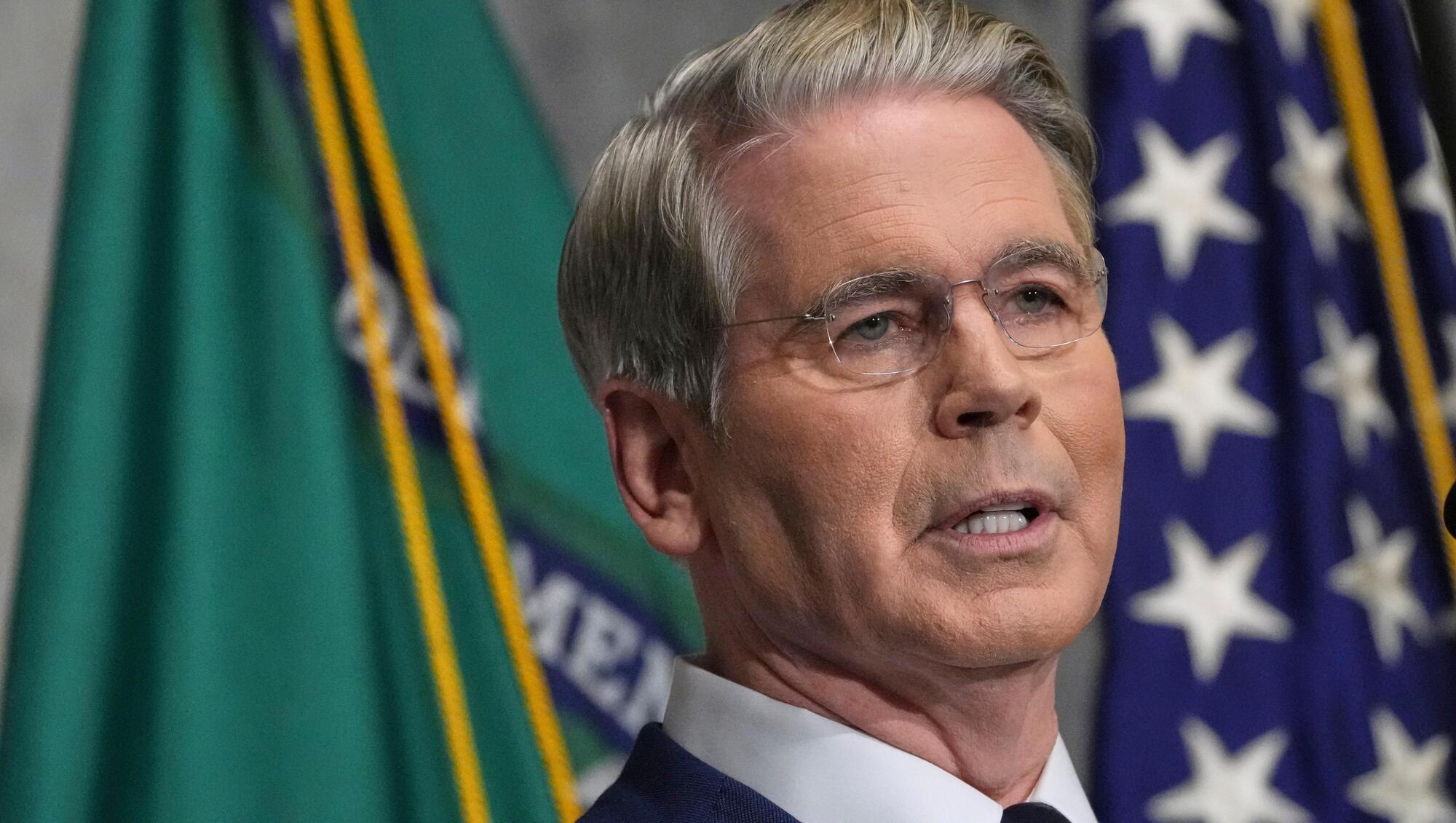
US treasury secretary Scott Bessent has spoken forcefully but the US continues to face a bond market selloff. Picture: AP Photo/Julia Demaree Nikhinson

Amid a tumultuous week on markets, the ramp-up in interest rates has raised fresh risks around sovereign and corporate debt. Despite forceful interventions by the US treasury secretary Scott Bessant in recent weeks, including the “I am the house now” comment on currency market intervention, the US treasury buyback scheme has so far proven less successful in stemming the sell-off in bond markets than the US support of the yen.
More broadly, the energy crisis created by the conflicts in the Middle East has resurfaced investor fears around inflation. At the same time, questions regarding fiscal sustainability, owing to deficits which have yet to be repaired since the pandemic in many G7 countries, also remain.
Read More
These two ingredients have been a recipe for bond market kryptonite. It comes as no surprise then, that the moves in yields have been dramatic over the past week. The yield on the US 10-year Treasury is around 15bps higher, testing 5% for the first time since 2007. In Europe, the rise in bond yields has been turbocharged by the sharp rise in energy prices and the vulnerability of large net energy importers, in particular Germany and the UK. The UK 10-year gilt yield is over 20bps higher on the week at 5.3%, while the German 10-year has topped 3.5% for the first time since the euro crisis in 2011.
At the front end of the curve, the hike and hawkish rhetoric from the ECB have seen a firming in rate futures. Its expectation for inflation to average 3.0% this year was unchanged, but it now anticipates it averaging 2.5% next year (was 2.3% in June), and 2.1% in 2028 (was 2.0%). Meanwhile, it continues to forecast that core inflation will run above the 2% target over the coming period, averaging 2.5% this year (no change) and 2.6% in 2027 (from 2.5%), before easing slightly to 2.3% (was 2.2%) in 2028. The meeting statement noted that the central bank now views the “risks to the upside for inflation”.
Following the meeting, markets are now fully pricing in a further 75bps of hikes, implying a deposit rate of 3.25% by mid-2027. This looks somewhat divorced from the fundamentals of an economy which remains stuck in a low growth trajectory, with very muted signs of second-round inflation emerging from the current energy price shock. Nevertheless, with an ECB Governing Council very much in a “fighting the last war” mindset, markets are taking the hawkish rhetoric at face value for now.
Turning to the week ahead, the monetary spotlight will be on the US Federal Reserve, Bank of England, and the Bank of Japan. At its last meeting in July, the Fed left rates unchanged at 3.50-3.75% for a fifth successive meeting. Since then, US market rate expectations have been somewhat volatile, amid mixed rhetoric and macro data from the US. Markets expect a hike from both the Fed and Bank of Japan, with a hold from the Bank of England.