John Whelan: Irish firms set to benefit from EU's Mexico deal
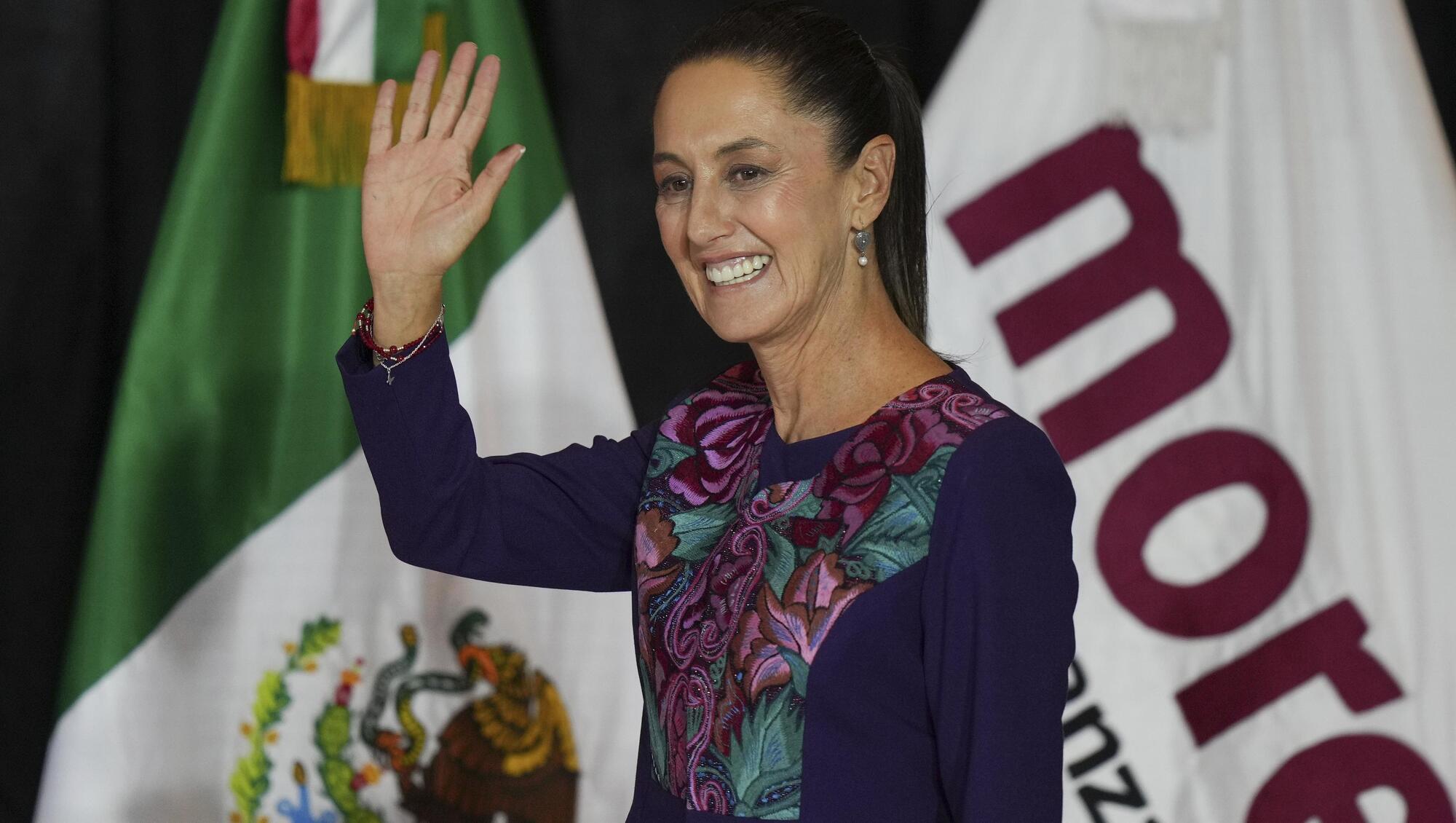
Mexican president Claudia Sheinbaum. Picture: AP Photo/Fernando Llano

Mexico City was the scene of the latest fast forward initiative by the European Commission to expand its influence in Latin America, as EC president Ursula von der Leyen signed off on a revamped trade agreement with Mexico on Friday.
The deal follows on from the recently signed Mercosur deal, as Brussels rushes to update and lock in its available free trade deals. Across the EU, there is an acceptance that reducing the reliance on China for certain commodities and raw materials and offset potential loss in trade with the US is now essential, as uncertainty builds in trading with these two major markets.
This latest free trade agreement was formally signed at the EU-Mexico summit in Mexico City on Friday, attended by Ms von der Leyen, European Council president António Costa and Mexican president Claudia Sheinbaum.
Ireland’s trade with Mexico is already robust and heavily weighted in Ireland’s favour, with Mexico serving as Ireland’s largest trading partner in Latin America. In 2025, Ireland’s exports to Mexico were €3.6bn, and imports from the market of €2.3bn.
Over 200 Irish companies export to Mexico, with trade driven primarily by pharmaceuticals, medical technology, food and dairy products, and specialised software. Unlike the Mercosur trade agreement, the Mexico agreement does not pose any threats to the EU’s agri-food producers and should smoothly go into place in Ireland and the other member states that have a strong agricultural lobby.
The update deal is expected to significantly boost market access by removing most remaining customs duties, improving access to public procurement markets and opening up services and investment opportunities. In particular, it will eliminate high tariffs on key EU exports, notably agri-food products, and improve conditions for sectors such as machinery, pharmaceuticals, and transport equipment.
Rosderra, Ireland’s largest pork exporters, will welcome the improved access to Mexico, which will give some fresh options if its largest market in the US is threatened. But it will also level the playing field with the UK pork producers, who have been benefiting from the UK’s updated trade deal with Mexico in 2025.
Hundreds of European producers who have registered their trademarks under the EU geographical indications, will also benefit as the deal safeguards distinctive regional food and drink products on the Mexican market. Irish products protected include Irish grass-fed beef, Clare Island salmon, Achill Island Sea Salt and Sneem Black Pudding.
This new EU-Mexico free trade agreement also represents a significant opportunity for Irish dairy manufacturers looking to expand into one of the world’s most dynamic markets. With a population of 131m and a growing middle class, Mexico offers a promising market for high-quality dairy exports, particularly cheese, butter, yogurt, milk powder, including infant formula. By reducing tariffs and introducing duty-free quotas across various dairy categories, this agreement provides Irish exporters with improved access and a foundation for market growth.
Ornua, the Irish dairy cooperative, is a major dairy exporter to Mexico, supplying Irish casein (a milk protein) for domestic Mexican cheese producers, alongside Kerrygold-branded butter and cheese. Ornua is actively scaling its presence in Mexico, targeting increased exports of its premium dairy products. While the cooperative faces volatile commodity markets and a generally challenging 2026 for pricing, it is expected to leverage its presence in Mexico with the new tariff liberalisations trade deal to boost butter volumes.
Ornua’s CEO, Conor Galvin, has warned that 2026 remains a highly volatile year for dairy, with milk prices expected to remain under pressure. European milk supply growth is limited, meaning Ornua must balance its volume growth with expansion into other global markets.
Another notable Irish company and major players active in the Mexican market, who will gain from the trade deal is the Kerry Group, which operates multiple manufacturing and technology centres in Mexico to serve the Latin American food and beverage industry.
The EU-Mexico agreement signed off last Friday is considered an Interim trade agreement (iTA). The iTA will function as a stand-alone agreement until the full agreement enters into force, as the iTA falls within the EU’s exclusive competence and therefore does not require ratification by individual EU member states. Its objective is to deliver the economic benefits of the negotiated trade commitments as early as possible.
Following last Friday’s decisions, all EU member states and Mexico will have to ratify the agreement. The iTA will remain in effect until it is superseded by the entry into force of the full partnership agreement.