Inspector of Prisons at loggerheads with prison service over issue of 'escorts' during visits
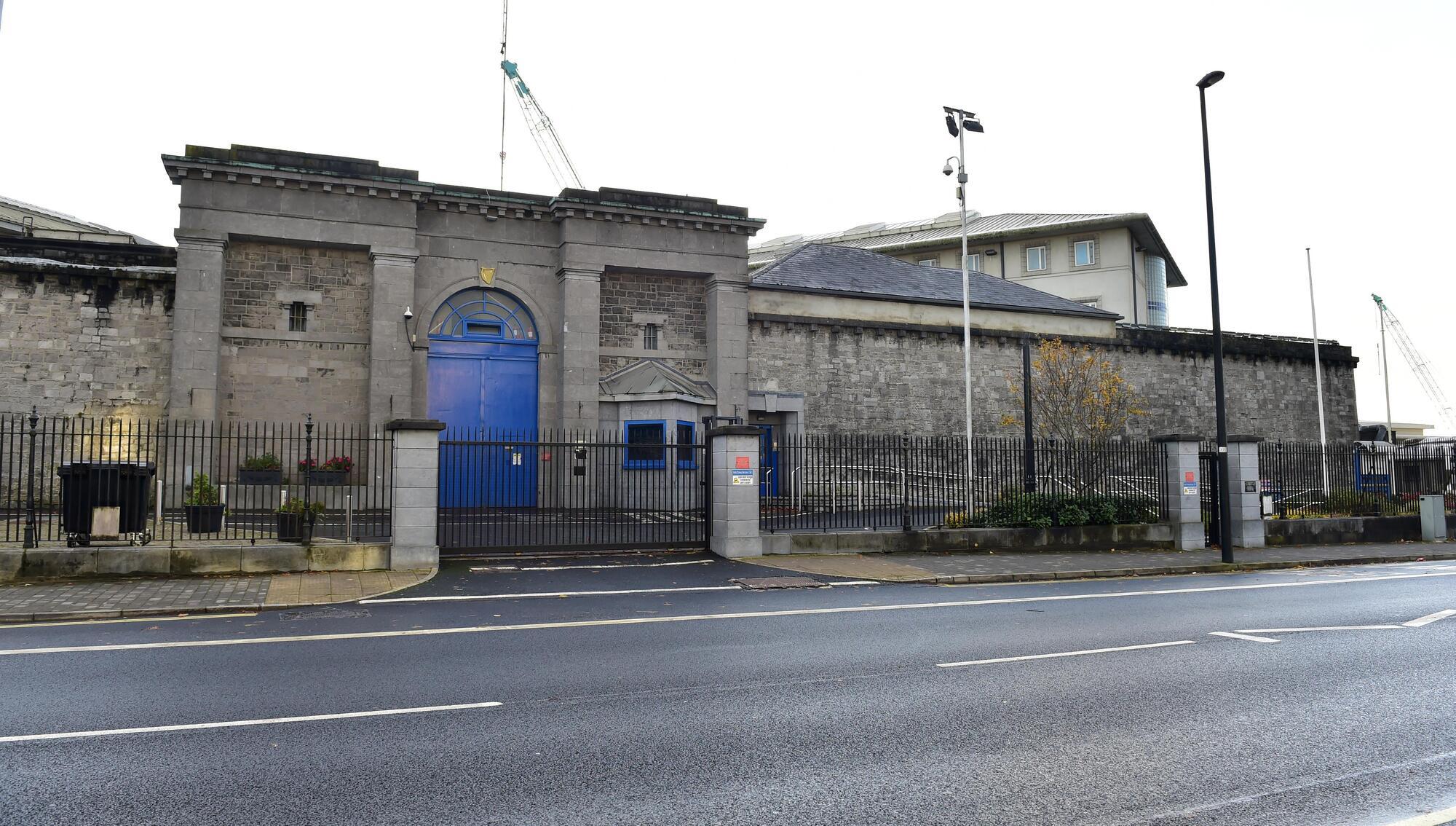
The rupture occurred last November after the governor of Limerick Prison placed an escort on inspectors during an announced visit, resulting in a formal complaint to the Irish Prison Service. File picture: Dan Linehan
The relationship between the Irish Prison Service and the Inspector of Prisons has ruptured over an escalating row caused by “escorts” of inspectors by prison officers.
Freedom of Information documents obtained by the reveal the position of both the head of the IPS, director general Caron McCaffrey, and chief inspector Mark Kelly have hardened despite efforts to find a resolution.
The emergence of the breakdown comes as the Office of the Inspector of Prisons (OIP) is due to publish its annual report on Thursday afternoon.
In correspondence, Mr Kelly states prison officer escorts are an “unprecedented and unwarranted interference” in the work of his office and were a dramatic change from the freedom of movement his inspectors had enjoyed since 2022.
Ms McCaffrey maintains the escorts are a purely “safety” measure, with officers placed at a distance to inspectors, and stressed this “does not impede” their work.
The prison boss further states that due to “significant overcrowding and heightened prisoner volatility”, as well as reduced staff availability, prison governors are legally obliged to take appropriate measures to ensure safety and security in prisons.
Read More
The rupture occurred last November after the governor of Limerick Prison placed an escort on inspectors during an announced visit, resulting in a formal complaint by Mr Kelly to the governor and to Ms McCaffrey.
Mr Kelly said the inspectors “experienced attempts to interfere with the operational autonomy of the inspection team”, which he said was repeated during an inspection of Dóchas Women’s Prison in Dublin.
He claimed the IPS operations director had issued instructions to the respective governors that “impeded the operational autonomy” of the OIP by “attempting to impose unprecedented and unwarranted conditions” on the freedom of movement of inspectors in prisons.
As a result, he said he had taken the formal decision to “suspend” the current thematic inspection of older people in prison.
The OIP has continued to conduct unannounced general inspections — two took place last March — as there is a statutory obligation on the body to do so. But other inspections, that are announced beforehand, remained suspended since November.
In his most recent correspondence to Ms McCaffrey, last month Mr Kelly accused the IPS of an “ongoing failure” to fully cooperate with inspections and claimed the escorts constitute an “unwarranted interference” by the IPS in the work of the inspector.
He said it was “not for the body monitored to seek to impose new and unwarranted conditions on its statutory monitoring body”.
In correspondence last November, Ms McCaffrey said: “The IPS rejects the suggestion that instructions issued to governors constitute ‘attempts to interfere with the operational autonomy’ of the OIP.” She said the Prisons Act 2007 contained “no authority permitting the inspector to instruct the IPS to cease or alter an operational control measure”.
She repeatedly states in correspondence the IPS is “fully committed” to constructive engagement with the OIP and to facilitate inspections consistent with legislation — including not only the Prisons Act 2007 but also the Safety, Health and Welfare at Work Act 2005.
Her correspondence stresses the OIP needs to supply the IPS with risk assessments and structures to meet the risks, which she said they had not received, to their satisfaction.
“It must be made absolutely clear that no person entering the prison has authority to traverse operational areas or engage with persons in custody unless appropriate discipline, risk controls and authorisations in place,” Ms McCaffrey said in a letter last November.
“You will be aware that our prisons are currently operating under significant overcrowding pressure," she said.
"This environment increases the inherent operational risk profile, including risks arising from prisoner movement, reduced staff availability and the potential for rapid escalation during incidents.”
Mr Kelly replied to say his office had operated in “full compliance” with all the laws over the past three years.
The correspondence details the respective positions on sharing OIP risk assessments and structures and attempts to try and resolve the dispute.
In a letter last March, Mr Kelly informed Ms McCaffrey he had spent “three decades” of leading prison inspections across hundreds of prisons in countries in the Council of Europe and that staff had “extensive” experience of prisons.
He accepted it was “incumbent” on the two bodies to “cooperate closely” on health and safety matters and risk mitigation.
He said he intended to resume his thematic inspections once disagreement over OIP risk measures were resolved.
Ms McCaffrey replied in March to say the information provided by the OIP did not seem to constitute a formal risk assessment and did not demonstrate the safety of unescorted movement in prisons.
After conducting an unannounced visit in Limerick Prison in March, Mr Kelly wrote to McCaffrey to say the inspectors were “able to work unencumbered by unwarranted ‘escorting’, including in highly sensitive areas”.
He said he trusted they could agree to go back to the “successful” inspection arrangements that previously applied before escorts.
On March 23, Ms McCaffrey told Mr Kelly that governors hold “full legal authority” to secure custody and operational management of prisons, which “can’t be displaced or overridden by any external body”.
She said escorting non-IPS personnel “falls within this statutory responsibility” and referenced the current operational environment of “significant overcrowding and heightened prisoner volatility”.
In addition, she raised the issue of OIP staff holding prison keys, which previously would have been given to them by prison officers to allow for their movement in prisons.
“For clarity, no drawing or handling of keys by external personnel is permitted, as this would be incompatible with the governor’s obligations for security and safe custody,” Ms McCaffrey wrote.
She repeated her request for outstanding documentation required under the health and safety act.
On May 12, she wrote again to Mr Kelly saying they had not received the request documentation.
On June 15, Mr Kelly responded and said there was “nothing to be gained” from further exchange of letters, adding he did not accept there was any outstanding documentation to be given.
He said it was “wholly inappropriate” for the IPS to seek to “impose new operational constraints” on the independent work of the OIP.
“Nor is it the role of the IPS to police the manner in which my office discharges its own statutory obligations,” he said.
Mr Kelly said notwithstanding the “professional commitment” of the IPS to facilitate inspections and engage constructively with the OIP, “the reality is that, since November 2025, there has been an ongoing failure by the Irish Prison Service fully to cooperate with our inspection work”.
He said his staff require to draw [carry] keys to work effectively in inspections.
He said his counterparts in England and Wales “must be issued” with keys within 15 minutes of the start of an unannounced inspection.
“My experienced colleagues and I do not require to be ‘escorted’ during our inspections; this constitutes an unwarranted interference with our work,” Mr Kelly said.
He said both he and his colleagues had carried keys since 2022 and had enjoyed “freedom of movement inside prisons”. He reminded Ms McCaffrey they were largely able to do so in unannounced inspections last March.
He pointed out to Ms McCaffrey the functions of the OIP would “significantly expand” in the very near future under the Inspection of Places of Detention Bill.
He said the bill would also “render it unlawful” to fail to cooperate with the newly titled Chief Inspector of Places of Detention.
Mr Kelly said: “It is now incumbent on us, as the leaders in our respective domains, to reach an agreement.”


CONNECT WITH US TODAY



Be the first to know the latest news and updates