Public urged to report any sightings of Asian hornets
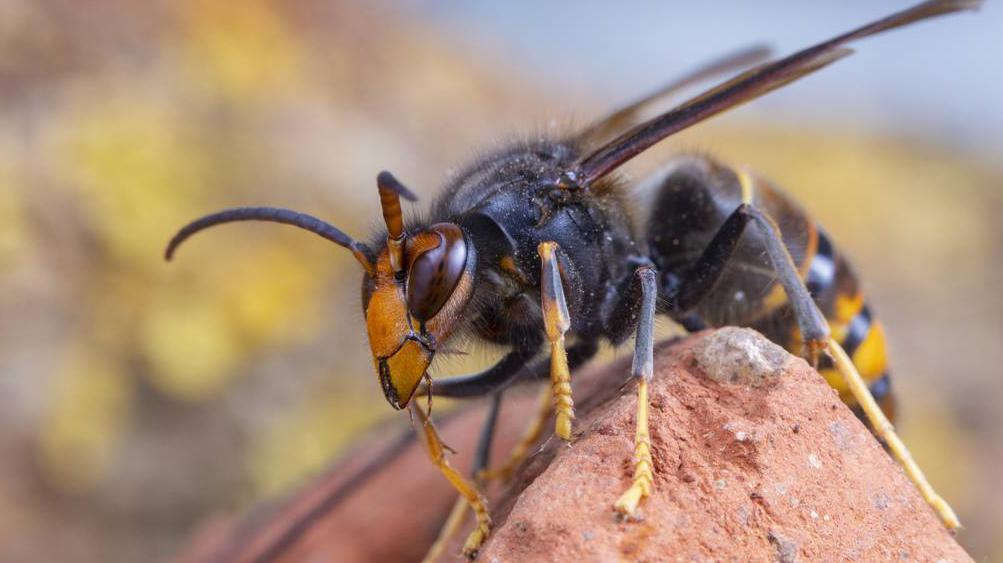
The creature, often called the yellow-legged hornet, is an apex predator of honey bees and other pollinating insects.
Members of the public are being urged to report any sightings of Asian hornets in Ireland.
It comes as some 1,356 reports were made last year amid concerns of the presence of the invasive creature in the country.
Of those reports, 36 were confirmed as Asian hornet, with two nests of the species removed in Cork.
The creature, often called the yellow-legged hornet, is an apex predator of honey bees and other pollinating insects.
Native to Asia, it has proven extraordinarily adept at colonising new environments, with its European presence tracing back to one mated queen, which was accidentally introduced to Bordeaux, France, in 2004.
Since then, the Asian hornet has become more established in France, Spain, Portugal, and parts of the UK, including south-west England.
The hornet is known to weaken bee colonies, reduce honey production, and disrupt foraging. In some regions, the cost of protecting hives takes up some 30% of a beekeeper's income.
It is usually 2cm-3cm in length with a black body and orange-tipped tail. The native giant woodwasp is frequently mistaken for an Asian hornet. Those are usually much larger than 5cm or more, yellow and black in colour, and are a widespread species.
In an update on Monday, Invasive Alien Species in Ireland urged the public to report any sightings to its online tool.
Asian hornets might be seen visiting flowers and fruits, or near beehives. They are also attracted to roadkill, fish sold in markets, and other sources of protein and can be seen hovering over sweet or alcoholic drinks.
The reporting tool can be found here.
CONNECT WITH US TODAY



Be the first to know the latest news and updates