Russia sanctions will have wider repercussions
I have always believed that at best, economic forecasting is a hazardous exercise and at worst it is a total waste of time.
Russia sanctions will have wider repercussions

The problem is that economics is a social science that is heavily influenced by human behaviour. It is also the case that the most sophisticated economic forecasting models can be blown out of the water by political events and decisions.

The case of the Ukraine and Russia is a case in point. Not too long ago, Russia occupied pride of place as one of the BRIC economies and the Ukraine was well up the queue in terms of becoming much more integrated with the EU and membership did not appear too far removed. Today both of those assertions are being seriously challenged.

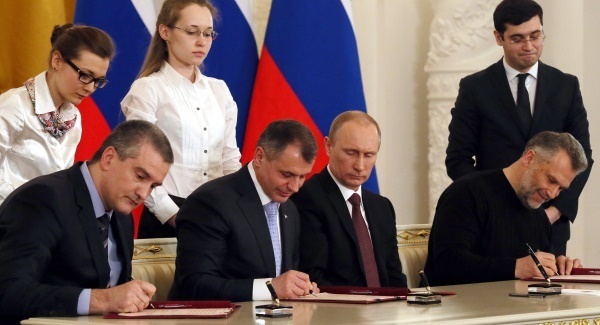
Russia has effectively annexed Crimea and aggressive attempts to exert considerably more influence in Eastern Ukraine may not be too far away.

It remains to be seen how the EU and the West in general will react to this, but there is every possibility that this could evolve into a situation where significant trade barriers and other sanctions could be imposed on Russia, and it could as a consequence become much more insulated from the Western economies, with potentially serious economic consequences for an economy heralded as offering very significant trade potential for Western companies.

It is also uncertain if Ukraine will be able to avoid being divided up.

The whole thing is a total mess, but was probably quite predictable for those with an intimate knowledge of the region. Putin is a power- hungry ego-maniac who appears hell bent on re-asserting Russia’s influence in the region. In this quest, there is a lot of fertile ground in the former Soviet countries, because there is a strong Russian ethnic presence in those countries.

It is estimated that people of Russian descent account for around 25% of the populations of Latvia and Estonia; 18% of Ukraine; 8% of Belarus; 26% of Kazakhstan; and 6% of Uzbekistan. For Putin, these demographics do offer the potential for disruption, as has been evidenced strongly in Ukraine.

For the EU and the US, the actions of Putin represent a very formidable challenge. The imposition of serious economic sanctions by the West would obviously be bad news for the fragile Russian economy, but the global implications of serious economic difficulties in one of the BRIC economies would be significant. Russia today is a much more significant part of the globalised economy than during the Cold War. Perhaps we will soon be talking about the BIC economies.

The energy dependence on Russia is also of the utmost significance. It is estimated that in 2011, Russia supplied 30% of EU imports of natural gas, accounting for around 5% of the EU’s energy requirement. This is a significant dependence on Russian gas and a trade war and sanctions would certainly have considerable short- term negative implications.

It also highlights the requirement in the EU, and particularly in a country like Ireland with such a massive imported energy dependence, to develop alternative sources of energy. Wind, solar, nuclear and wave energy should be looked at in a serious way, if one believes Putin will continue to pursue the stance he has adopted in the Ukraine. Those who are protesting against wind farms all over the country might take note or then again they might not.

Last year, Ireland exported €637m in merchandise goods to Russia and imported €142m in goods from that country. In January this year, exports were valued at €46m and imports at €15m. It is not a huge export market for Ireland, but has been expanding rapidly in recent years and up until now the potential looked very significant.

It is all now up in the air, but one would have to believe and fear that Putin will put political imperatives above economic ones.

More in this section

Cookie Policy Privacy Policy Brand Safety FAQ Help Contact Us Terms and Conditions

© Examiner Echo Group Limited