Carney visits Europe to seek closer ties amid worsening trade war with Trump
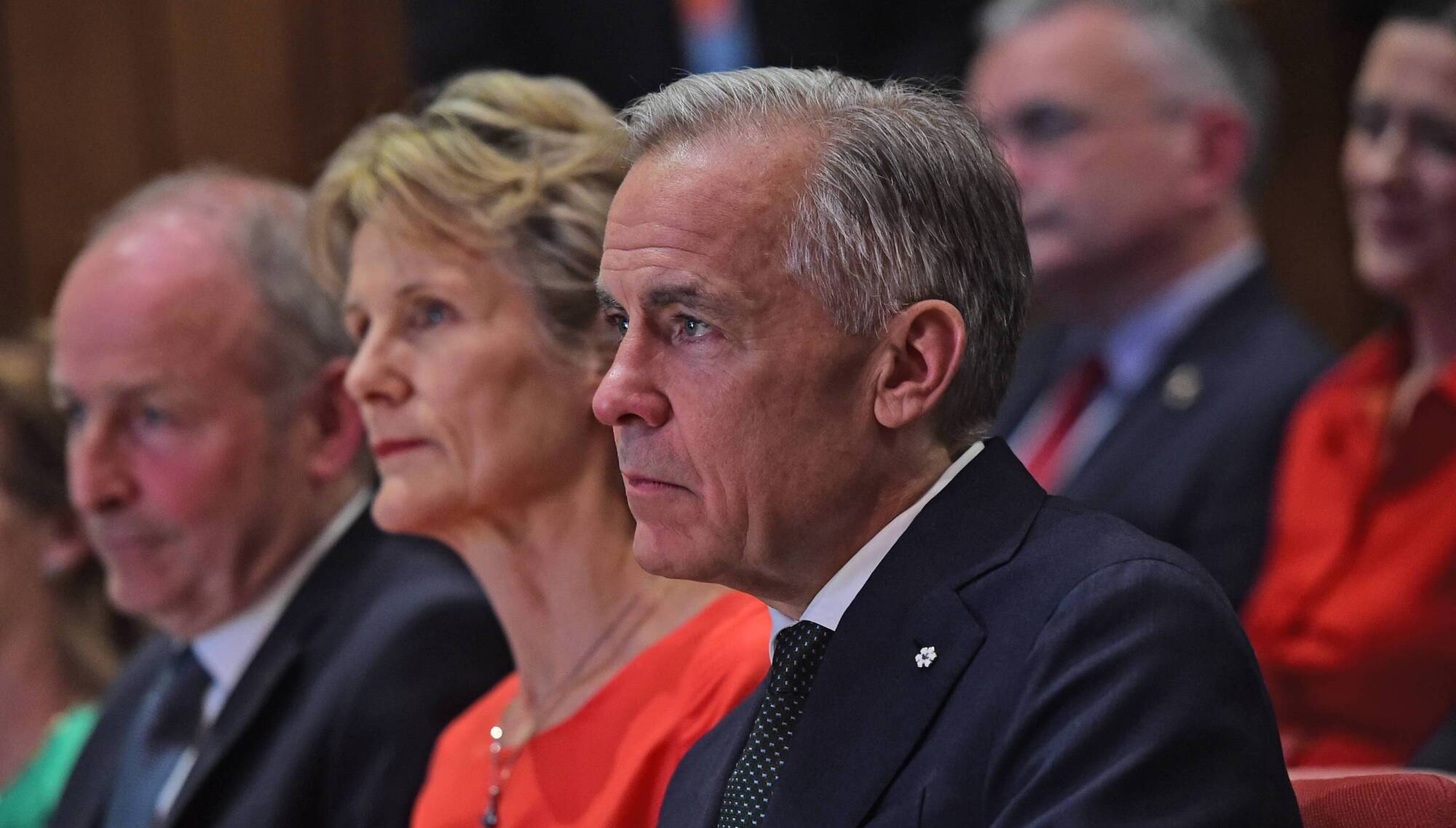
Canadian Prime Minister Mark Carney has broached the possibility of Canada becoming an associate member of the EU, according to the Wall Street Journal. Photo: Conor McKeown
Canadian Prime Minister Mark Carney will travel to Strasbourg on Wednesday, becoming the first foreign head of government to attend the European Commission president’s State of the Union address, as he seeks new partnerships amid repeated threats by U.S. President Donald Trump against Canada's sovereignty.
Carney will speak to the European Union Parliament on Thursday, laying out his vision for "a unique alliance" between Canada and Europe.
Carney has pledged to double Canada’s non-U.S. trade in the next decade as the country pivots away from its southern neighbor amid an increasingly acrimonious trade war.
Seven EU diplomats in Canada and Europe told Reuters there are active efforts toward deeper collaboration on trade, defense and digital security, but no specific plan for a more comprehensive Canadian-EU relationship has been discussed at a high level.
Carney said on Tuesday more detailed discussions would begin at the Canada-EU summit in Montreal in late October.
“Our relationship with the EU has become increasingly close, especially over the past year and a half,” Canadian Foreign Minister Anita Anand told Reuters.
“The EU stands out as a jurisdiction where there are not only shared values, but shared economic interests.”
Last week, the Wall Street Journal reported that Carney had suggested to European leaders that Canada become an "associate member" of the EU.
Four EU diplomats in Canada said any kind of EU membership for Canada was impossible, noting the geographic constraints and the legal implications membership in the union carries.
“We want to upgrade the Canada-EU relationship, but even though we both believe in a rules-based global order, there is an ocean that separates us,” one of the diplomats said.
Significant obstacles remain to ramping up trade. Mark Manger, a professor of political economy and global affairs at the University of Toronto, said EU officials have been frustrated by Canada’s refusal to open two industries it protects at great expense: telecommunications and dairy.
“We would have to put something on the table the EU wants, but at the moment, both of these markets are just closed,” Manger said. Although Canada has a trade deal with the 27-member EU, 10 countries have not ratified it.
Anand Sundar, special adviser to the director at the European Council on Foreign Relations, said officials are working on proposals for a unique relationship between Canada and the EU similar to agreements the EU has with other non-EU states.
“Defense is the area where both Europe and Canada’s dependence on the U.S. runs deepest, where both sides face similar threats and for which it is easiest to get public buy-in,” Sundar said.
In December, Canada agreed to join a European initiative making it the first non-European country to participate in the continental defense procurement strategy.
Four European diplomats said that while many of their leaders have been privately shocked by Trump’s verbal attacks on Canada, most are loath to publicly back Carney's more aggressive approach to trade talks with the U.S., fearing the president might then turn on Europe.
Canada's EU ambassador-designate, Jonathan Wilkinson, said European officials have been in close contact with Carney's government and that there is much tacit support, citing the EU's size and focus on issues to help Canada assert its sovereignty, including AI and digital services.
"We haven't asked European leaders to stand up and make a declaration of support for Canada and I don't think we need that," he said. "We can stand up for ourselves and find new ways to work."

CONNECT WITH US TODAY



Be the first to know the latest news and updates