Substation fire that shut Heathrow Airport was preventable, says report
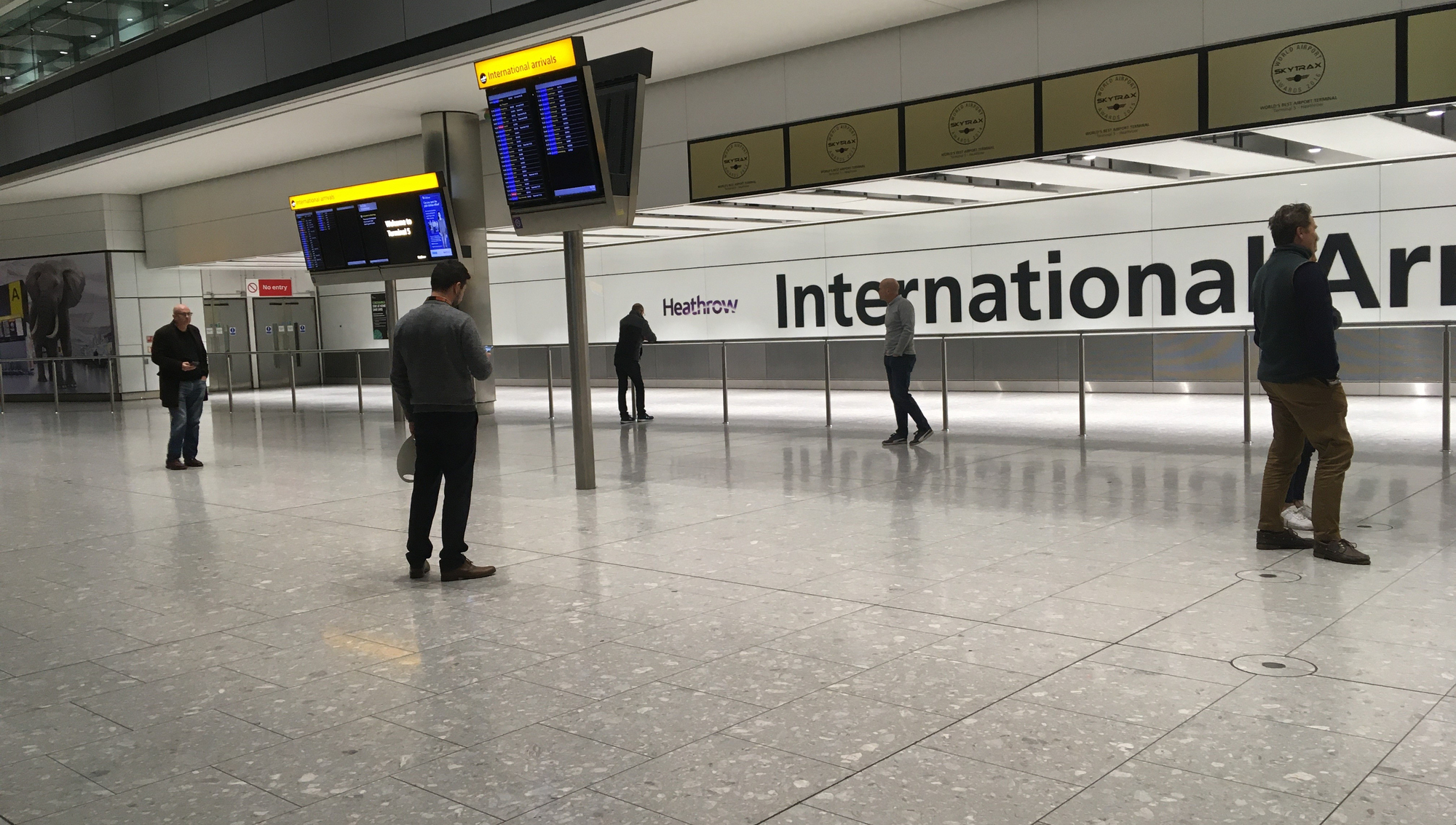
The empty arrivals concourse at Terminal 5 of Heathrow Airport (Heather Clifton/PA)
British energy watchdog Ofgem has launched an investigation after a report found a fire that caused the shutdown of Heathrow Airport was due to a preventable technical fault.
The report by the National Energy System Operator (Neso) said an âelevated moisture readingâ had been found in oil samples at the North Hyde substation in west London in July 2018, but action was not taken to replace electrical insulators known as bushings.
In 2022, a decision was made to âdefer basic maintenanceâ at the substation, meaning the issue went âunaddressedâ, the final report said.
On Wednesday, Ofgem said it had opened an official enforcement investigation into National Grid Electricity Transmission (NGET) based on the Neso reviewâs findings.
The fire on March 20 this year was caused by a âcatastrophic failureâ in one of the transformers, âmost likely caused by moisture entering the bushing causing a short circuitâ, which ignited the oil, the Neso report said.
A review by the National Grid in 2022 found the fire suppression system at the North Hyde site was âinoperableâ, while another assessment in July 2024 indicated the system was still âout of serviceâ, the report said.
No flights operated at the west London airport until about 6pm on March 21 because of the blaze which started late the previous night.
More than 270,000 air passenger journeys were disrupted by the closure.
The electricity outage led to 71,655 domestic and commercial customers losing power and the âcomplete loss of suppliesâ to part of Heathrow Airportâs internal electrical distribution network, the report said.
Akshay Kaul, director general for infrastructure at Ofgem, said:âŻâThe North Hyde substation fire resulted in global disruption, impacted thousands of local customers, and highlighted the importance of investment in our energy infrastructure.
âAs a result of the reportâs findings, we have opened an investigation into National Grid Electricity Transmission.
âWe have also commissioned an independent audit of their most critical assets.
âOfgem will also further examine the incident and its causes and take further action as appropriate.
âWe expect energy companies to properly maintain their equipment and networks to prevent events like this happening.
âWhere there is evidence that they have not, we will take action and hold companies fully to account.
âBritain has one of most reliable energy systems in the world and thankfully incidents like this are rare. We must continue to invest in the system to maintain that resilience.â
Outcomes from Ofgemâs investigation could include a finding of no breach, or compliance action to bring companies into compliance, along with potential contributions to the voluntary redress fund, penalties and licence revocation.
The Neso report, which was published on Wednesday and commissioned by Energy Secretary Ed Miliband, read: âAn elevated moisture reading in one of SGT3âs (the transformerâs) bushings had been detected in oil samples taken in July 2018.
âAccording to National Grid Electricity Transmissionâs relevant guidance, such readings indicate âan imminent fault and that the bushing should be replacedâ.
âWhile the reading was recorded in National Grid Electricity Transmissionâs online system, the mitigations appropriate to its severity were not actioned.
âThe controls in place were not effective and failed to identify subsequently that action had not been taken in relation to the elevated moisture reading.
âThis includes an opportunity in 2022 when a decision was taken to defer basic maintenance on SGT3. The issue therefore went unaddressed.â
The report continued: âThe July 2024 fire risk assessment stated that if a fire started on any of the three supergrid transformers, âit would not be suitably suppressedâ.
âAs a result, a high priority action was created on the pump of the water mist system to be appropriately serviced and maintained.
âThat action remained outstanding at the time of the incident, in March 2025.
âNational Grid Electricity Transmission stated that it was planning a combination of replacements and refurbishments of the fire suppression system by October 2025.â
The Neso review also found that the design and configuration of Heathrowâs internal power network meant the loss of just one of its three supply points would âresult in the loss of power to operationally critical systems, leading to a suspension of operations for a significant periodâ.
Plans were in place to respond to such an event, including the reconfiguration of the network which would take approximately 10 to 12 hours, but the loss of a supply point was ânot assessed to be a likely scenario by Heathrow Airport Limited, due to its expectation of the resilience of the wider networkâ, the report said.
âThis meant that its internal electrical distribution network was not designed or configured to take advantage of having multiple supply points to provide quick recovery following such a loss and relied on manual switching.â
Mr Miliband said: âThe report is deeply concerning because known risks were not addressed by the National Grid Electricity Transmission, and Ofgem has now opened an official enforcement investigation to consider any possible licence breaches relating to the development and maintenance of its electricity system at North Hyde.
âThere are wider lessons to be learned from this incident. My department, working across Government, will urgently consider the findings and recommendations set out by Neso and publish a response to the report in due course.â
A Heathrow spokesperson said: âHeathrow welcomes this report, which sheds further light on the external power supply failure that forced the airportâs closure on 21 March.
âA combination of outdated regulation, inadequate safety mechanisms and National Gridâs failure to maintain its infrastructure led to this catastrophic power outage.
âWe expect National Grid to be carefully considering what steps they can take to ensure this isnât repeated.
âOur own review, led by former cabinet minister Ruth Kelly, identified key areas for improvement and work is already under way to implement all 28 recommendations.â
Heathrow is Europeâs largest airport with more than 83.9 million passengers travelling through its terminals in 2024.
A National Grid spokesperson said: âAs Nesoâs report sets out, in Great Britain we have one of the most reliable networks in the world, and events of this nature are rare.
âNational Grid has a comprehensive asset inspection and maintenance programme in place, and we have taken further action since the fire. This includes an end-to-end review of our oil-sampling process and results, further enhancement of fire risk assessments at all operational sites, and retesting the resilience of substations that serve strategic infrastructure.
âWe fully support the recommendations in the report and are committed to working with Neso and others to implement them. We will also co-operate closely with Ofgemâs investigation.
âThere are important lessons to be learnt about cross-sector resilience and the need for increased co-ordination, and we look forward to working with government, regulators and industry partners to take these recommendations forward.â