News conference between Zelenskyy and Trump’s Ukraine envoy cancelled
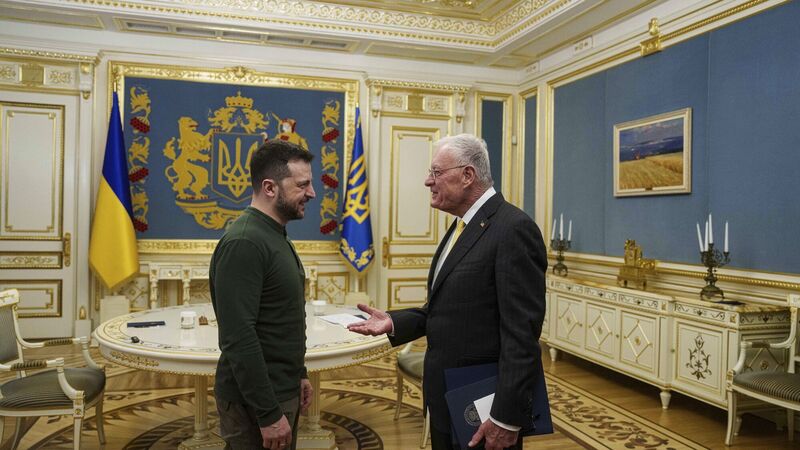
US special envoy for Ukraine and Russia Keith Kellogg, right, and Ukraine’s President Volodymyr Zelensky talk during their meeting in Kyiv, Ukraine Picture: Evgeniy Maloletka/AP
A planned news conference after talks between Ukrainian President Volodymyr Zelenskyy and US President Donald Trump’s Ukraine envoy was cancelled as political tensions deepened between the two countries over how to end the almost three-year war with Russia.
The format of the press event, which was to include comments to the media by Mr Zelenskyy and retired US lieutenant general Keith Kellogg, was changed at the last minute on Thursday so that the two did not deliver statements or field questions from journalists.
The change was requested by the US side, Ukrainian presidential spokesman Serhii Nikiforov said.

Lt gen Kellogg’s trip to Kyiv coincided with recent feuding between Mr Trump and Mr Zelenskyy that has bruised their personal relations and cast further doubt on the future of US support for Ukraine’s war effort.
Mr Nikiforov gave no other reason other than that the cancellation was in accordance with US wishes.
The US delegation made no immediate comment.
The White House did not immediately respond to questions about why the news conference was called off.
When the meeting began, photographers and video journalists were allowed into a room where the two men shook hands before sitting across from each other at a table at the presidential office in Kyiv.
The two men were due to speak about Mr Trump’s efforts to end the war.
Mr Zelenskyy had previously said he looked forward to explaining what was happening in Ukraine and showing it to Lt gen Kellogg.
Lt gen Kellogg, one of the architects of a staunchly conservative policy book laying out an “America First” national security agenda, has long been Mr Trump’s top adviser on defence issues.

Mr Zelenskyy and Mr Trump have traded rebukes in recent days.
The spat erupted after Russia and the US agreed on Tuesday to start working toward ending the war in Ukraine and improving their diplomatic and economic ties.
With that, Mr Trump abruptly reversed the three-year US policy of isolating Russia.
Mr Zelenskyy was unhappy that a US team opened the talks without inviting him or European governments that have backed Kyiv.
When Mr Trump claimed Mr Zelenskyy was deeply unpopular in Ukraine, the president said Mr Trump was living in a Russian-made “disinformation space”, suggesting he had been duped by Russian President Vladimir Putin.
But Mr Zelenskyy “retains a fairly high level of public trust” — about 57%, according to a report released on Wednesday by the Kyiv International Institute of Sociology.
Mr Trump accused Mr Zelenskyy of being “A Dictator without Elections!!”.
Because of the war, Ukraine did delay elections that were scheduled for April 2024.

Mr Trump also suggested that Ukraine was to blame for the war.
Russia’s army crossed the border on February 24 2022, in an all-out invasion that Mr Putin sought to justify by falsely saying it was needed to protect Russian-speaking civilians in eastern Ukraine and prevent the country from joining Nato.
On Wednesday, Mr Trump warned Mr Zelenskyy that he “better move fast” to negotiate an end to Russia’s invasion of Ukraine or risk not having a nation to lead.
European leaders also commented on the feud, throwing their support behind Mr Zelensky.
German Chancellor Olaf Scholz whose country has been Kyiv’s second-biggest weapons supplier after the US, said it was “wrong and dangerous” to deny Mr Zelenskyy’s democratic legitimacy.
Ukraine has been defending itself for nearly three years against a merciless war of aggression — day after day,” Mr Scholz told news outlet Der Spiegel.
Russian officials, meanwhile, are basking in Washington’s attention and offering words of support for Mr Trump’s stance.
Kremlin spokesman Dmitry Peskov said “the rhetoric of Zelenskyy and many representatives of the Kyiv regime in general leaves much to be desired” — a veiled reference to Ukrainian criticism of Mr Putin.
“Representatives of the Ukrainian regime, especially in recent months, often allow themselves to make statements about the heads of other states that are completely unacceptable,” Mr Peskov said in a conference call with reporters.
Amid the diplomatic clamour, Ukrainian civilians continue to endure Russian strikes.
Russia fired 161 Shahed and decoy drones and up to 14 missiles of various types at Ukraine overnight from Wednesday to Thursday, according to military authorities.
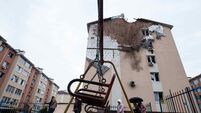
A Russian glide bomb struck an apartment block in the southern city of Kherson on Wednesday night, killing one person and wounding six, including 14-year-old twins, authorities said.
The southern port city of Odesa also came under a Russian drone attack for the second consecutive night, leaving almost 50,000 homes without electricity in freezing winter temperatures, officials said.
CONNECT WITH US TODAY



Be the first to know the latest news and updates