Eye keyhole surgery to remove tumour the first of its kind in Britain
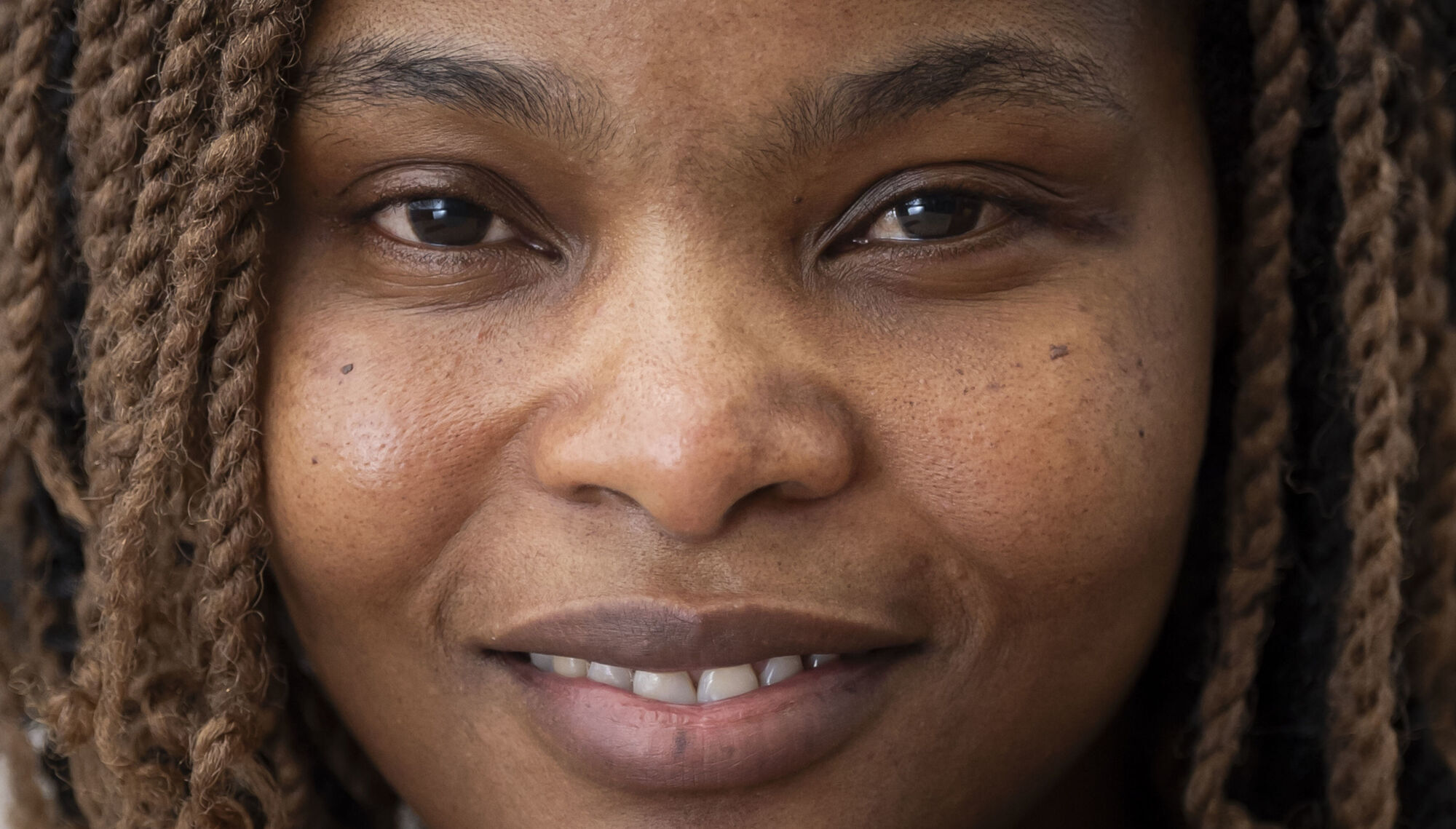
Ruvimbo Kaviya is first person in Britain to have surgery to remove a tumour through her eye socket. Picture: Danny Lawson/PA
Ruvimbo Kaviya, a mother of three, had a meningioma removed from the space located beneath the brain and behind the eyes.
Many of these types of tumours would have previously been considered inoperable, because of where they are situated in an area called the cavernous sinus.
Those which have been removed required complex surgery, which involves taking off a large part of the skull and moving the brain to access the tumour. This in itself can lead to serious complications, including seizures.
However, surgeons from the Leeds Teaching Hospitals NHS Trust have managed to remove one of these tumours using keyhole surgery through Ms Kaviya’s eye socket — the first surgery of its kind in Britain.
Experts at the Leeds hospital practised the surgery multiple times, first using 3D models of Ms Kaviya’s head and then in a cadaver lab.
The surgery, known as an endoscopic trans-orbital approach, took three hours and Ms Kaviya, a nurse in Leeds, was up and walking about later the same day. She has been left with a tiny scar near her left eye.
Neurosurgeon Asim Sheikh said: “There’s been a move towards minimally invasive techniques over the last few years or so, with the advancement of technology, tools, 3D innovation.
He said traditional methods to get to the place where the tumour was situated requires “pressing on quite a lot of brain”.
“So if you press on it too much, or retract it, or try to move it apart, it can lead to patients having seizures afterwards,” Mr Sheikh said. “This way, we’re not even sort of touching the brain.”
His colleague Jiten Parmar, a maxillofacial surgeon, devised a technique where a little part of the outside wall of the eye socket was cut to allow more access for the endoscope.
He said before this new keyhole technique, the area that needed to be operated on was “difficult to get to from the outside without taking off most of the skull plate”, which in itself can cause some quite serious damage.
“Going through the eye socket gets into the same area and it’s a way more elegant approach,” he told PA.
Ms Kaviya said her family were “sceptical” about the procedure, adding: “But I just told them that ‘I have to do this — it’s either I do it or it keeps growing and maybe I will die. Who knows? There’s a first time to everything. So you never know — this might be the best chance for me to have it.’ And it was.”
On her recovery, she said: “When I had the operation, I thought I was possibly going to stay in hospital for weeks or months and I was home in days. I had double vision for about three months but everything else was OK.”

CONNECT WITH US TODAY



Be the first to know the latest news and updates