Terry Anderson, reporter held captive in Lebanon for years, dies aged 76
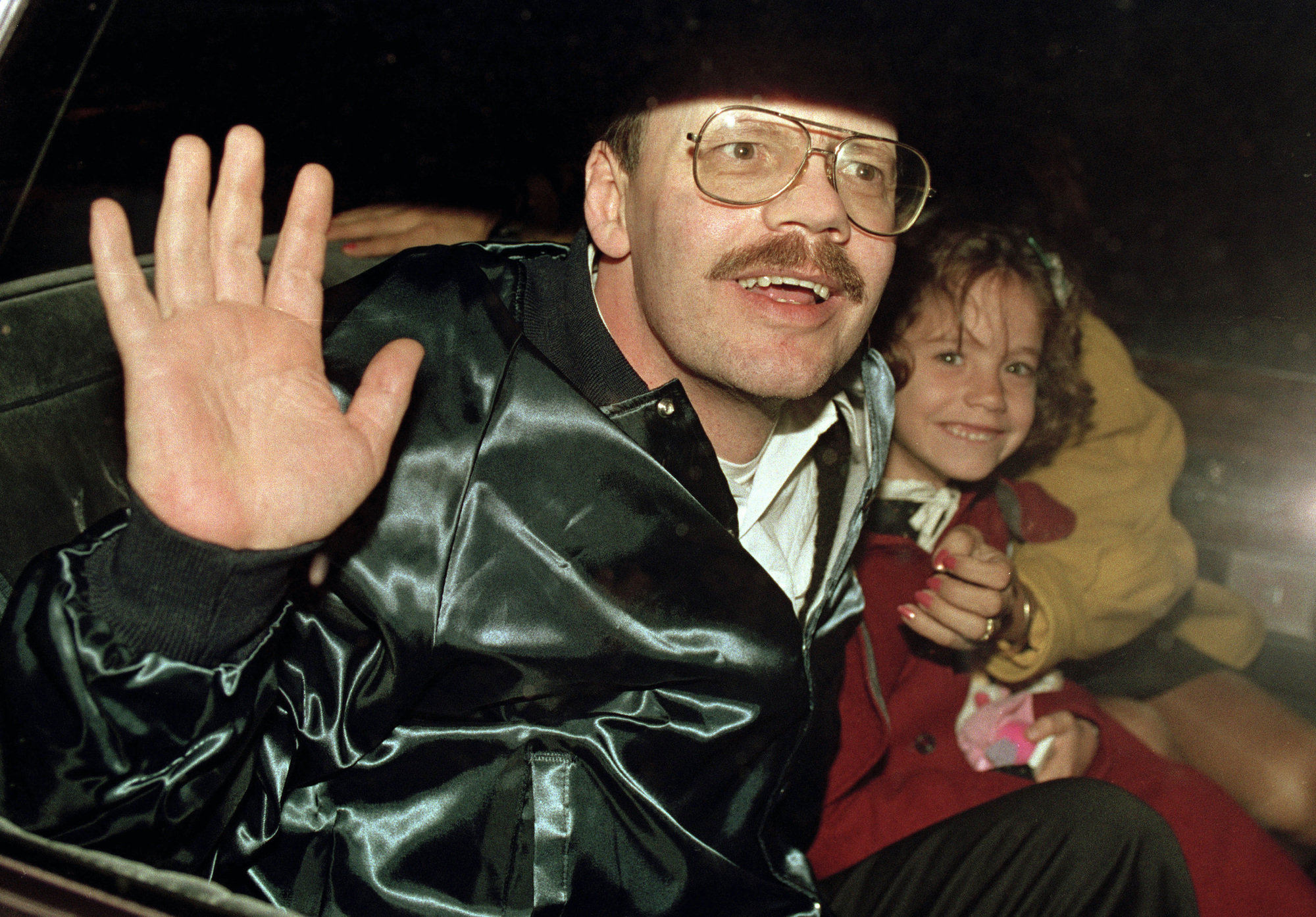
American reporter Terry Anderson, who was held hostage for nearly seven years after being snatched from a street in war-torn Lebanon in 1985, has died aged 76.
The Associated Press correspondent, who chronicled his abduction and torturous imprisonment by Islamic militants in his best-selling 1993 memoir Den Of Lions, died on Sunday at his home in Greenwood Lake, New York, said his daughter, Sulome Anderson.
Mr Anderson died of complications from recent heart surgery, his daughter said.
Julie Pace, senior vice president and executive editor of the AP, said: “Terry was deeply committed to on-the-ground eyewitness reporting and demonstrated great bravery and resolve, both in his journalism and during his years held hostage.
“We are so appreciative of the sacrifices he and his family made as the result of his work.”
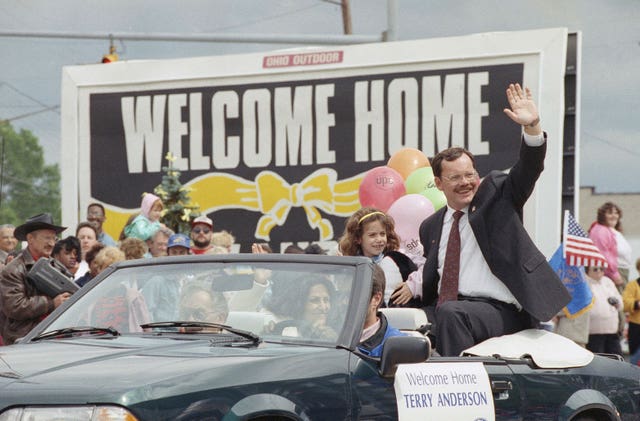
Ms Anderson said of her father: “He never liked to be called a hero, but that’s what everyone persisted in calling him.
“I saw him a week ago and my partner asked him if he had anything on his bucket list, anything that he wanted to do. He said: ‘I’ve lived so much and I’ve done so much. I’m content.'”
After returning to the United States in 1991, Anderson led a peripatetic life, giving public speeches, teaching journalism at several prominent universities and, at various times, operating a blues bar, Cajun restaurant, horse ranch and gourmet restaurant.
He also struggled with post-traumatic stress disorder (PTSD), won millions of dollars in frozen Iranian assets after a federal court concluded that country played a role in his capture, then lost most of it to bad investments. He filed for bankruptcy in 2009.
Upon retiring from the University of Florida in 2015, Anderson settled on a small horse farm in a quiet, rural section of northern Virginia he had discovered while camping with friends.
“I live in the country and it’s reasonably good weather and quiet out here and a nice place, so I’m doing all right,” he said with a chuckle during a 2018 interview with The Associated Press.
In 1985, Anderson became one of several Westerners abducted by members of the Shia Muslim group Hezbollah during a time of war that had plunged Lebanon into chaos.
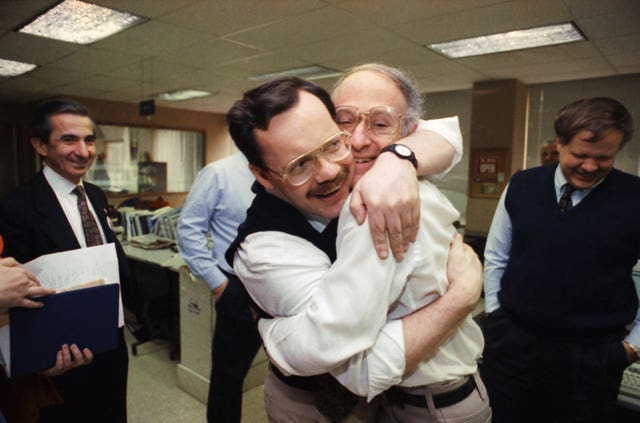
After his release, he returned to a hero’s welcome at AP’s New York headquarters.
Louis D Boccardi, the president and chief executive officer of the AP at the time, recalled that Anderson’s plight was never far from his AP colleagues’ minds.
“The word ‘hero’ gets tossed around a lot but applying it to Terry Anderson just enhances it,” Mr Boccardi said. “His six-and-a-half-year ordeal as a hostage of terrorists was as unimaginable as it was real — chains, being transported from hiding place to hiding place strapped to the chassis of a truck, given often inedible food, cut off from the world he reported on with such skill and caring.”
As the AP’s chief Middle East correspondent, Anderson had been reporting for several years on the rising violence gripping Lebanon as the country fought a war with Israel, while Iran funded militant groups trying to topple its government.
On March 16, 1985, a day off, he had taken a break to play tennis with former AP photographer Don Mell and was dropping Mr Mell off at his home when gun-toting kidnappers dragged him from his car.
He was likely targeted, he said, because he was one of the few Westerners still in Lebanon and because his role as a journalist aroused suspicion among members of Hezbollah.

What followed was nearly seven years of brutality during which he was beaten, chained to a wall, threatened with death, often had guns held to his head and was kept in solitary confinement for long periods of time.
Mr Anderson was the longest held of several Western hostages Hezbollah abducted over the years, including Terry Waite, the former envoy to the Archbishop of Canterbury, who had arrived to try to negotiate Mr Anderson’s release.
By Mr Anderson’s and other hostages’ accounts, he was also their most hostile prisoner, constantly demanding better food and treatment, arguing religion and politics with his captors, and teaching other hostages sign language and where to hide messages so they could communicate privately.
He managed to retain a quick wit and biting sense of humour during his long ordeal. On his last day in Beirut he called the leader of his kidnappers into his room to tell him he’d just heard an erroneous radio report saying he’d been freed and was in Syria.
“I said: ‘Mahmound, listen to this, I’m not here. I’m gone, babes. I’m on my way to Damascus.’ And we both laughed,” he told Giovanna Dell’Orto, author of AP Foreign Correspondents in Action: World War II to the Present.
Mr Anderson’s humour often hid the PTSD he acknowledged suffering for years afterwards. “The AP got a couple of British experts in hostage decompression, clinical psychiatrists, to counsel my wife and myself and they were very useful,” he said in 2018.
“But one of the problems I had was I did not recognise sufficiently the damage that had been done.
“So, when people ask me, you know: ‘Are you over it?’ Well, I don’t know. No, not really. It’s there. I don’t think about it much these days, it’s not central to my life. But it’s there,” he said.
Mr Anderson said his faith as a Christian helped him let go of the anger. And something his wife later told him also helped him to move on: “If you keep the hatred, you can’t have the joy.”
At the time of his abduction, Mr Anderson was engaged to be married and his future wife was six months pregnant with their daughter, Sulome.
The couple married soon after his release but divorced a few years later, and although they remained on friendly terms, Mr Anderson and his daughter were estranged for years.
“I love my dad very much. My dad has always loved me. I just didn’t know that because he wasn’t able to show it to me,” Sulome Anderson told the AP in 2017.
CONNECT WITH US TODAY



Be the first to know the latest news and updates