US and Japan seek UN resolution banning nuclear weapons in outer space
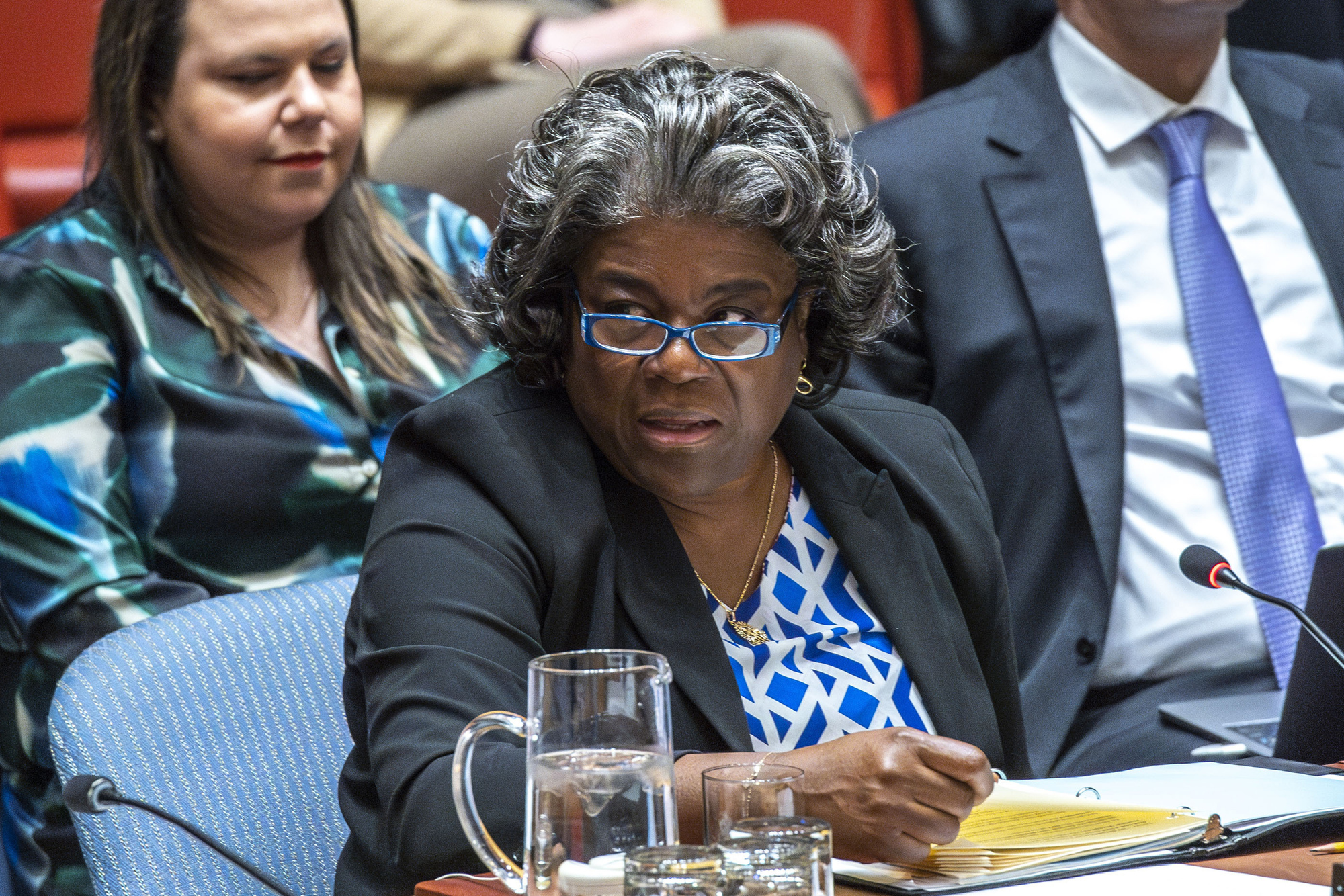
The United States and Japan are sponsoring a UN Security Council resolution calling on all nations not to deploy or develop nuclear weapons in space, the US ambassador has announced.
Linda Thomas-Greenfield told a UN Security Council meeting on Monday that âany placement of nuclear weapons into orbit around the Earth would be unprecedented, dangerous, and unacceptableâ.
The announcement that the US and Japan had circulated a resolution follows White House confirmation last month that Russia has obtained a âtroublingâ anti-satellite weapon capability, although such a weapon is not operational yet.
Russian President Vladimir Putin declared later that Moscow has no intention of deploying nuclear weapons in space, claiming that the country has only developed space capabilities similar to those of the US.
The Outer Space Treaty ratified by about 114 countries including the United States and Russia prohibits the deployment of ânuclear weapons or any other kinds of weapons of mass destructionâ in orbit or the stationing of âweapons in outer space in any other mannerâ.
Japanâs foreign minister Yoko Kamikawa, who chaired the council meeting, said that even during âthe confrontational environmentâ of the Cold War, the rivals agreed to ensure that outer space remained peaceful.
That prohibition on putting any weapons of mass destruction into orbit must be upheld today, she said.
Ms Thomas-Greenfield said all parties to the treaty must commit to the ban on nuclear and other destructive weapons, âand we must urge all member states who are not yet party to it to accede to it without delayâ.
She said the United States looks forward to engaging with the other members of the 15-nation Security Council âto forge consensus around this textâ.
Russiaâs deputy UN ambassador Dmitry Polyansky said Moscowâs initial impression is that the proposed resolution is âyet another propaganda stunt by Washingtonâ, âvery politicisedâ and âdivorced from realityâ.
He criticised the text, saying the wording was not worked out by experts nor discussed at specialised international platforms such as the UN Conference on Disarmament or the UN Committee on Outer Space.
Outside the Security Council, Ms Thomas-Greenfield said the US is interested in engaging with parties to the treaty âto explore ways to increase confidence in complianceâ with the ban on nuclear weapons and other weapons of mass destruction in outer space.
âThe United States has already begun considering approaches to help ensure that countries cannot deploy nuclear weapons in orbit undetected, and we intend to engage with other states parties as our ideas evolve,â she said.
Ms Thomas-Greenfield also reiterated to the council the United States is willing to engage Russia and China right now, without preconditions, on bilateral arms control issues.
But Russiaâs Mr Polyansky accused the West of âtrying to inflict strategic defeat on my countryâ.
He said: âAny interaction will only be possible if the United States and Nato review their anti- Russian course, and when they show that they are ready to participate in comprehensive dialogue, taking into account all of those strategic stability factors and removing all of the concerns that we have about our security.â
UN Secretary General Antonio Guterres briefed the council, saying âgeopolitical tensions and mistrust have escalated the risk of nuclear warfare to its highest point in decadesâ.
He said the movie Oppenheimer about Robert Oppenheimer, who directed the US project during the Second World War that developed the atomic bomb, âbrought the harsh reality of nuclear doomsday to vivid life for millions around the worldâ.
âHumanity cannot survive a sequel to Oppenheimer,â the UN chief said.