India launches spacecraft on mission to the moon
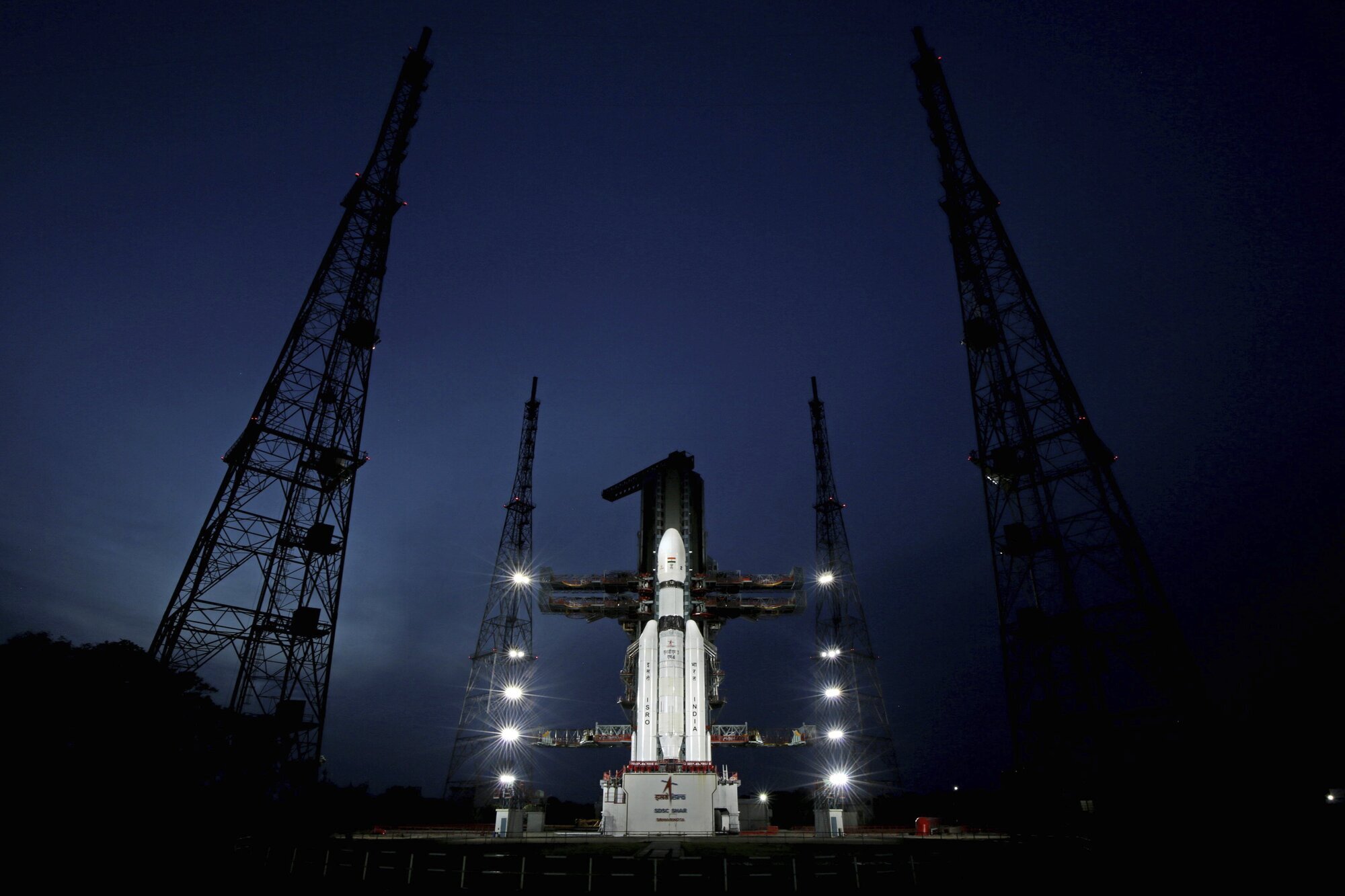
India has launched a spacecraft into space on a mission to the far side of the moon in a follow-up bid to its failed effort nearly four years ago to land a rover softly on the lunar surface.
Chandrayaan-3, the word for “moon craft” in Sanskrit, blasted off from a launch pad in Sriharikota with an orbiter, a lander and a rover.
It will embark on a journey lasting slightly over a month before landing on the moon’s surface later in August.
A successful landing would make India the fourth country — after the US, the Soviet Union and China — to achieve the feat.
LIFTOFF! The LVM3 M4 has lit its side boosters and #Chandrayaan3 is off to the moon
— ISRO Spaceflight (@ISROSpaceflight) July 14, 2023
The six-wheeled lander and rover module of Chandrayaan-3 is configured with payloads that would provide data to the scientific community on the properties of lunar soil and rocks, including chemical and elemental compositions, said Dr Jitendra Singh, junior minister for science and technology.
India’s previous attempt to land a robotic spacecraft near the moon’s little-explored south pole ended in failure in 2019.
It entered the lunar orbit but lost touch with its lander which crashed while making its final descent to deploy a rover to search for signs of water.
According to a failure analysis report submitted to the Indian Space Research Organisation (ISRO), the crash was caused by a software glitch.
The £100 million mission in 2019 was intended to study permanently shadowed moon craters which are thought to contain water deposits and were confirmed by India’s Chandrayaan-1 mission in 2008.
ISRO director Sreedhara Panicker Somanath said the main objective of the mission this time is a safe and soft landing on the moon.
He said the Indian space agency has perfected the art of reaching the moon, “but it is the landing that the agency is working on”.


CONNECT WITH US TODAY



Be the first to know the latest news and updates