Biden tells Americans to have confidence in banks after collapse
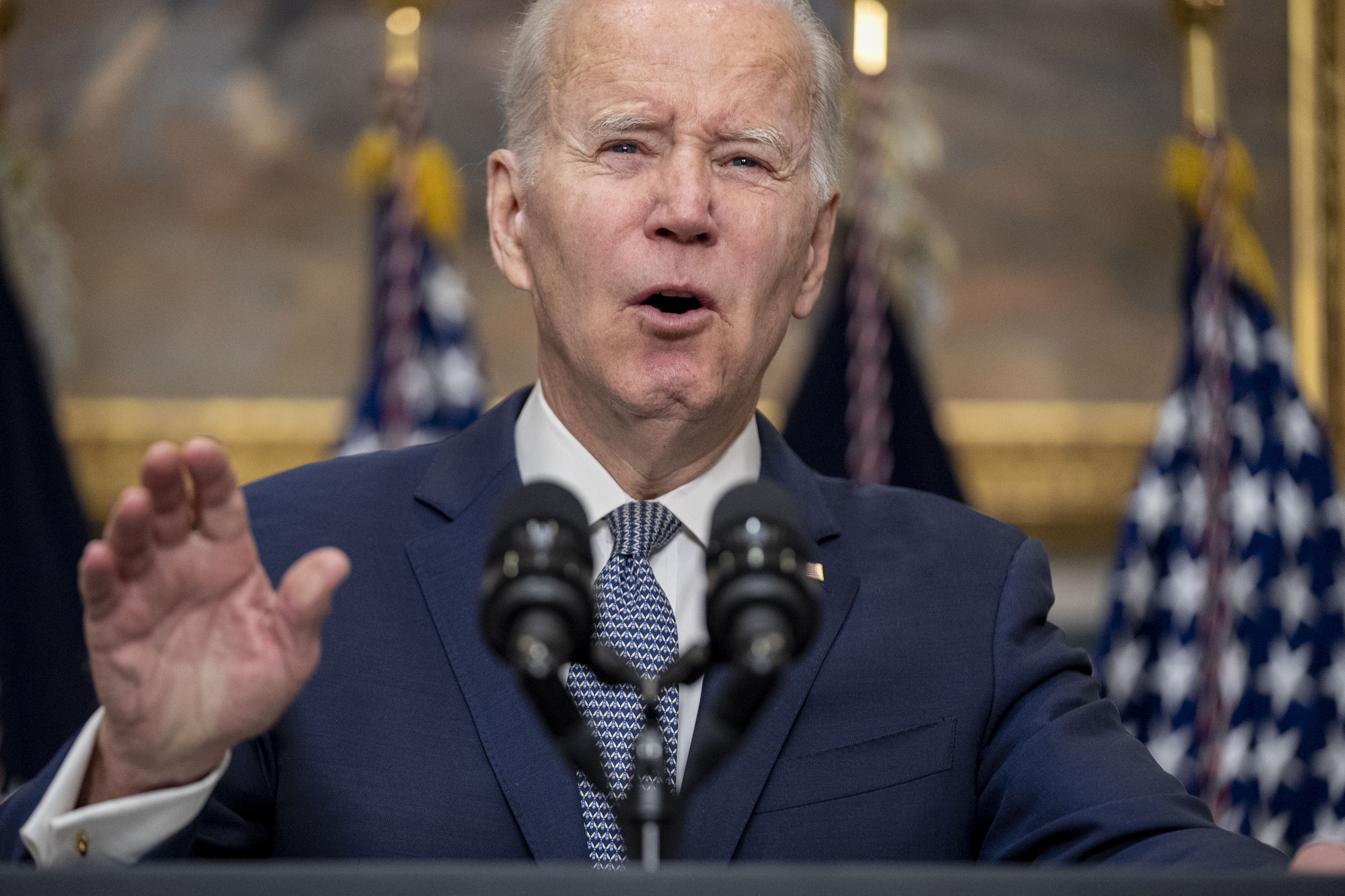
President Joe Biden has told US residents that the nation’s financial systems are sound, following the stunning collapse of two banks that prompted fears of a broader upheaval.
“American can have confidence that the banking system is safe,” the US leader said from the Roosevelt Room before a trip to the West Coast.
“Your deposits will be there when you need them.”
US regulators closed the Silicon Valley Bank on Friday after it experienced a traditional bank run, where depositors rushed to withdraw their funds all at once.
It is the second largest bank failure in American history, behind only the 2008 failure of Washington Mutual.
In a sign of how fast the financial bleeding was occurring, regulators announced that New York-based Signature Bank had also failed.
The president, speaking from the Roosevelt Room shortly before US markets opened, said he would seek to hold those responsible to account, and pressed for better oversight and regulation of larger banks.
He also promised no losses would be borne by taxpayers.
Governments in the US and UK both took extraordinary steps to prevent a potential banking crisis.
American regulators worked through the weekend to find a buyer for Silicon Valley Bank, which had more than $200 billion in assets and catered to tech start-ups, venture capital firms, and well-paid technology workers.
While those efforts appeared to have failed, officials assured all of the bank’s customers that they would be able to access their money on Monday.
The Bank of England and UK Treasury said they had facilitated the sale of the Silicon Valley bank’s London-based subsidiary to HSBC, Europe’s biggest bank, ensuring the security of $8.1 billion of deposits.
The assurances came as part of an expansive emergency lending program intended to prevent a wave of bank runs that would threaten the stability of the banking system and the economy as a whole.
Mr Biden also said the managers of the banks should be fired. “If the bank is taken over by the FDIC (Federal Deposit Insurance Corporation), the people running the bank should not work there any more,” he said.
With more than $110 billion in assets, Signature Bank is the third-largest bank failure in US history. Another beleaguered bank, First Republic Bank, announced on Sunday that it had bolstered its financial health by gaining access to funding from the Fed and JPMorgan Chase.
The developments left markets jittery as trading began on Monday. The Asian and European markets fell but not dramatically, and US futures were down.
In an effort to shore up confidence in the banking system, the US Treasury Department, US Federal Reserve and FDIC said all Silicon Valley Bank clients would be protected and able to access their money.
“This step will ensure that the US banking system continues to perform its vital roles of protecting deposits and providing access to credit to households and businesses in a manner that promotes strong and sustainable economic growth,” the agencies said in a joint statement.
Under the plan, depositors at Silicon Valley Bank and Signature Bank, including those whose holdings exceed the $250,000 insurance limit, will be able to access their money on Monday.
The UK also moved quickly, working throughout the weekend to arrange the sale of Silicon Valley Bank UK, the California bank’s British arm, for the nominal sum of one pound.
While the bank is small, with less than 0.2% of UK bank deposits according to central bank statistics, it had a large role in financing technology and biotech start-ups that the British government is counting on to fuel economic growth.
Chancellor Jeremy Hunt said some of the country’s leading tech companies could have been “wiped out”.
“When you have very young companies, very promising companies, they’re also fragile,” Mr Hunt told reporters, explaining why authorities moved so quickly.
“They need to pay their staff and they were worried that as of 8am this morning, they might literally not be able to access their bank account.”
He stressed that there was never a “systemic risk” to Britain’s banking system.
Silicon Valley Bank began its slide into insolvency when it was forced to dump some of its treasuries at at a loss to fund its customers’ withdrawals. Under the Fed’s new programme, banks can post those securities as collateral and borrow from the emergency facility.
The US Treasury has set aside $25 billion to offset any losses incurred. Fed officials said, however, that they do not expect to have to use any of that money, given that the securities posted as collateral have a very low risk of default.
Though Sunday’s steps marked the most extensive government intervention in the banking system since the 2008 financial crisis, the actions are relatively limited compared with what was done 15 years ago.
The two failed banks themselves have not been rescued, and taxpayer money has not been provided to them.
Some prominent Silicon Valley executives feared that if Washington did not rescue their failed bank, customers would make runs on other financial institutions in the coming days. Stock prices plunged over the last few days at other banks that cater to technology companies, such as First Republic and PacWest Bank.
Among the bank’s customers are a range of companies from California’s wine industry, where many wineries rely on Silicon Valley Bank for loans, and technology start-ups devoted to combating climate change.