Yellen discusses Russia oil price cap as Chancellor Nadhim Zahawi visits US
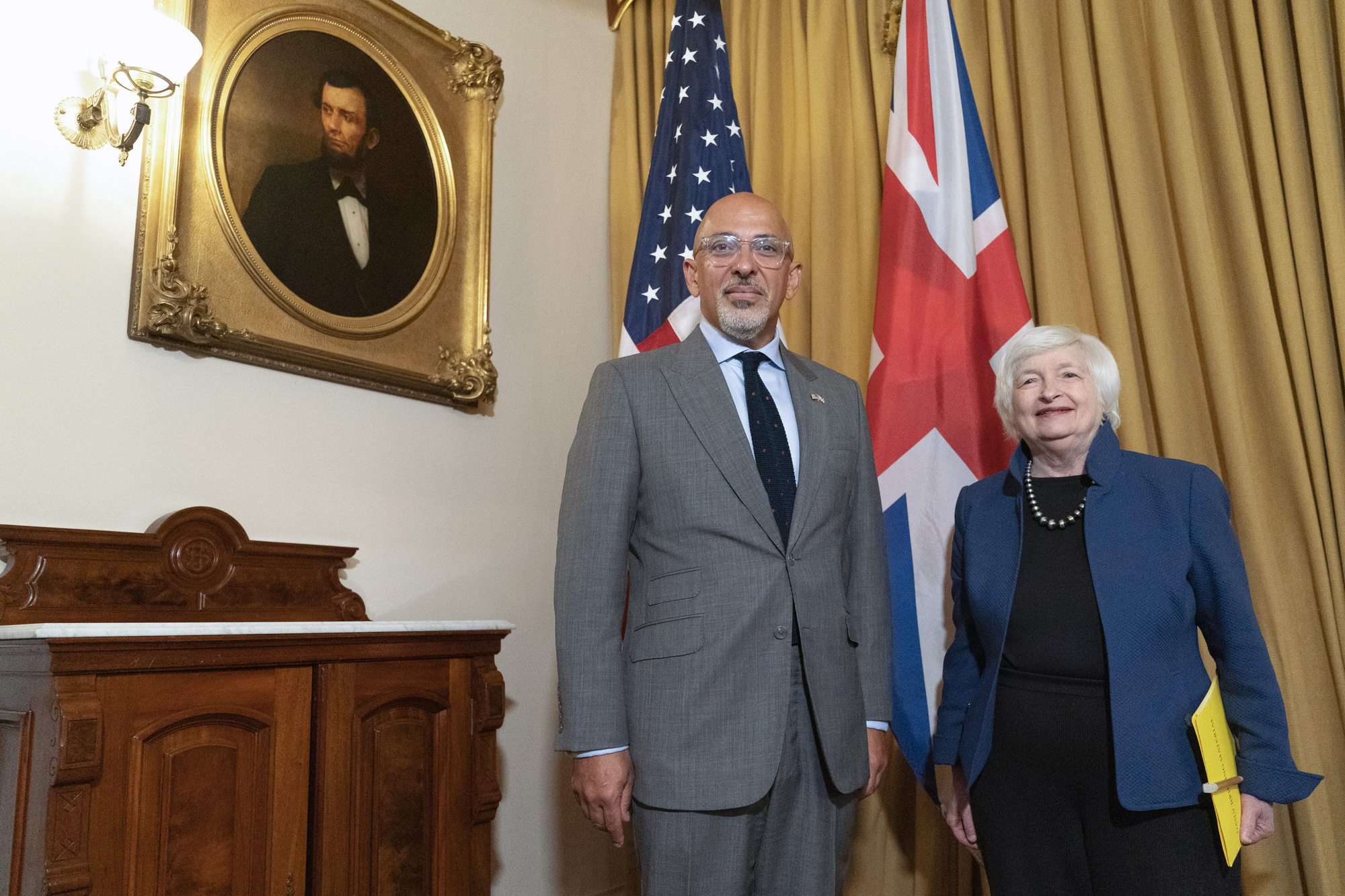
US treasury secretary Janet Yellen, right, with the United Kingdom’s Chancellor Nadhim Zahawi at the Treasury Department in Washington (Jacquelyn Martin/AP)
US Treasury Secretary Janet Yellen has warned that a failure to place a price cap on Russian oil would hurt the global economy.
“Without a price cap, we face the threat of a global energy price spike if the majority of Russian energy production gets shut in,” Ms Yellen said at the start of a meeting with her British counterpart, Chancellor Nadhim Zahawi.
The European Union has decided to ban nearly all oil from Russia by the end of the year.
It will also ban insuring and financing the maritime transport of Russian oil to other countries.

Unless a price cap is implemented, prices will almost certainly spike.
The UK and other Group of Seven countries tentatively agreed in June to pursue a ceiling on the price of Russian oil.
Getting as many other nations as possible to agree to join a buyers’ cartel has been one of the US Treasury’s main objectives as it seeks to curb Russia’s ability to finance its war in Ukraine.
Ms Yellen said there has been “substantial progress” towards making the price cap a reality and she was optimistic it would happen.
Mr Zahawi, who became Chancellor of the Exchequer on July 5, said Britain intends to “influence key nations” to join the plan.
The Kremlin’s main pillar of financial revenue – oil – has kept the Russian economy afloat despite export bans, sanctions and the freezing of central bank assets.
Limiting the price would reduce the Kremlin’s income from oil, and a cap would encourage the country to continue producing, US Treasury officials have said.
World leaders fear that Russia could, however, constrict its energy supply in retaliation, causing prices to spike.

Ms Yellen said a price cap would also limit the impact of higher oil prices on inflation in consuming countries, with the cost of petrol and diesel still squeezing consumers and businesses hard, especially in Europe.
To be effective, participating countries would have to collectively agree to purchase the oil at a lower-than-market price.
China and India, two countries that have largely resisted signing on to efforts to punish the Kremlin and have maintained business relationships with Russia during the war, will need to get on board.
Mr Zahawi said “there is obviously some more to be done and we’re ready to work in particular to persuade more countries to support the measure”, citing India, Turkey, South Africa and others as possible participants.
US Treasury leaders have been visiting allies and neutral parties in the war to call for their participation, even if informally.
Ms Yellen travelled to the Indo-Pacific in July and Treasury deputy secretary Wally Adeyemo met with government ministers and business leaders in India in mid-August, in part to push for the price cap.
The Biden administration is keeping a close eye on the progress of the talks.
“We believe it’s not only an idea worth exploring, it’s an idea worth implementing,” John Kirby, a national security spokesman, told reporters on Wednesday.
“And we look forward to hearing what the finance ministers say at the end of the week.”
CONNECT WITH US TODAY



Be the first to know the latest news and updates