Battle of Sievierodonetsk rages in Ukraine as Russia is blamed for food crisis
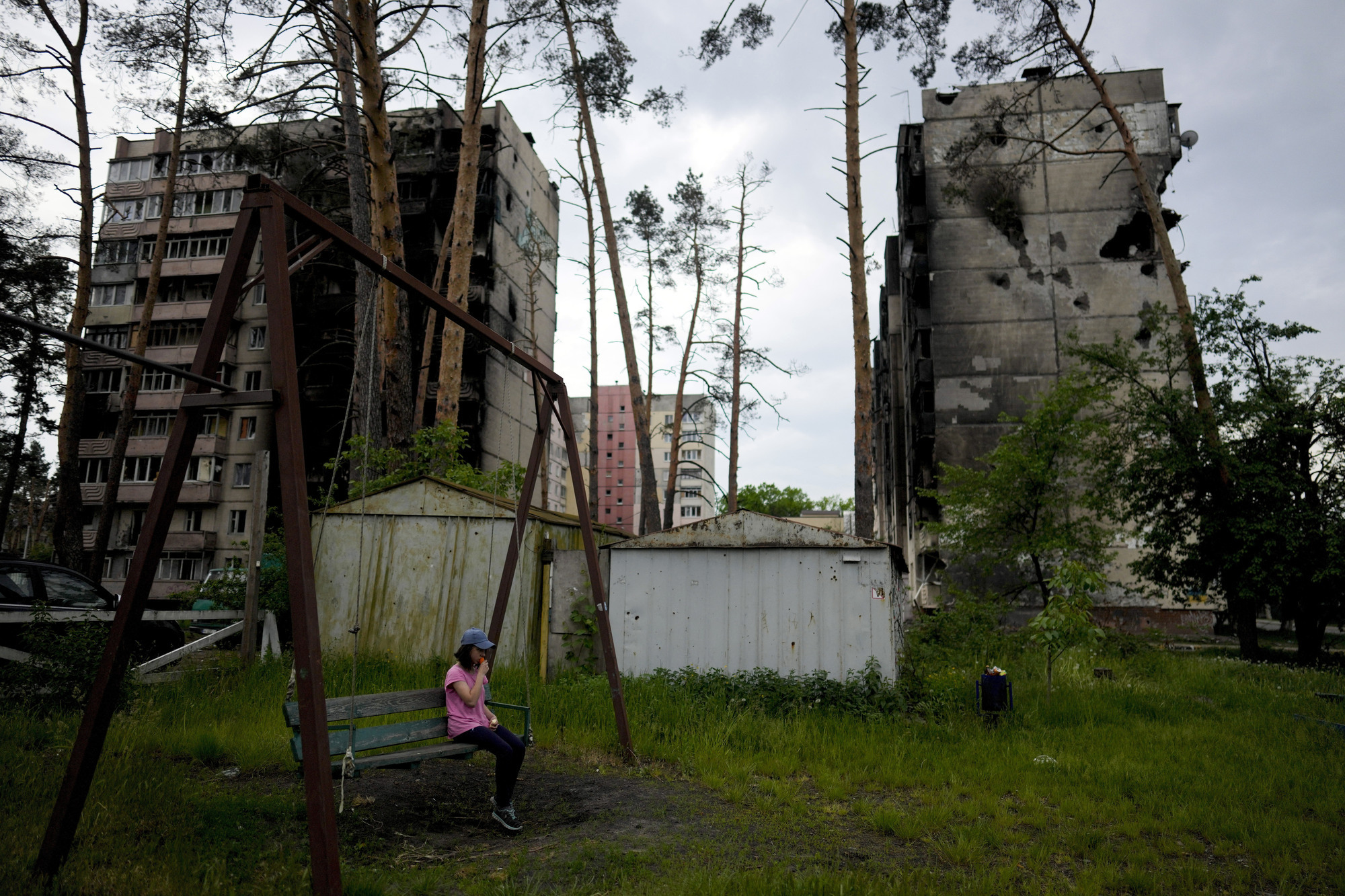
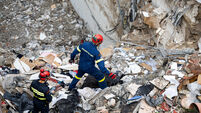
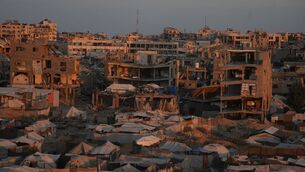
Russian troops have pushed deeper into a key east Ukrainian city, fighting street by street in a battle that has left Sievierodonetsk in ruins.
As Moscowâs advance there increases in intensity, Russian forces have also shelled parts of Ukraineâs north east, while the struggle continues for control of a southern region.
It comes as Ukrainian President Volodymyr Zelenskyy says Russia has prevented the export of 22 million tonnes of Ukrainian grain, contributing to a growing global food crisis.
Meanwhile, in a bid to pressure Moscow to end the war, the European Union (EU) has agreed to embargo most Russian oil imports by the end of the year.
Military analysts have described the fight for Sievierodonetsk as part of a race against time for the Kremlin.
The city is important to Russian efforts to quickly complete the capture of the eastern industrial region of the Donbas before more western arms arrive to bolster Ukraineâs defence.
Moscow-backed separatists already held territory in the region and have been fighting Ukrainian troops for eight years.
âThe Kremlin has reckoned that it canât afford to waste time and should use the last chance to extend the separatist-controlled territory because the arrival of western weapons in Ukraine could make it impossible,â Ukrainian military analyst Oleh Zhdanov said.
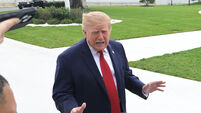
In a potential setback for Ukraine, US President Joe Biden appeared to dismiss reports that the US is considering sending long-range rocket systems to the country.
But the EU has approved additional sanctions on Russia.
As part of a long-delayed financial support package to help Ukraine, EU leaders agreed on Monday to embargo most Russian oil imports into the 27-nation bloc by the end of 2022.
The agreement came after Mr Zelenskyy asked the EU to target Russian oil exports so Moscow âfeels the price for what it is doing against Ukraineâ.
The embargo covers Russian oil brought in by sea, allowing a temporary exemption for imports delivered by pipeline.
EU Council president Charles Michel said the agreement covers more than two-thirds of oil imports from Russia.
Ursula von der Leyen, the head of the EUâs executive branch, said the move will âeffectively cut around 90% of oil imports from Russia to the EU by the end of the yearâ.
In an effort to punish and divide the West over its support for Ukraine, Russia has cut off natural gas to a handful of European countries.
In its latest move, Russian state gas giant Gazrpom said it will halt gas supplies to Dutch gas trader GasTerra starting from Tuesday.
Russia has also ramped up its actions on the battlefield.
In his nightly video address, Mr Zelenskyy said the situation in the Donbas remains âextremely difficultâ as Russia has put its armyâs âmaximum combat powerâ there.
The Ukrainian military said Russian forces reinforced their positions outside Sievierodonetsk, a city 90 miles south of the Russian border in an area that is the last pocket of Ukrainian government control in Luhansk.
Sievierodonetsk mayor Oleksandr Striuk said the city has been âcompletely ruinedâ.
Artillery fire has destroyed critical infrastructure and damaged 90% of the buildings and power and communications have been largely cut to a city that was once home to 100,000 people, he said.
âThe number of victims is rising every hour but we are unable to count the dead and the wounded amid the street fighting,â Mr Striuk told The Associated Press in a phone interview, adding that Moscowâs troops had advanced a few more blocks toward the city centre.
He said only about 12,000 to 13,000 residents remain, sheltering in basements and bunkers to escape the Russian bombardment.
The situation recalls the siege of Mariupol, which trapped residents and led to some of the worst suffering of the war.
More than 20,000 are feared dead in Mariupol.
Mr Striuk estimated that 1,500 civilians have died in Sievierodonetsk since the war began from Russian attacks and from dire conditions that include a lack of medicine and medical treatment.
A 32-year-old French journalist, Frédéric Leclerc-Imhoff, died on Monday near Sievierodonetsk when he was hit by shrapnel from shelling while covering Ukrainian evacuations, according to his employer, French broadcaster BFM TV.
Mr Zelenskyy said Mr Leclerc-Imhoff was the 32nd media worker to die in Ukraine since Russia invaded on February 24.
Governors of the Luhansk and Donetsk regions â which make up the Donbas â said six civilians, including the journalist, were killed in shelling.
Authorities in Kharkiv, Ukraineâs second-largest city, also reported one person has died in shelling there.
Mr Zelensky said Russian troops have also shelled the Sumy region near the Russian border and the struggle continues for the southern Kherson region, which has been largely controlled by Russian troops since the early days of the war.
Russia-installed officials there said they would ask the Kremlin to annex it, while Kyiv, in turn, has vowed to liberate the region.
The Russian advance in Sievierodonetsk and Lysychansk on either side of the strategically important Siverskiy Donetsk River is part of an all-out push, said Mr Zhdanov, the Ukrainian military analyst.
He said the intensity of the latest fighting and the influx of Russian troops have surprised Ukrainians, who are trying to hold out until more weapons arrive.
On Monday, Mr Biden told reporters there are no plans for the US to send long-range rocket systems to Ukraine, amid reports the move is being considered.
Dmitry Medvedev, the deputy head of Russiaâs Security Council, called it a âreasonableâ decision.
He said that âotherwise, if our cities come under attack, the Russian armed forces would fulfil their threat and strike the centres where such criminal decisions are madeâ.
Mr Medvedev added that âsome of them arenât in Kyivâ.
In the Kherson region, the Russia-installed deputy head of the regional administration, Kirill Stremousov, told Russiaâs Tass state news agency that grain from last yearâs harvest is being delivered to Russian buyers, adding that âobviously there is a lot of grain hereâ.
Russia has pressed the West to lift sanctions against it as it seeks to shift the blame for the growing food crisis, which has led to skyrocketing prices in Africa.
Mr Zelenskyy accused Moscow of âdeliberately creating this problemâ and said Russiaâs claim that sanctions are to blame is a lie.
He said sanctions have not blocked Russian food and accused Russia of stealing at least 500,000 tonnes of Ukrainian grain.