Putin calls on Ukrainian military to seize power to better negotiate with Russia
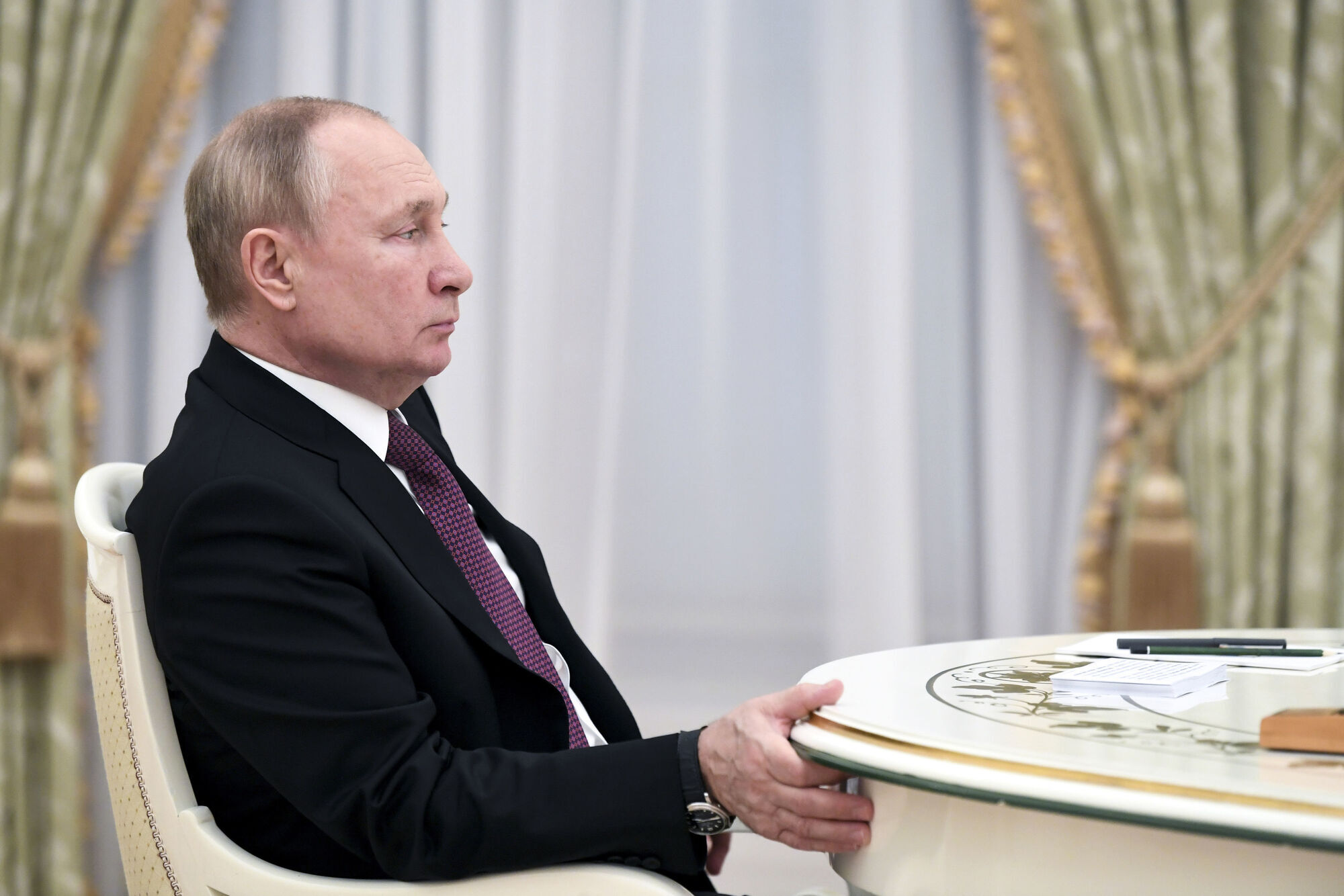
Russian President Vladimir Putin. Picture: Pavel Bednyakov/Sputnik, Kremlin Pool Photo via AP
Russian President Vladimir Putin has called on the Ukrainian military to seize power in order to better negotiate with Russia.
In a video address, Mr Putin called the Ukrainian Government a “gang of drug addicts and neo-Nazis who have has lodged itself in Kyiv and taken hostage the entire Ukrainian people.”
"I once again appeal to the military personnel of the armed forces of Ukraine: do not allow neo-Nazis and (Ukrainian radical nationalists) to use your children, wives and elders as human shields," he said.
A visibly angry Putin went on to urge the Ukrainian armed forces to "take power into your own hands" saying it would be easier for them to reach an agreement with Russia if they did so.
Later in his speech, Putin repeated a claim that the Ukrainian leadership and army had engaged in “genocide” in the Donbas region of eastern Ukraine.
"We are fighting with nationalist groups that are directly responsible for the genocide of the Donbas and the bloodshed of peaceful civilians in the two republics."
He added that all Russian servicemen in Ukraine were acting "professionally and heroically."
Just minutes ago the Council of Europe's committee of ministers voted to suspend Russia over its attack on Ukraine.
The motion, brought by Ukraine and Poland, was approved by 42 out of 47 member states.
The decision adopted today means that the Russian Federation remains a member of the Council of Europe and party to the relevant Council of Europe conventions, including the European Convention on Human Rights.
Ukrainian capital under threat
Meanwhile, Russian troops are now bearing down on Ukraine’s capital, with gunfire and explosions resonating ever closer to the government quarter, in an invasion of a democratic country that has fuelled fears of wider war in Europe.
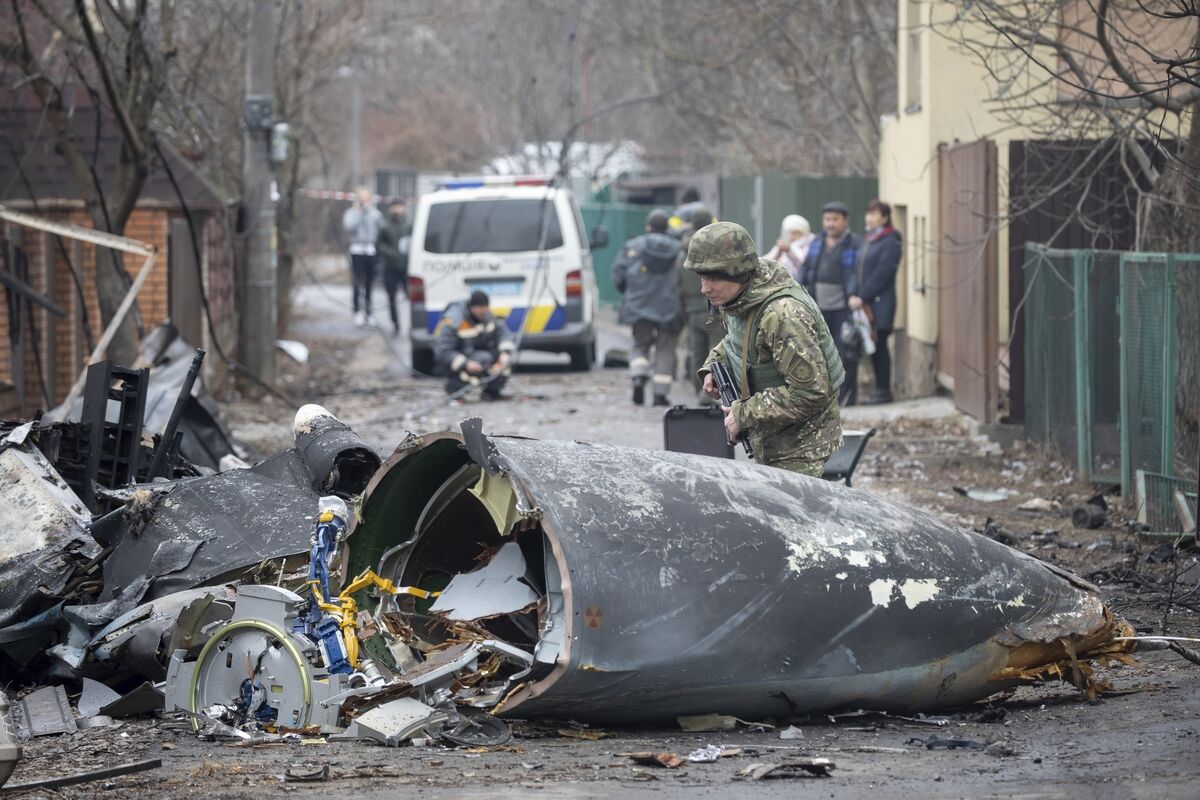
The US and other global powers slapped ever-tougher sanctions on Russia as the invasion reverberated through the world’s economy and energy supplies, threatening to further squeeze ordinary households.
UN officials said they were preparing for millions to flee Ukraine, sporting authorities sought to punish Russia on global playing fields, and Nato leaders called an urgent meeting to discuss how far they can go to challenge Mr Putin without engaging Russian forces in direct war.
Day two of Russia’s invasion focused on the Ukrainian capital, where reporters heard explosions starting before dawn and gunfire was reported in several areas.
Ukrainian authorities used armoured vehicles and snowploughs to defend Kyiv and limit movement, and said Russian spies were seeking to infiltrate the city.
Russia’s military said it had seized a strategic airport outside Kyiv that would allow it to quickly build up forces to take the capital.
It claimed to have already cut the city off from the west — the direction most of those escaping the invasion are heading in, with lines of cars snaking towards the Polish border.
Intense fire broke out on a bridge across the Dnipro River dividing the eastern and western sides of Kyiv, with about 200 Ukrainian forces establishing defensive positions and taking shelter behind their armoured vehicles and later under the bridge.
Ukrainian officials reported at least 137 deaths on the Ukrainian side and claimed hundreds on the Russian one. Russian authorities released no casualty figures.
UN officials reported 25 civilian deaths, mostly from shelling and air strikes, and said 100,000 people were believed to have left their homes and estimated up to four million could flee if the fighting escalates.
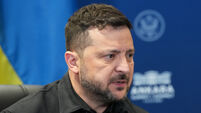
Ukrainian President Volodymyr Zelensky pleaded with Moscow to hold talks, and with western powers to act faster to cut off Russia’s economy and provide military help.
“When bombs fall on Kyiv, it happens in Europe, not just in Ukraine,” he said. “When missiles kill our people, they kill all Europeans.”
His whereabouts were kept secret after he told European leaders he was number one on Russia’s list of targets.
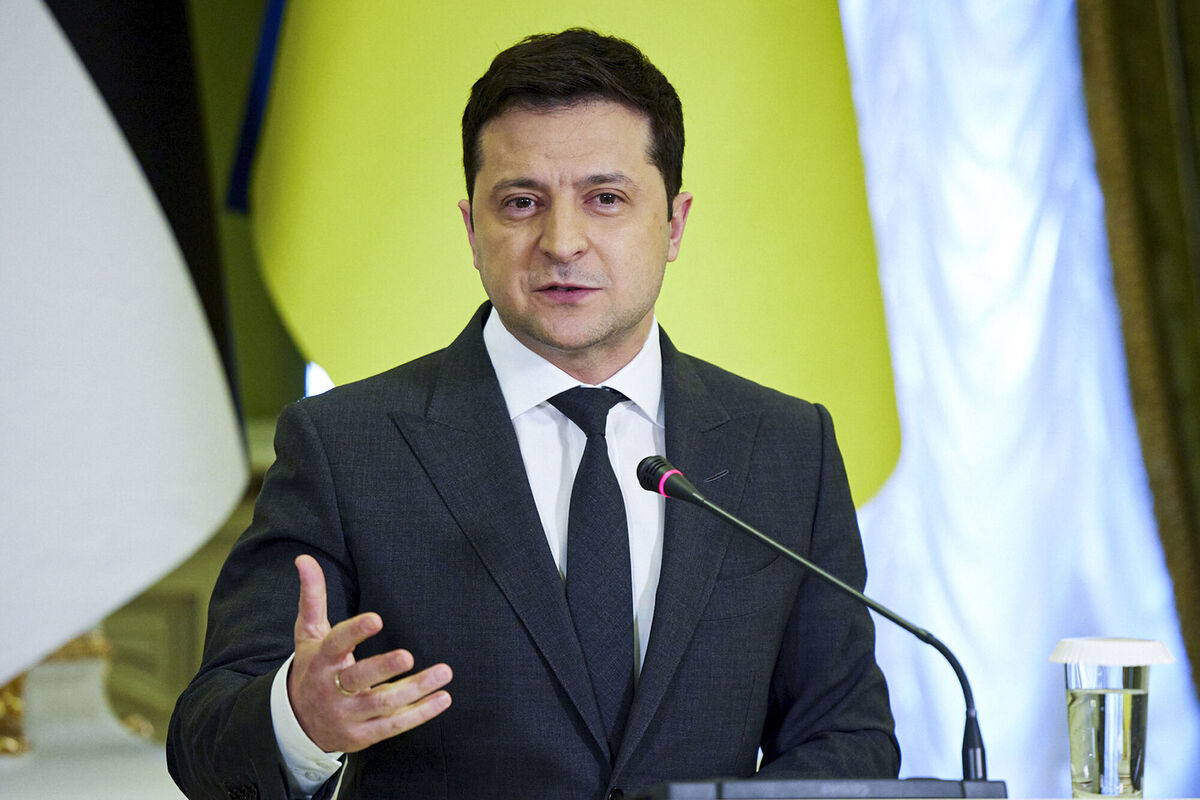
He also offered to negotiate on one of Mr Putin’s key demands: that Ukraine declare itself neutral and abandon its ambition of joining Nato.
The Russian president’s spokesman said the Kremlin could consider the idea, but foreign minister Sergey Lavrov suggested it may be too late, saying Mr Zelensky had “missed the opportunity” to discuss a non-aligned status for Ukraine when Mr Putin previously proposed it.
After denying for weeks that he planned to invade, Mr Putin argued that the West left him no choice by refusing to negotiate on his security demands.
The autocratic leader has not said what his ultimate plans for Ukraine are, but Mr Lavrov gave a hint, saying on Friday: “We want to allow the Ukrainian people to determine its own fate.”
Mr Putin’s spokesman Dmitry Peskov said Russia recognises Mr Zelensky as Ukraine’s president, but would not say how long the Russian military operation could last.
Mr Zelensky appealed to global leaders for even more severe sanctions than the ones imposed by western allies and for defence assistance.
“If you don’t help us now, if you fail to offer a powerful assistance to Ukraine, tomorrow the war will knock on your door,” said the leader, who cut diplomatic ties with Moscow, declared martial law and ordered a full military mobilisation that would last 90 days.
The invasion began early on Thursday with a series of missile strikes on cities and military bases, and quickly followed with a multi-pronged ground assault that rolled troops in from several areas in the east, from the southern region of Crimea, which Russia annexed in 2014, and from Belarus to the north.
After Ukrainian officials said they lost control of the decommissioned Chernobyl nuclear power plant, scene of the world’s worst nuclear disaster, Russia said it was working with the Ukrainians to secure the plant.
As western leaders rushed to condemn and punish Russia, US President Joe Biden announced new sanctions that will target Russian banks, oligarchs, state-controlled companies and hi-tech sectors, saying Mr Putin “chose this war” and had exhibited a “sinister” view of the world in which nations take what they want by force.
He added that the measures were designed not to disrupt global energy markets. Russian oil and natural gas exports are vital energy sources for Europe.


CONNECT WITH US TODAY



Be the first to know the latest news and updates