Belarus leader criticises EU for refusing to hold talks on migrants
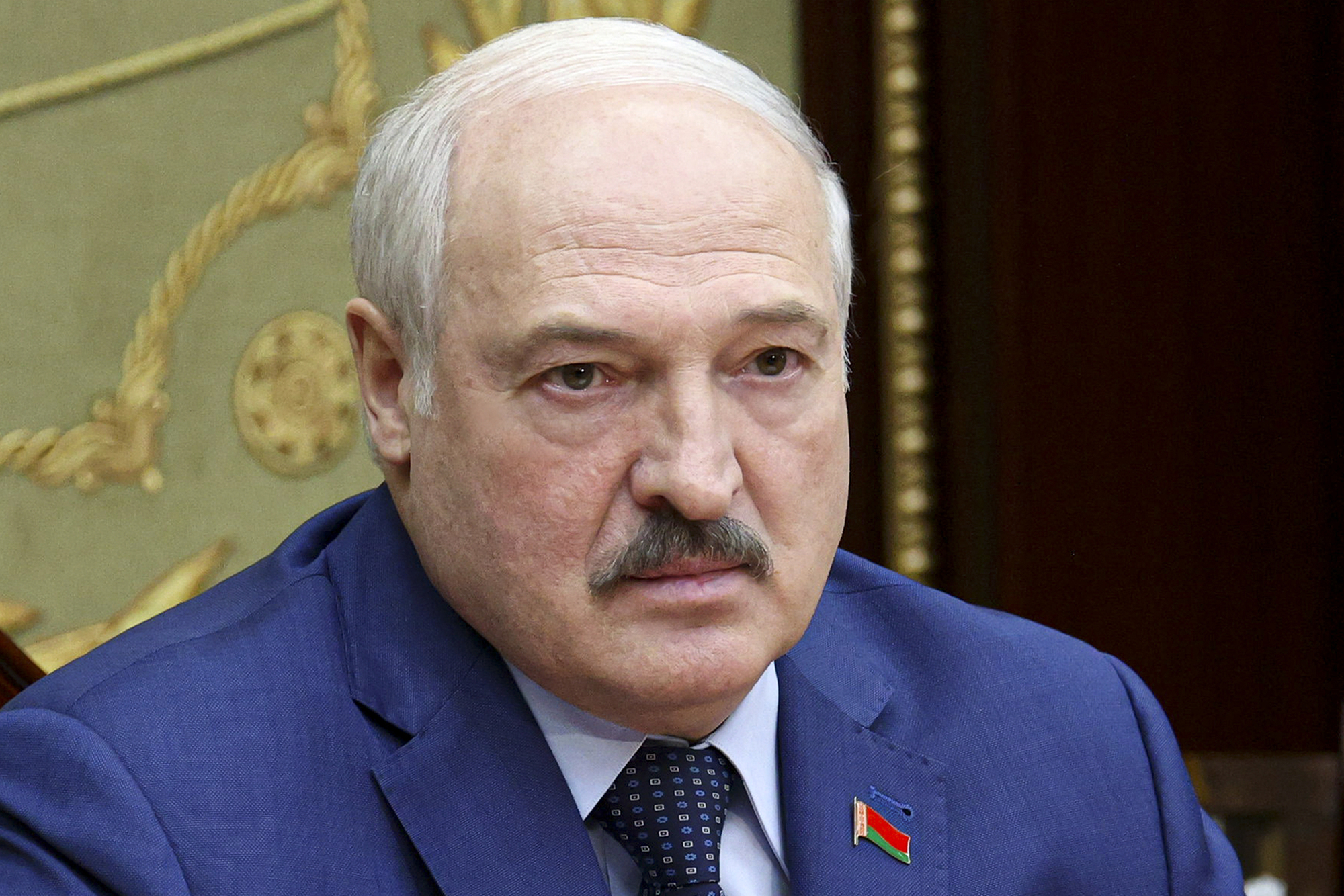
The president of Belarus has criticised the European Union for its refusal to hold talks on the influx of migrants on the country’s border with Poland.
Alexander Lukashenko urged Germany to accommodate about 2,000 migrants who had remained on the border with Poland and condemned EU officials for refusing to negotiate an end to the standoff.
“We must demand that the Germans take them,” Mr Lukashenko said at a meeting with officials.
He charged that German chancellor Angela Merkel promised him that the EU would deal with the issue when they spoke by phone earlier this month.

“I’m still waiting for the EU to give us a response about 2,000 refugees,” Mr Lukashenko said. “They haven’t even contacted us.”
EU spokesman Peter Stano said the bloc had been “in touch with a number of Belarussian interlocutors”, adding that it was looking into the possibility of holding talks with UN agencies and Belarussian officials at a technical expert level on how to help facilitate the repatriation of those stuck in Belarus.
The EU has accused Mr Lukashenko’s government of orchestrating the migration surge on its eastern flank as a “hybrid attack” in retaliation for the bloc’s sanctions over the crackdown by Belarusian authorities on domestic protests. Belarus denies the charge.
German foreign minister Heiko Maas again denounced the “cynical misuse of migrants” by Mr Lukashenko’s government.
Poland is pushing the migrants back, saying it is protecting the border for all of Europe. It has received strong declarations of support from the EU, Nato and the US.

A few migrants have died in the damp forests straddling the border. Others have abandoned hopes of reaching Europe and have been flown back to their home countries in recent days.
Humanitarian organisations and Poland’s influential Roman Catholic Church have been pressing to be allowed to bring aid to the stranded migrants, and non-governmental organisations in Poland have arranged charity collections.
Poland’s Border Guard spokeswoman Anna Michalska said on Monday that there had been more than 300 attempts by migrants to force the razor-wire border fence into the EU on Sunday. Most were prevented, while about 60 people who got through were turned back, she said.
In one case, a group of around 150 “aggressive foreigners” tried to cross, aided by Belarus forces who used laser and electric torch lights to blind Polish border guards, she added.
Ms Michalska said that Poland was planning return flights for hundreds of Iraqi migrants now staying in the country’s guarded centres for foreigners.

She said that out of about 1,900 migrants staying in these centres, more than 1,200 were Iraqis. About 700 of them had applied for international protection and were waiting for a decision about whether they would be able to stay in the EU. Poland would like to fly the others back.
Ms Michalska said Poland was seeking permission from Baghdad to fly back the first group of some 80 Iraqis in the coming days, on a chartered flight. Around 20 of them had received deportation decisions.
“We are working with the Iraqi side that needs to agree to receive its citizens back,” Ms Michalska said.
Polish prime minister Mateusz Morawiecki said on Sunday that his country was ready to finance return flights for migrants, and the European border agency Frontex said it was working with Poland on such flights.

CONNECT WITH US TODAY



Be the first to know the latest news and updates