71 dead in militant attacks on police and border posts in Burma

Ethnic Rohingya militants in western Burma have launched overnight attacks on more than two dozen police and border outposts, leaving 71 people dead, the government said, in a significant escalation of their armed struggle.
The office of the country's leader, Aung San Suu Kyi, said military and border police responded to the attacks by launching "clearance operations".
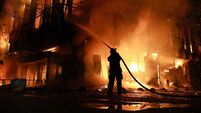
A witness in Maungdaw township said soldiers entered her village, burned homes and property, and shot dead at least 10 people.
The witness said villagers fled in many directions but mostly to a nearby mountain range. She said gunshots and explosions could be heard and smoke could still be seen on Friday evening.
A militant group, the Arakan Rohingya Salvation Army (ARSA) claimed the overnight attacks on more than 25 locations, saying they were in defence of Muslim Rohingya communities abused by government forces.
The clashes were the worst since an attack by the militants on three border posts last October killed nine policemen, setting off months of brutal counter-insurgency operations by Burmese security forces against Rohingya communities in Rakhine state.
Human rights groups accused the army of carrying out massive human rights abuses including killing, raping and burning down more than 1,000 homes and other buildings.
The army's abuses fuelled further resentment towards the government among the Rohingya, most of whom are considered illegal immigrants from neighbouring Bangladesh without any of the civil rights of citizens. ARSA took advantage of the resentment by stepping up recruitment of members.
The Rohingya have long faced discrimination in Buddhist-majority Burma and were the targets of inter-communal violence in 2012 that killed hundreds and drove about 140,000 people - predominantly Rohingya - from their homes to camps for the internally displaced, where most remain.
According to the United Nations, more than 80,000 Rohingya have fled to neighbouring Bangladesh since October.
Thursday night's attacks began a few hours after a Rakhine Advisory Commission led by former UN secretary-general Kofi Annan submitted its final report and recommended that the government act quickly to improve economic development and social justice in Rakhine state to resolve violence between Buddhists and the Rohingya Muslim minority.
Ms Suu Kyi's office said the attacks were intended to coincide with the release of Mr Annan's report.
ARSA also referred to the report, saying the army in recent weeks had stepped up activity to derail any attempt to implement the recommendations.
It said it had tried to avoid conflict until army atrocities became intolerable and action was needed to defend Rohingya civilians.