Latest: Donald Trump decided to fire FBI director James Comey before recommendation to do so
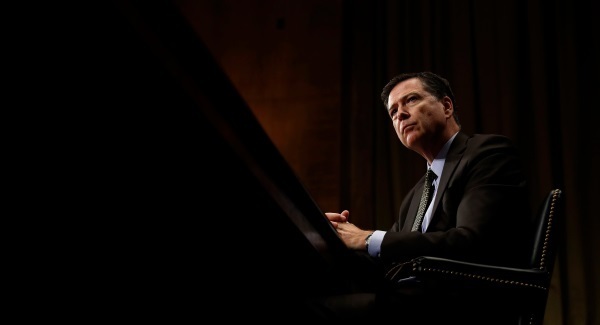
US President Donald Trump has said he had planned to fire FBI director James Comey regardless of the recommendation from his deputy attorney general, contrary to earlier statements from the White House.
Mr Trump told NBC News he had made up his mind to dismiss Mr Comey before he met on Monday with Attorney General Jeff Sessions and deputy Rod Rosenstein.
"I was going to fire regardless of recommendation." - Trump on Comey to @LesterHoltNBC https://t.co/gBT8FsPaNH pic.twitter.com/3dbkG5rksD
— Colin Jones (@colinjones) May 11, 2017
White House officials had said earlier in the week that Mr Trump asked Mr Sessions and Mr Rosenstein for their opinions about Mr Comey, and the president then acted on those recommendations.
Mr Trump also told NBC "I know that I'm not under investigation" for collusion with Russia.
He said he spoke with Mr Comey once during dinner and twice in phone calls, during which time he says the FBI chief told him "you are not under investigation".
Trump says he called Comey and asked him if he was under investigation. Unbelievable. pic.twitter.com/08VBkU2NEz
— Judd Legum (@JuddLegum) May 11, 2017
He says he initiated one phone call, and Mr Comey initiated the other.
In his termination letter to Mr Comey, sent to reporters on Tuesday, Mr Trump thanked him for informing him "three times" that he is not under investigation.
Mr Trump added: "I know that I'm not under investigation. Me personally. I'm not talking about campaigns or anything else. I am not under investigation."
A group of 20 attorneys general is now calling for the appointment of an independent special counsel to continue the investigation into Russian interference in last year's US presidential election.
The group led by Democratic Massachusetts Attorney General Maura Healey described President Donald Trump's firing of FBI director James Comey during the ongoing investigation as a "violation of public trust", in a letter sent to deputy attorney general Rod Rosenstein today.
The group wrote that only the appointment of an independent special counsel "with full powers and resources" can begin to restore public confidence.
Those signing the letter include the attorneys general of California, Connecticut, Delaware, the District of Columbia, Hawaii, Iowa, Illinois, Maine, Maryland, Minnesota, New Mexico, New York, North Carolina, Oregon, Pennsylvania, Rhode Island, Virginia, Vermont and Washington.
Acting FBI Director Andrew McCabe said he disagrees with the White House suggestion that it is a low priority of the FBI to investigate Russian interference in the election and potential Trump campaign collusion.
He said it is a "highly significant investigation", contradicting statements made by the White House downplaying the significance.
Yesterday, White House deputy press secretary Sarah Huckabee Sanders said it was "probably one of the smallest things" that the FBI has "got going on their plate".
Mr McCabe told a Senate panel that he would not describe the investigation that way.
Still, he declined to say exactly how many FBI personnel are involved in the investigation, adding that he cannot discuss that in a public setting.
Mr McCabe also contradicted the White House claim that fired director James Comey had lost the support of rank-and-file members of the bureau.
The White House used that assertion to justify Mr Comey's firing, but Mr McCabe said the claim is not accurate.
He said Mr Comey "enjoyed broad support" within the agency and that he holds Mr Comey in the "absolute highest regard", adding that it was the "greatest privilege" of his career to serve under him.
Mr McCabe assured senators that he will alert them to any effort to interfere with the investigation.
Mr Trump's firing of Mr Comey on Tuesday has led Democrats and others to raise concerns about the future of the investigation.
But Mr McCabe, speaking publicly for the first time since his former boss's ouster, said there has been "no effort to impede our investigation".
"You cannot stop the men and women of the FBI from doing the right thing," he declared.
He also said he would not inform the White House about developments in the probe.
Mr McCabe responded to questions from the top Democrat on the Senate intelligence committee, Mark Warner of Virginia, who said he thought Mr Comey's dismissal was directly related to the Russia investigation.
Days before he was fired, Mr Comey requested more resources to pursue his investigation, US officials have said, fuelling concerns that Mr Trump was trying to undermine a probe that could threaten his presidency.
It was unclear whether word of the Comey request, put to Deputy Attorney General Rod Rosenstein, ever made its way to Mr Trump.
However, the revelation intensified the pressure on the White House from both political parties to explain the motives behind Mr Comey's stunning ouster.
Mr Trump is the first president since Richard Nixon to fire a law enforcement official overseeing an investigation with ties to the White House.
Democrats quickly accused Mr Trump of using Mr Comey's handling of the Hillary Clinton email investigation as a pretext and called for a special prosecutor into the Russia probe.
Republican leaders brushed off the idea as unnecessary.
Defending the firing, White House officials said Mr Trump's confidence in Mr Comey had been eroding for months.
They suggested Mr Trump was persuaded to take the step by Justice Department officials and a scathing memo, written by Mr Rosenstein, criticising the director's role in the Clinton investigation.
"Frankly, he'd been considering letting Director Comey go since the day he was elected," Ms Sanders said, a sharply different explanation from the day before, when officials put the emphasis on new Justice complaints about Mr Comey.
Mr Trump's action left the fate of the Russia probe deeply uncertain.
The investigation has shadowed Mr Trump from the outset of his presidency, though he has denied any ties to Russia or knowledge of campaign co-ordination with Moscow.
Mr Trump, in a letter to Mr Comey dated Tuesday, contended that the director had told him "three times" that he was not personally under investigation.
The White House refused to provide any evidence or greater detail.
Former FBI agents said such a statement by the director would be all but unthinkable.
Mr McCabe told senators he could not comment on conversations between Mr Comey and the president.
Ms Sanders, speaking on ABC's Good Morning America, said: "I have heard that directly from him (Trump), that that information was relayed directly to him from Director Comey."
On NBC's Today, she said she would defer to the president himself for any additional details.
Outraged Democrats called for an independent investigation into the Trump campaign's possible ties to Russia's election interference, and a handful of prominent Republican senators left open that possibility.
However, Senate Majority Leader Mitch McConnell, with the support of the White House, brushed aside those calls, saying a new investigation would only "impede the current work being done".
The Senate intelligence committee subpoenaed former Trump national security adviser Michael Flynn on Wednesday for documents related to its investigation into Russia's election meddling.
Mr Flynn's Russia ties are also being scrutinised by the FBI.
The White House appeared caught off guard by the intense response to Mr Comey's firing, given that the FBI director had become a pariah among Democrats for his role in the Clinton investigation.
In defending the decision, officials leaned heavily on a memo from Mr Rosenstein, the deputy attorney general, criticising Mr Comey's handling of the Clinton investigation.
However, Mr Rosenstein's own role in Mr Comey's firing became increasingly murky on Wednesday.
Three US officials said Mr Comey recently asked Mr Rosenstein for more manpower to help with the Russia investigation.
Senator Dick Durbin, D-Ill, said that while he could not be certain the request triggered Mr Comey's dismissal, he said he believed the FBI "was breathing down the neck of the Trump campaign and their operatives and this was an effort to slow down the investigation".
Justice Department spokeswoman Sarah Isgur Flores denied that Mr Comey had asked Mr Rosenstein for more resources for the Russia investigation.
Trump advisers said the president met with Mr Rosenstein, as well as Attorney General Jeff Sessions, on Monday after learning that they were at the White House for other meetings.
One official said Mr Trump asked Mr Rosenstein and Mr Sessions for their views on Mr Comey, then asked the deputy attorney general to synthesise his thoughts in a memo.
The president fired Mr Comey the following day.
The White House informed Mr Comey by sending him an email with several documents, including Mr Rosenstein's memo.
It is unclear whether Mr Rosenstein was aware his report would be used to justify the director's ouster.
A farewell letter from Mr Comey that circulated among friends and colleagues said he does not plan to dwell on the decision to fire him or on "the way it was executed".
Mr Trump is only the second president to fire an FBI director, underscoring the highly unusual nature of his decision. President Bill Clinton dismissed William Sessions amid allegations of ethical lapses in 1993.
The White House said the Justice Department was interviewing candidates to serve as interim FBI director while Mr Trump weighs a permanent replacement.
Ms Sanders said the White House would "encourage" the next FBI chief to complete the Russia investigation.
"Nobody wants this to be finished and completed more than us," she said.
CONNECT WITH US TODAY



Be the first to know the latest news and updates