Burundi rejects African Union peacekeeping force

Burundi’s government has rejected the African Union’s plans to deploy a 5,000-strong peacekeeping force to stop escalating violence triggered by President Pierre Nkurunziza’s extended tenure in office.
Government spokesman Philippe Nzobonariba said if the African Union sent troops without Burundi’s consent it would be viewed as an attack, adding that Burundi had enough forces to maintain peace.
Burundi has been in turmoil since April when Mr Nkurunziza’s candidacy for a third term was announced and violence escalated following his re-election in July.
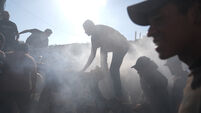
Last week 87 people died when an unidentified group attacked three military installations.
Burundi’s security forces responded with a rampage in parts of the capital Bujumbura, regarded as centres of opposition.
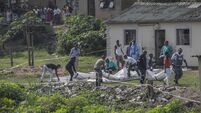
Police and the military are accused of dragging more than 150 civilians from their homes and shooting them at point blank range, according to human rights groups.
Burundi’s government insists its troops acted professionally.
In response to the violence, the African Union authorised sending a peacekeeping force to Burundi to stop the political violence.
The African Prevention and Protection Mission would be deployed to Burundi for at least six months and its mission could be extended, the AU’s Peace and Security Council said.
The force’s mandate would include protecting civilians under imminent threat and helping to create conditions for holding inter-Burundian dialogue.
The AU’s decision was unusual as it did not seek an invitation from Burundi’s government for the peacekeepers.
In another effort at mediation, Burundi’s fighting sides are to meet on December 28 in Uganda to try to resolve the crisis, Uganda’s defence minister has said.
As Burundi ratchets up the killing, it rejects 5,000-strong African Union peacekeeping force https://t.co/EPWbhksq4O pic.twitter.com/RDOrukw46j
— Kenneth Roth (@KenRoth) December 20, 2015
Fourteen groups including Burundi’s ruling party, opposition parties and civic organisations will attend the talks aimed at ending the violent political unrest in which hundreds have been killed, said Crispus Kiyonga, who is also facilitating the peace talks mediated by the East African Community.
Ugandan president Yoweri Museveni will moderate the talks.
But the chances for the negotiations are not certain as the Nkurunziza government has refused to participate in previous talks.
The United Nations Security Council expressed “deep concern about the escalation of violence in Burundi”, condemning both the attack on the military installations and the retaliatory rampage in Bujumbura.
The council urged all sides in Burundi to support Mr Museveni’s mediation effort and to co-operate with the AU’s plan to deploy a peacekeeping force.
At least 400 people have been killed since April 26, when it was announced Mr Nkurunziza would run for a third term, according to human rights groups.
Nearly 3,500 people have been arrested in the political crisis and 220,000 people have fled the country.
Mr Nkurunziza’s third term was opposed by many Burundians and the international community, who say it violates the country’s constitution two-term limit.
Mr Nkurunziza argues that his first term in office does not count because he was elected by parliament and not by the people.
CONNECT WITH US TODAY



Be the first to know the latest news and updates