Stabbing suspect reveals cannibal fantasies
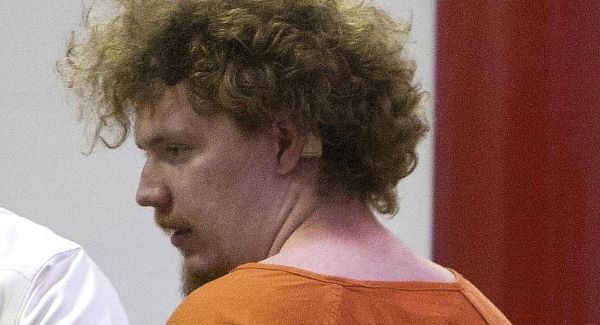
A man accused of stabbing more than a dozen people at a Texas college told investigators he had fantasised about cannibalism, necrophilia and cutting off people’s faces and wearing them as masks.
Dylan Quick, 20, also said he had researched mass stabbings on his home computer about a week before Tuesday’s attack at Lone Star College, according to a search warrant affidavit.
“He stated that he had read numerous books about mass killings and serial killers which are also located at his residence,” the affidavit said.
Quick is facing three charges of aggravated assault with a deadly weapon over the attack that injured 14 people. Only one person remained in hospital yesterday, listed in good condition.
Quick’s next hearing is on May 10. If convicted, he faces up to 20 years in prison.
Quick’s lawyer, Jules Laird, said he was still looking into his client’s background. He said he did not think Quick had a history of mental illness, but he was on suicide watch and would stay in jail as he undergoes psychological tests.
“Not every question has an answer that satisfies you or that says this is the root cause of why he did this ... with a knife. We are going to see if we can reach that,” Mr Laird said.
The affidavit named nine items that were seized from Quick’s home, including one listed as “Hanibal Lecter Mask”. Hannibal Lecter is the cannibalistic serial killer from the 1991 film The Silence Of The Lambs.
Other items seized included a laptop and an animal dissection kit.
The affidavit said Quick told the investigator that in preparing for the campus attack, he had sharpened various things, including a hairbrush and pencils, to use as weapons. However, authorities have said Quick used only a razor utility knife to slash at his victims.
They said a scalpel was found in a backpack he was carrying when he was arrested.
Authorities said students tackled Quick and held him down until police arrived.
Texas does not permit people to carry handguns on campuses, but politicians are considering allowing concealed permit holders to take their weapons into college buildings and classrooms.
Opponents argue that allowing guns into campus buildings increases the chances for violence.
Mr Laird said Quick had been home-schooled for most of his life and that he had been enrolled at Lone Star in part so he could be around other people and “get some type of feel for what the rest of the world is like as opposed to just living at home ... and being home-schooled by his mothe.”.
Mr Laird said Quick’s parents had not had any major problems with their son, but he did apparently go missing for a few days in January 2011.
Quick’s parents had contacted Texas EquuSearch, a private group that searches for missing people, after getting a text message from their son saying “he was leaving because he might possibly harm himself”, said Frank Black, a case adviser with the organisation.
Mr Black said he and others with his group were about to begin a search when his parents contacted them, saying they had found their son and he was safe.
Quick had apparently been staying on the Lone Star College campus and some security guards had given him food and a tent to sleep in, Mr Black said.
Mr Laird said Quick’s parents were devastated.
Quick’s mother is “the person that knows him more than anybody else in the world. And so, what she knows of him does not fit with what happened (on Tuesday),” he said.
CONNECT WITH US TODAY



Be the first to know the latest news and updates