Iconic Vietnam photo girl thanks her saviours
It was a chilling photograph that came to symbolise the horrors of the Vietnam War and ultimately helped end it.
It also saved the life of Kim Phuc, who was just nine when, on June 8 1972, her village was attacked by south Vietnamese planes.
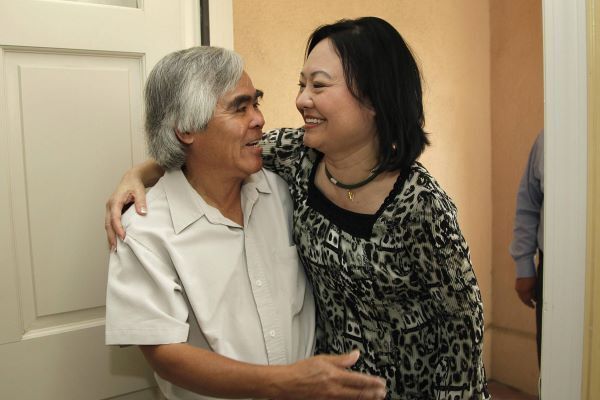
Now Ms Phuc, who lives near Toronto, Canada, with her family, has honoured those who saved her, including British reporter Christopher Wain, at a dinner to celebrate the 40th anniversary of the iconic photograph.
At the dinner was AP photographer Huynh Cong “Nick” Ut, who took the photo, as well as other journalists, doctors and nurses who helped Ms Phuc get assistance and treated her terrible injuries.
Mr Ut, who was 21 at the time, heard Ms Phuc’s screams as she ran down the road to escape her burning village and snapped the photo that became famous around the world.
The Vietnamese photographer then drove the badly-burned child to a small hospital, where he was told she was too badly injured to help. But he flashed his American press badge, demanded that doctors treat the girl and left, assured that she would not be forgotten.
“I’m so grateful he was there,” Ms Phuc said last night. “He helped me and rushed me to the nearest hospital. He saved my life. He’s my hero. This opportunity tonight I want to honour all of my personal heroes.”
Mr Ut said he cried when he saw her running and that if he did not help and she died he would have killed himself.
He said he knew right away this picture was different and his veteran photo editor, Horst Fass, deemed it the most the iconic photo of the Vietnam war.
“It changed the war. I met so many American soldiers who said, ’Nicky, because of your picture I’ll get to go home early’,” Mr Ut said.
In the Pulitzer Prize-winning image, children run screaming from a burning Vietnamese village. Ms Phuc, the little girl in the centre of the frame, is naked and crying, her clothes and layers of skin melted away by napalm.
A few of days after the image shocked the world, a number of British journalists including Mr Wain, an ITN correspondent who had given Ms Phuc water from his canteen and drizzled it down her burning back at the scene and fought to have her transferred to the American-run hospital.
It was the only facility in Saigon equipped to deal with her severe injuries.
“When we found in her in the British hospital it was in very un-sterile conditions,” Mr Wain said.
“I asked one of the nurses how she was and the nurse looked at her and said, ’Oh, she’ll die maybe tomorrow or maybe next day’. It was obvious it was very urgent.”
Martha Arsenault, a nurse who cared for Ms Phuc at the American hospital, said when she arrived at the American hospital, nobody thought she would survive.
“Everybody, the doctors, they all thought she wouldn’t because she was just so burnt,” she said.
Ms Arsenault said the photo reminded her of how just awful war was.
Mr Wain said he still feels slightly concerned for Ms Phuc because she has had to relive the traumatic experience all her life.

CONNECT WITH US TODAY



Be the first to know the latest news and updates










