Libya dismisses world arrest bid

Libya’s deputy foreign minister has dismissed efforts by the International Criminal Court to issue arrest warrants against three senior leaders.

Libya dismisses world arrest bid

Libya’s deputy foreign minister has dismissed efforts by the International Criminal Court to issue arrest warrants against three senior leaders.

Court prosecutors said yesterday that they were putting the final touches to their case against three Libyan leaders on charges of murder and persecution over the brutal crackdown on anti-government rebels. Libyan leader Muammar Gaddafi is expected to be among them.

Speaking in a late-night discussion with reporters in the Libyan capital, Khaled Kaim said his government would “not show any attention to the decision”.

He said Libya did not recognise the jurisdiction of the international court, nor did most African countries.

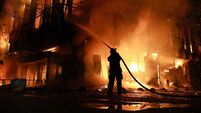
Nato aircraft blasted an oil terminal in a key eastern city at nightfall yesterday, Libyan TV reported, after Britain urged the alliance to widen its assault on areas controlled by Gaddafi.

Kaim sharply condemned that call, describing it as a “provocation”.

“This threat is aimed at terrorising civilians,” he said.

Kaim also said the Nato strikes were aimed at killing Gaddafi, but “those attempts to kill the leader are a complete waste of time”.

The Libya TV report said the bombs hit methanol tanks at the oil port of Ras Lanouf, causing leaks.

The reported attack came as the Libyan conflict appeared largely stalemated, with each side claiming gains one day, only to be turned back the next.

Libyan rebels said yesterday they had taken full control of the western port city of Misrata, 125 miles from Tripoli, the only major city in western Libya with a significant rebel toehold. The claim could not be confirmed.

In Misrata, rebel fighter Abdel-Salam described the situation as static.

“The situation is almost frozen, as the rebels are in full control over Misrata,” he said. “The rebels are not engaged in any major fighting fronts with Gaddafi forces.”

The two sides have been battling intensely over Misrata, symbolic because of its location near Gaddafi’s capital. His forces shelled the city heavily and at some points took up positions inside Misrata neighbourhoods to fire at civilians and fighters, while avoiding Nato air strikes.

Rebels and residents say Gaddafi forces remain at the edges of the town.

More than 1,000 people have died in Misrata in the fighting and shelling.

The rebel fighter denied earlier reports suggesting that rebels were advancing towards the western city of Zlitan, which would be the next step on the road to Tripoli.

“The rebels agreed that it is better not to move forward or open new fronts,” he said.

He added, “It will be a big risk to advance. Anything could happen and cost us heavy causalities. This is not the right decision to take right now.”

Gaddafi has rarely been seen or heard since a strike killed his son on April 30. He briefly showed up on state-run television and on another day he issued a minute-long voice message.

Kaim said Gaddafi was “still the leader of the country – but not in charge of day-to-day business”.

The call to widen the Nato strikes on Libya came as International Criminal Court prosecutors put the final touches on their case against three Libyan leaders on charges of murder and persecution in the brutal crackdown on anti-government rebels.

Prosecutor Luis Moreno-Ocampo will file a 74-page document with nine annexes outlining the allegations and seeking arrest warrants for the three Libyan leaders considered most responsible for the atrocities.

Meanwhile, in another move against Gaddafi, Arab League states meeting in Cairo asked the company operating the Arabsat satellite to stop transmitting the official Libyan TV channels. The Arab League owns the satellite. It was not clear when the decision would take effect.

More in this section

Cookie Policy Privacy Policy Brand Safety FAQ Help Contact Us Terms and Conditions

© Examiner Echo Group Limited