Car bombs push up Iraq death toll
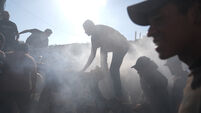
Two car bombs tore through car parks packed with Shia pilgrims today in an Iraqi holy city, pushing the death toll from a week of attacks to more than 170.
The upturn in violence poses a major test for prime minister Nouri al-Maliki’s new and shaky coalition government as followers of a powerful Shia cleric and a key ally demanded he fill key security posts.
The blasts struck Karbala as hundreds of thousands of pilgrims were massing for religious rituals marking the end of a 40-day mourning period for the Islamic sect’s most beloved saint.
The first attack occurred about 7am in a car park near busloads of pilgrims on the eastern outskirts of Karbala, 55 miles south of Baghdad. Police and hospital officials said six pilgrims were killed and 34 people wounded in that attack.
Another bomb was discovered nearby and dismantled before it could explode, police said.
More than four hours later, a second explosion struck pilgrims on the southern edge of the city, killing at least 20 people, including two soldiers, and wounding 42, the officials said.
There is a vehicle ban in Karbala for the holy period so pilgrims are dropped off at car parks and walk in.
Monday’s attacks followed a triple suicide bombing last week along two highways leading to Karbala that killed 56 and wounded at least 180 – most of them Shia pilgrims.
Hundreds of thousands of pilgrims were gathering in Karbala for today’s ceremonies marking the end of Arbaeen, a 40-day mourning period to observe the seventh century death of the Imam Hussein, the Prophet Muhammad’s grandson.
His death in battle near Karbala sealed Islam’s historic Sunni-Shia split – the ancient divide that provided the backdrop for the sectarian bloodshed in Iraq after the 2003 US-led war.
No group claimed responsibility for today’s blast, but car bombs and suicide attacks are the trademark of al Qaida in Iraq and other Sunni religious extremists.
Followers of anti-US Shia cleric Muqtada al-Sadr, who have been blamed for some of the worst sectarian violence in past years, criticised Mr al-Maliki for not naming new defence, interior and national security ministers.
Mr al-Maliki formed a new government on December 21 after months of political deadlock but has said he needs more time to find security ministers who are apolitical. He maintains control of the ministries in the meantime.
“We demand that the appointment of security ministers to provide security for the Iraqi people be expedited,” said Fawzi Akram al-Tarzi, a member of Mr al-Sadr’s bloc in parliament.
Security forces also have been targeted in the latest spate of violence, which began last Tuesday with a suicide bombing targeting police recruits in Tikrit.
The Islamic State of Iraq, an al Qaida front group, has claimed responsibility for the Tikrit attack as well as two bombings last week at security force headquarters in Baqouba that together killed 10 people.
Also today, police said two bombs in Baghdad killed an Iraqi army intelligence officer and his driver and wounded eight bystanders in separate strikes that hit a Shia and a Sunni neighbourhood. Hospital officials in Baghdad confirmed the fatalities.