Nobel judges defend Obama peace prize

Four judges have spoken out to defend awarding of the Nobel Peace Prize to US president Barack Obama.

Nobel judges defend Obama peace prize

Four judges have spoken out to defend awarding of the Nobel Peace Prize to US president Barack Obama.

In a rare public defence of a process normally shrouded in secrecy, the judges said Mr Obama’s selection was deserved and unanimous.

One judge noted with surprise that Mr Obama “didn’t look particularly happy” at being named the Nobel Peace Prize laureate. Another marvelled at how critics could be so patronising.

To those who said a Nobel was too much too soon in Mr Obama’s young presidency, “we simply disagree ... He got the prize for what he has done”, committee chairman Thorbjorn Jagland said from Strasbourg, France, where he was attending meetings of the Council of Europe.

Mr Jagland singled out Mr Obama’s efforts to heal the divide between the West and the Muslim world and scale down a Bush-era proposal for an anti-missile shield in Europe.

“All these things have contributed to – I wouldn’t say a safer world – but a world with less tension,” he said.

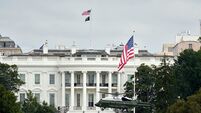
Nine-year Nobel committee veteran Inger-Marie Ytterhorn said Mr Obama’s demeanour spoke volumes when he first acknowledged the award during a news conference on the lawn of the White House Rose Garden.

“I looked at his face when he was on TV and confirmed that he would receive the prize and would come to Norway, and he didn’t look particularly happy,” she said.

“Obama has a lot of problems internally in the United States and they seem to be increasing. Unemployment, health care reform. They are a problem for him.”

She acknowledged there was a risk the prize might backfire on Mr Obama by raising expectations even higher and giving ammunition to his critics.

“It might hamper him,” Ms Ytterhorn said, because it could distract from domestic issues.

Still, she added “whenever we award the peace prize, there is normally a big debate about it”, so the Obama controversy was not unexpected.

It was unusual, however, for the Nobel jury to speak out so candidly about its selection.

Even the most seasoned Nobel watchers were surprised by Mr Obama’s Nobel – they had not expected the US president, who took office barely two weeks before the February 1 nomination deadline, to be seriously considered until at least next year.

But Mr Jagland said that was never an issue for the Nobel committee, which followed the guidelines set forth by Alfred Nobel, the Swedish industrialist and inventor of dynamite who established the prize in his 1895 will.

“Alfred Nobel wrote that the prize should go to the person who has contributed most to the development of peace in the previous year,” Mr Jagland said.

“Who has done more for that than Barack Obama?”

Aagot Valle, a left-wing Norwegian politician who joined the five-judge Nobel panel this year, also dismissed suggestions that Mr Obama was undeserving of the honour.

“Don’t you think that comments like that patronise Obama? Where do these people come from?” Mr Valle said.

“Well of course, all arguments have to be considered seriously. I’m not afraid of a debate on the peace prize decision. That’s fine.”

World leaders reacted positively to Mr Obama’s Nobel in most cases, the committee said, with much of the criticism coming from the media and Mr Obama’s political rivals.

“I take note of it. My response is only the judgment of the committee, which was unanimous,” Mr Jagland said.

In announcing the award Friday, the committee, whose members are appointed by the Norwegian parliament, applauded the change in global mood brought by Mr Obama’s calls for peace and co-operation.

They also praised his pledges to reduce the world stock of nuclear arms, ease US conflicts with Muslim nations and strengthen the US role in combating climate change.

Nobel Peace Prize selections have often been surrounded by fierce debate. Controversial awards include the 1994 prize shared by Palestinian leader Yasser Arafat and Israeli leaders Shimon Peres and Yitzhak Rabin for Middle East peace efforts, as well as the joint prize to US secretary of state Henry Kissinger and North Vietnamese negotiator Le Duc Tho for a 1973 ceasefire agreement. The Vietnam War continued for two more years.

x

More in this section

Cookie Policy Privacy Policy Brand Safety FAQ Help Contact Us Terms and Conditions

© Examiner Echo Group Limited