Bush's former press chief defends bombshell book
Former White House press secretary Scott McClellan defended his bombshell book about the Bush administration today, saying he did not speak up against the overselling of war in Iraq because he gave the president the benefit of the doubt.
“You’re in a bubble atmosphere,” Mr McClellan told AP Television News, “and sometimes because of your affection for the person you’re working for and your belief in that person, you sometimes lose perspective on some of the larger truths out there. It’s hard to step back from that.”
In hindsight, Mr McClellan said he came to view the war as a mistake by a president and advisers swept up in a grand plan of seeding democracy in the Middle East by overturning Iraqi Saddam Hussein’s government.
Mr McClellan says Mr Bush and his aides became so convinced of the need for war that they ignored or downplayed intelligence that did not fit their argument.
The press chief had worked for Mr Bush since Mr Bush was governor of Texas and he was deputy press secretary during the lead-up to the 2003 invasion. He said any misgivings he had were offset by affection for the president and respect for his foreign policy team.
It was easy to believe Mr Bush, he told NBC’s Today show, because the president was not consciously trying to inflate the threat of Iraq unleashing weapons of mass destruction, but only “came to convince himself of that”.
In the AP interview, Mr McClellan said Mr Bush “still clings to the hope that history is going to vindicate him”.
“I would welcome such a development,” he said.
Mr McClellan said he grew “increasingly dismayed and disillusioned” during his final year as White House press secretary. He pinpointed as his tipping point the unfolding of the CIA leak case and what it revealed about Mr Bush’s role in releasing classified information about Iraq to the press.
Mr McClellan became press secretary in July 2003 and left the White House in April 2006.
As his book, What Happened: Inside the Bush White House and Washington’s Culture of Deception, vaulted to No 1 on Amazon.com’s best-seller list, Republican critics dismissed Mr McClellan as a turncoat, a sellout and a disgruntled former employee.
The White House called the book puzzling and sad.
Former White House counsellor Dan Bartlett offered an immediate rebuke to Mr McClellan’s allegations of pro-war propaganda.
“I would not personally participate in a process in which we are misleading the American people, and that’s the part that I think is hurting so many of his former colleagues,” Mr Bartlett said.
“To think that he is making such a striking allegation against his former colleagues, to me, is beyond the pale.”
Speaking to reporters yesterday in Sweden, US secretary of state Condoleezza Rice said Mr Bush was honest about the reasons for the war and remained convinced now that toppling Saddam was right and necessary.
In the TV interviews, Mr McClellan rejected complaints that he penned a sensational book to cash in on his White House service. He said he had “a higher loyalty” to the truth, first regarding the CIA leak case but later wrapping in the White House’s handling of the war, Hurricane Katrina and other issues.
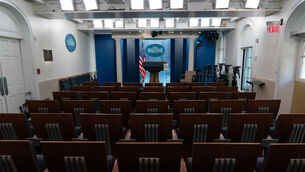
He said he was ordered to say from the press room podium that White House aides Karl Rove and Lewis “Scooter” Libby were not involved in leaking CIA operative Valerie Plame’s identity to the press. Later a criminal investigation revealed that they were.
“I blame myself for putting myself in the position of going to the podium and passing along information I didn’t know was false, but later learned that it was,” Mr McClellan said.
And he recalled a day in April 2006, when the unfolding perjury case against Mr Libby had revealed that Mr Bush secretly declassified portions of a 2002 intelligence report about Iraq’s weapons capabilities to help deflect criticism of his case for war.
High-profile criticism was coming from Ms Plame’s husband, former ambassador Joseph Wilson, in those days before the war.
The president was leaving an event in North Carolina, Mr McClellan recalled, and as they walked to Air Force One, a reporter shouted a question: Had the president, who had repeatedly condemned the selective release of secret intelligence, enabled Mr Libby to leak classified information to The New York Times back then to bolster the administration’s arguments for war?
Mr McClellan took the question to the president, telling Mr Bush: “He’s saying you yourself were the one that authorised the leaking of this information.”
“And he said, ’Yeah, I did’. And I was kind of taken aback,” Mr McClellan said.
“For me I came to the decision that at that point I needed to look for a way to move on, because it had undermined, I think, a lot of what we had said.”