Iraqi PM pledges to extend crackdown on militias
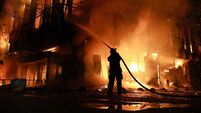
Iraq’s prime minister pledged to expand his crackdown on Shiite militias to Baghdad, despite a mixed performance so far against militants in the southern city of Basra.
The US ambassador, meanwhile, said that despite a “boatload” of problems with the Basra operation, he was encouraged that the Shiite-led government was finally confronting extremists regardless of their religious affiliation.
Iraqi forces launched a major operation on March 25 to rid Basra of Shiite militias and criminal gangs that had effectively ruled the city of two million people since 2005. But the offensive stalled in the face of fierce resistance from the militiamen and an uprising across the Shiite south spearheaded by the Mahdi Army of anti-American cleric Muqtada al-Sadr.
Fighting eased on Sunday when al-Sadr ordered his fighters to stand down under a deal brokered in Iran.
Nevertheless, prime minister Nouri Maliki, himself a Shiite, insisted that the campaign to reclaim Basra was on track and that he would soon go after “criminal gangs” in Baghdad and elsewhere.
Mr Maliki specified two Baghdad neighbourhoods – Sadr City and Shula – where the Mahdi militia holds sway and where US and Iraqi forces have clashed with militants in recent days.
Both areas remain under a vehicle ban imposed last week throughout Baghdad but which has been lifted elsewhere in the capital.
“We cannot remain silent about our people and families in Sadr City, Shula and other areas ... while they are held hostage by gangs that control them,” Mr Maliki said. “We must liberate (them) because we came into office to serve them.”
It was unclear whether any new operation was imminent, but residents of Sadr City and other Shiite areas of the capital said many people began stocking up on food and water after Mr Maliki’s remarks.
Mr Maliki also said the government would spend £52 million to improve public services in Basra and create 25,000 jobs there – moves aimed at weaning away support for the militias as security forces revamp their tactics to combat the extremists.
Last week’s offensive in Basra resulted in a dramatic increase in violence - including rocket and mortar attacks on the US-controlled Green Zone in Baghdad.
The violence erupted as the two top American officials in Iraq were preparing to brief Congress on prospects for further US troop cuts.
US Ambassador Ryan Crocker, who will appear before Congress on Tuesday with top commander General David Petraeus, said he was surprised at the way the Basra campaign unfolded.
“I had the understanding that this was going to be an effort to get down, show they were serious with additional forces, put the squeeze on, develop a full picture of conditions and then act accordingly,” he told reporters yesterday.
“I was not expecting, frankly, a major battle from day one.”
But Mr Crocker said he was encouraged that the Iraqi government was willing to take on Shiite militias, some of which maintain close ties to major political parties in the national leadership.
“Were there problems? There were a boatload of problems, and they still have a long way to go,” he added.
In a statement yesterday, al-Sadr complained that although he had called on his militia to stop fighting, the army and police were continuing illegal arrests and attacks against his followers.
Al-Sadr blamed the attacks on “corrupt elements” and said if the government could not remove them, “we are ready to co-operate ... to purge our army and police of such elements”.
The cleric has also called on Shiites to converge on the holy city of Najaf next Wednesday – the fifth anniversary of the US capture of Baghdad – to protest against the American military presence in Iraq. He urged a “million-strong” turnout.
Although major fighting in the south eased last weekend, military operations are continuing in the Basra area.
US and Iraqi officials have maintained that the crackdown was directed at criminals and renegade militiamen but not al-Sadr’s political movement, which holds 30 of the 275 seats in the national parliament and is a major political force.
But the Sadrists believed the operation was aimed at weakening their movement before provincial elections in the autumn. Resistance was so fierce that the Iraqis had to call in US jets and British tanks and artillery to help in the battle.