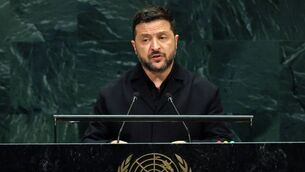
South Korea believe North's nuclear test was genuine
South Korean officials today said they believed North Korea tested a nuclear weapon as it claimed, but determining whether the atomic explosion was successful would take a couple weeks.
The reported underground test yesterday stirred up angry debate in the South’s legislature about whether the government’s policy to engage the secretive communist neighbour has failed and should be scuttled.
Unification Minister Lee Jong-seok, the top official for North Korean policy, told politicians that the South believed the North’s claims the underground test was conducted, but that they weren’t certain it was successful. He called it a “grave threat” that the South “cannot tolerate”.
Presidential security adviser Song Min-soon said it would take about two weeks to determine if the alleged test was successful, the president’s office said.
Confirming the nuclear blast would involve checking for radioactive materials in the area, a Defence Ministry official said.
South Korea was borrowing a sophisticated radioactivity detector from Sweden to help efforts determine whether North Korea did test a nuclear bomb.
The equipment, set to arrive tomorrow in South Korea, detects xenon – an inert gas released when there is a nuclear explosion – in the air, said Bae Koo-hyun, a researcher of the Korea Institute of Nuclear Safety.
However, after the test, Bae said winds in the area had been blowing north-east, away from South Korea and the detection equipment.
“However good equipment we have, it’s difficult to determine unless the wind blows from the North to the South,” he said.
Opposition politicians blamed the nuclear test on the government’s engagement policy and demanded an apology from Lee.
“We have made many efforts to resolve North Korea’s nuclear issue, but I’m sorry to the public for this having happened,” the unification minister said.
Lee said the South needed to change its policy, but insisted it didn’t need to be overhauled or scrapped.
South Korean President Roh Moo-hyun repeated his view that the policy should be reviewed following the reported test, his spokesman Yoon Tae-young told reporters.
But the president added: “The engagement policy has also helped dispel people’s concerns by easing tensions in South-North relations and helped economic activities by ensuring confidence in economic stability,” Roh was quoted as saying by his spokesman.
The two Koreas embarked on historic reconciliation efforts in 2000 after the first-and-only summit of their leaders. The meeting ended decades of hostility since the Korean War stopped in a cease-fire that has never been replaced with a peace treaty – leaving them technically at war.
South Korea has become one of North’s top trade partners, also sending aid and co-operating on projects in North Korea such as a tourism venture and joint industrial park.
President Roh warned the North that Seoul wouldn’t continue making concessions to Pyongyang without receiving anything in return. Roh was meeting with party leaders today.
The South halted regular aid in July after the North launched a series of missiles against international objections. However, Seoul later agreed to send emergency aid after the North suffered devastating floods in mid-July.
After the test, the South said it would decide today whether to continue with a scheduled delivery of cement to North Korea.
The UN Security Council has unanimously condemned the North’s decision to disregard a UN appeal not to carry out a test.
The council was weighing a US draft resolution to impose potentially crippling sanctions on the impoverished country.
South Korea’s nuclear envoy, Chun Young-woo, returned from Beijing today and said China appeared to have dropped opposition to tough UN sanctions.
“China seems to have different position than it had before on a Chapter 7 resolution,” Chun said, referring to the section of the UN Charter that deals with threats to international peace, breaches of the peace and acts of aggression.
To deal with these threats or conflicts, the UN Security Council can authorise a range of measures under Chapter 7, from breaking diplomatic ties and imposing economic and military sanctions to taking military action to restore peace.