Munich massacre: Teen loner planned gun attack for past year
Officials said the German- Iranian, aged 18, identified only as David S due to German privacy laws but named in some media reports as Ali Sonboly, had been a victim of bullying, who suffered from panic attacks set off by contact with other people.
The teenager had been seeing a doctor for treatment over a number of psychiatric problems, starting in 2015 with in-patient hospital care, followed up with out-patient visits.
Officers said medication for his problems had been found his room. Toxicological and autopsy results are still not available, so it is not yet clear whether he was taking the medicine when he embarked on his shooting spree last Friday.
Investigators said the gunman had been bullied by schoolmates at least once, four years ago, and had been fascinated by mass shootings.
None of the bullies were among his victims, however, and none of those killed were known to him.
The attack took place on the fifth anniversary of the killing of 77 people by Norwegian right-wing extremist Anders Behring Breivik, whose victims included dozens of young people.
Investigators said the Munich shooter had researched that slaughter online and had visited the site of a previous school shooting in the German town of Winnenden last year.
Robert Heimberger, Bavaria’s top official, said “he had been planning this crime since last summer”, citing a “manifesto” linked to the shooting found in the gunman’s locked room in the apartment he shared with his parents and brother.
Mr Heimberger said he could not reveal details of the document yet because there are “many more terabytes” of information to evaluate, but described the gunman as a “devoted player” of group internet “killer games”, pitting virtual shooters against each other.
Weapons are strictly controlled in Germany and police are still trying to determine how the shooter obtained the Glock 17 used in the attack.
Mr Heimberger said it is “very likely” the suspect purchased the weapon illegally online on the “darknet,” a restricted access computer network often used by criminals. He said the weapon had been rendered unusable and sold as a prop before being restored to its original function.
The gunman’s father saw a video of the start of his son’s rampage on social media and spoke to police as it was taking place, Mr Heimberger said, adding that the family was not yet emotionally able for questioning by police.
Witnesses claimed the gunman shouted slurs against foreigners, even though he was the German-born son of Iranian asylum-seekers. Mr Heimberger said the McDonald’s restaurant where most of the victims died was a hangout for youths of immigrant backgrounds, and the dead included victims of Hungarian, Turkish, Greek, and Kosovo Albanian backgrounds.
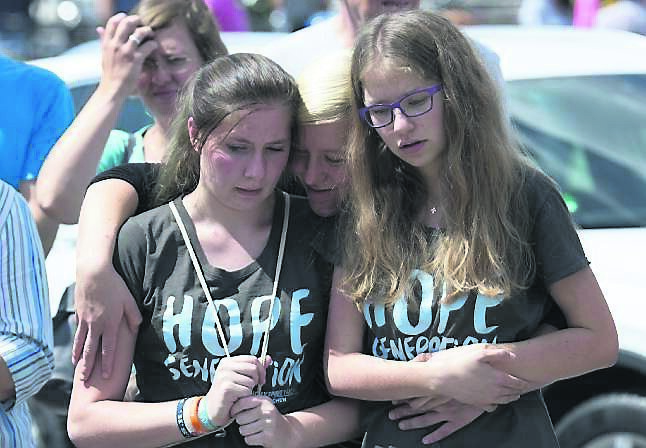
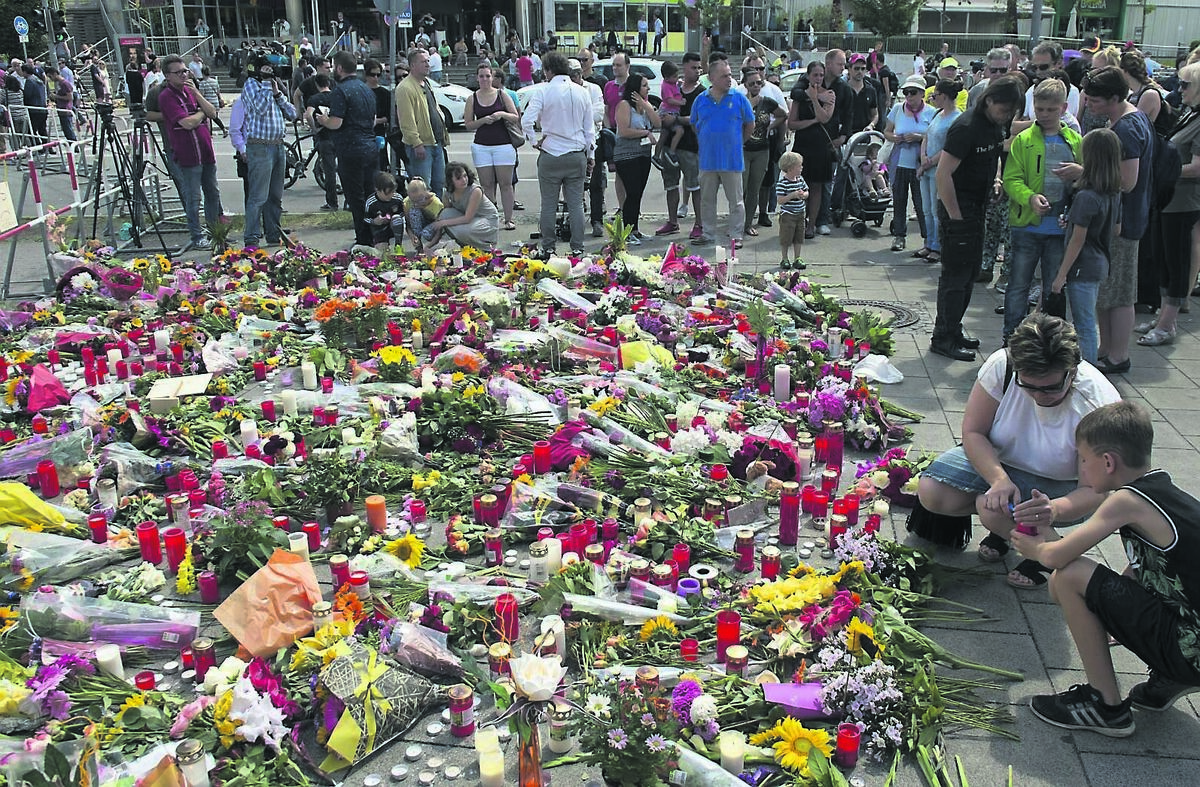
The restaurant remained cordoned off yesterday as nearby residents and relatives of the victims gathered for a second day to pay their respects.
In the aftermath of the attack, Bavaria’s top security official urged the government to allow the country’s military to be deployed in support of police during attacks.
Following the Nazi era, Germany’s post-war constitution only allows the military, known as the Bundeswehr, to be deployed domestically in cases of national emergency.
However, state interior minister Joachim Herrmann told the Welt am Sonntag newspaper that the regulations are now obsolete, declaring that Germans have a “right to safety”.
“It would be completely incomprehensible... if we had a terrorist situation like Brussels in Frankfurt, Stuttgart, or Munich and we were not permitted to call in the well-trained forces of the Bundeswehr,” he said.
Federal interior minister Thomas de Maiziere backed the idea, saying it made sense to call on the military in emergencies.
He suggested this might be possible without constitutional changes, saying that the nation’s highest court has previously ruled “the Bundeswehr can support the police with its forces in particularly dangerous situations”.
Munich deployed 2,300 police officers to lock down the city on Friday night, calling in elite Swat teams from around the country and neighbouring Austria.

CONNECT WITH US TODAY



Be the first to know the latest news and updates