‘Great Escape’ hero told he didn’t merit compensation
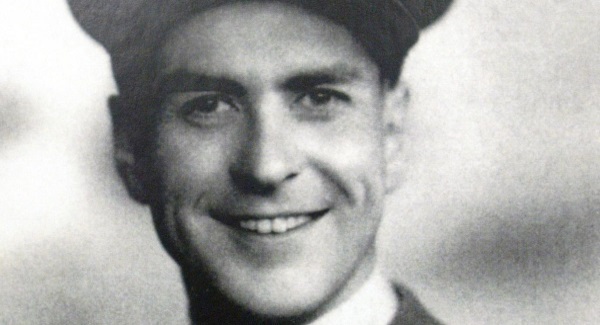
Flight Lieutenant Bertram ‘Jimmy’ James was held prisoner for a year in Sachsenhausen camp after he and Allied officers were recaptured and spared execution following the daring escape from Stalag Luft III in March 1944.
Flt Lt James and his fellow detainees were kept under close guard by SS troops at the camp’s Sonderlager A compound, and after trying to escape he was held in solitary confinement and lived under the constant threat of execution.
However, 20 years, later the British government told him he was not entitled to compensation for Nazi persecution because he had not suffered enough.
Documents seen for the first time after being released by the British National Archives at Kew, west London, reveal the foreign office denied him money because he was not subjected to the “well-known inhuman and degrading treatment of a concentration camp proper”.
In August 1965, the foreign office told him: “Your case has been very carefully considered, and I regret to inform you that your application cannot be accepted for registration because the conditions in the Sonderlager at Sachsenhausen were such that you were never subjected to this type of persecution.”
Flt Lt James wrote back to express his “disappointment” that the “scale of suffering and degradation” was not sufficient to warrant compensation, and gave a detailed account of how he had been interrogated and tortured, faced the fear of execution and watched as inmates were beaten and worked to death at another concentration camp before “their bodies were burnt in bonfires”.
However, government officials still refused, despite his case reaching the newspapers, saying compensation was for those singled out by the Nazis because of “ideology” and inmates at camps where “deliberately contrived suffering was an end in itself and extermination by starvation, exposure, overwork or the gas chambers... the likely fate of every prisoner”.
The conditions he endured at Sachsenhausen, the foreign office said, were “in no way comparable”.
It was only after a parliamentary inquiry was held in 1968 that it was decided the Sachsenhausen survivors should be compensated, and he was eventually awarded £1,192 and 15 shillings — around £18,500 (€23,000) today.
He claimed not to have suffered any lasting disability from his imprisonment — “although, naturally, this is an experience which I should have preferred to have avoided”.
However, he wrote: “During most of this time I was under threat of execution which was, to say the least, somewhat disturbing.”












