Gravity waves: ‘Scientific breakthrough of the century’
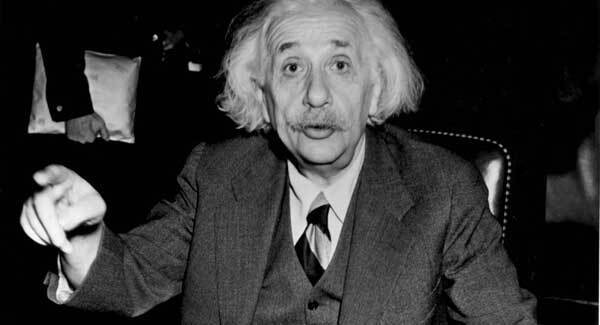
Gravity waves — ripples in spacetime — have been detected by scientists a century after Albert Einstein predicted their existence.

Gravity waves: ‘Scientific breakthrough of the century’

The discovery, made in the US, was described by one British member of the international team as “the biggest scientific breakthrough of the century”.

Capturing gravitational waves could open a new window to the universe and even help scientists to watch the cosmos being born.

The subtle distortions of spacetime are generated by cataclysmic events such as the collision of black holes or super-dense neutron stars, or powerful stellar explosions. As the waves spread out, they compress and stretch the very fabric of the universe.

Although astronomical observations have hinted at their presence, until now they have remained a theoretical concept based on Einstein’s mathematics.

Scientists detected them using laser beams fired through two perpendicular pipes, each 4km long, situated more than 3,000km apart in Hanford, Washington, and Livingston, Louisiana.

Together they make up the Laser Interferometer Gravitational Wave Observatory (Ligo), where the hunt for gravitational waves only began in earnest last September.

Breaking the news at the National Press Club in Washington DC, laser physicist David Reitze, from the University of Florida, said: “Ladies and gentlemen, we have detected gravitational waves. We did it.” He was greeted with loud applause.

British expert James Hough, from the University of Glasgow, claimed the breakthrough was more important than the discovery of the missing Higgs boson, the “God particle” linked to mass, in 2012.

To say gravitational waves are hard to detect is a gross understatement.

The Ligo lasers are designed to detect the way a passing wave causes minute changes in the lengths of the pipes. This results in the two lasers being slightly out of step, creating an interference pattern that can be measured. The effect is very, very small — the equivalent of about one 10,000th the width of a proton, the heart of an atom.

Gravitational waves are predicted in Einstein’s General Theory of Relativity, published in 1916, which links gravity to the curvature of spacetime by massive objects. They can be produced in different ways — for instance, by black holes or neutron stars spiralling towards each other on a collision course, a titanic supernova, or exploding star, or even the Big Bang that gave birth to the universe.

The last possibility raises the prospect of peering behind the veil of the Cosmic Microwave Background (CMB), a relic of radiation from about 4,000 years after the Big Bang. Gravity waves could allow scientists to see what happened even before the CMB came into being.

The gravity waves detected by the Ligo team were from two colliding black holes 1.3bn light years away.

Ligo scientist Gabriela Gonzalez, from Louisiana State University, compared the achievement to that of the 16th century pioneer of modern astronomy, Galileo Galilei.

She said: “It’s monumental — like Galileo using the telescope for the first time.”

More in this section

Cookie Policy Privacy Policy Brand Safety FAQ Help Contact Us Terms and Conditions

© Examiner Echo Group Limited