VIDEO: Transplant gives new face to New York firefighter burned in 2001 blaze
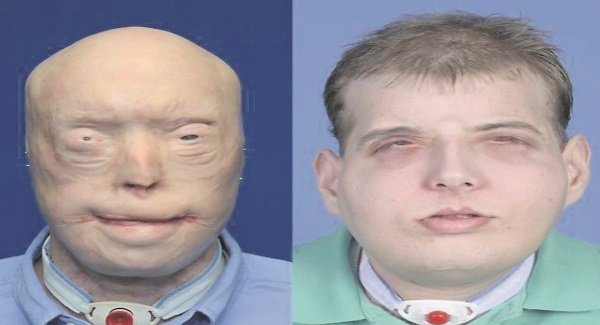
A volunteer firefighter, badly burned in a 2001 blaze, has received the most extensive face transplant ever, covering his skull and much of his neck.

VIDEO: Transplant gives new face to New York firefighter burned in 2001 blaze

The surgery took place in August at the NYU Langone Medical Center in New York. The patient, Patrick Hardison, 41, is still undergoing physical therapy at the hospital but plans to return home for Christmas.

The surgery has paved the way for him to regain normal vision, and he said that will let him accomplish a major goal: “I’ll start driving again.”

More than two dozen face transplants have been performed worldwide since the first one in France in 2005. Dr Eduardo Rodriguez, who led the surgical team that carried out Hardison’s transplant, said Hardison’s is by far the most extensive performed successfully in terms of the amount of tissue transferred.

The transplant extends from the top of the head, over Hardison’s skull and down to the collarbones in front; in back, it reaches far enough down that only a tiny patch of Hardison’s original hair remains — its colour matched by the dark blond hair growing on his new scalp. The transplant includes both ears.

The surgery lasted 26 hours. It left no scars on Hardison’s new face because the seam of the transplanted tissue runs down the back of his skull.

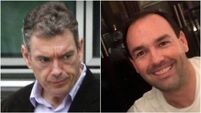
The donor was 26-year-old New York artist and competitive bicyclist David P Rodebaugh. He had died of injuries from a biking accident on a Brooklyn street.

Hardison was burned on September 5, 2001, in Senatobia, Mississippi when he entered a burning house to search for a woman. The roof collapsed, giving him third-degree burns on his head, neck, and upper torso.

He spent about two months at a burn centre. Doctors used a layer of skin from his legs to cover his wounded head, but he had lost his ears, lips, most of his nose, and virtually all of his eyelid tissue.

Since he could not blink, doctors used skin grafts to reinforce what remained of his eyelids and sewed them nearly shut to protect his eyes.

“I was almost totally blind,” he recalled. “I could see just a little bit.”

His face was “one huge scar,” Rodriguez said. Hardison still went to baseball games and did other things outside, although people stared. He playfully told curious children that he had fought a bear. Still, he said, life was hard. He endured 71 surgeries.

Eventually a friend of his wrote to Rodriguez, who had performed a 2012 face transplant at the University of Maryland Medical Center. The doctor said he would try to help, and in August 2014 Hardison was placed on a waiting list.

“We were looking for the ideal donor,” one who matched Hardison on biological traits to minimise the risk of his body’s rejecting the new tissue, as well as things like skin and hair colour, said Rodriguez.

A year later, Rodebaugh was identified as a potential donor by LiveOnNY, the nonprofit organisation that seeks transplant organs and tissue in the New York City area.

The hospital paid for the operation, which included attaching four bone segments to Hardison’s skull, as anchors to prevent the face from drooping.

Now, three months later, the lower part of his face remains swollen, but that will go away in a few months. With his new eyelids and more surgery, he’s expected to regain a normal field of vision. He will have to continuing taking medications to prevent his body from rejecting the transplant.

Eventually, “a casual observer will not notice anything that is odd” in Hardison’s new face, which will blend features of his original face and the donor’s, said Rodriguez. Hardison said his new face has already made a difference. “I used to get stared at all the time, but now I’m just an average guy,” he said.

More in this section

Cookie Policy Privacy Policy Brand Safety FAQ Help Contact Us Terms and Conditions

© Examiner Echo Group Limited