Cassini spacecraft set for fly-by on Saturn’s water-world moon
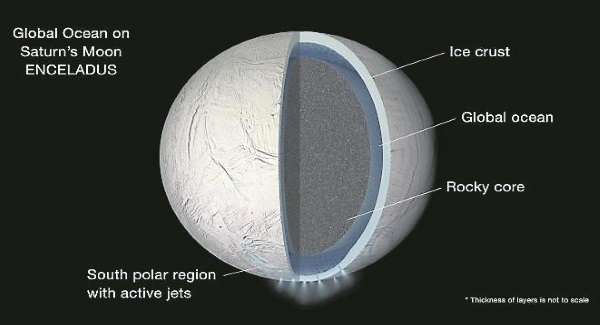
A spacecraft will this week be sent plunging deep through a fountain of icy spray erupting from an extraterrestrial ocean that could harbour life.
Cassini spacecraft set for fly-by on Saturn’s water-world moon

The historic fly-by will mark the most exciting attempt yet to unlock the hidden secrets of Saturn’s water-world moon Enceladus.

Scientists confirmed last month that the small satellite – which at 310 miles across is a seventh of the size of Earth’s moon – has a global ocean covered by an icy shell.

At 3.22 pm, Irish time, on Wednesday, the Cassini probe will shoot through the plume above the moon’s south polar region at an altitude of 30 miles.

During the approach, instruments on board the craft will sample the spray and analyse the cocktail of chemicals within it.

Higher plume encounters have been made before, but the low sweep will allow Cassini to access heavier molecules including organics.

Dr Curt Niebur, Cassini programme scientist at the American space agency Nasa’s headquarters in Washington DC, said: “This incredible plunge through the Enceladus plume is an amazing opportunity for NASA and its international partners on the Cassini mission to ask, ’can an icy ocean world host the ingredients for life?”’

The plume is fed by icy geysers which blast 250 kilograms (551 pounds) of water vapour, ice grains and volatile chemicals into space at 1,360 mph and are thought to have a fiery origin deep beneath the moon’s surface.

They have been compared with hydrothermal vents on Earth – volcanic fissures on the ocean floor where sea water percolating through fractures in the bedrock is heated to high temperatures.

The complex chemistry around hydrothermal vents gives rise to oases of teeming life in some of the deepest, coldest and darkest corners of the world’s oceans.

Dr Hunter Waite, from Southwest Research Institute in San Antonio, Texas – who is team leader for the craft’s neutral mass spectrometer instrument (INMS), said: “Confirmation of molecular hydrogen in the plume would be an independent line of evidence that hydrothermal activity is taking place in the Enceladus ocean, on the seafloor.

More in this section

Cookie Policy Privacy Policy Brand Safety FAQ Help Contact Us Terms and Conditions

© Examiner Echo Group Limited