Tensions still high year after Gaza war
Doctors have since amputated his other leg. His life and prospects have crumbled because of the 50-day war. “The war ended, but my tragedy did not,” said the pale 36-year-old, moving around in a motorised wheelchair. “I spent the past year going from one hospital to another. A year ago, I was a teacher standing before my students. Today, I am helpless to serve even my children.”
People on either side of the war are still struggling with the fallout. Israel and Hamas, too, don’t know if the truce they have is stable or if the next war is just around the corner.
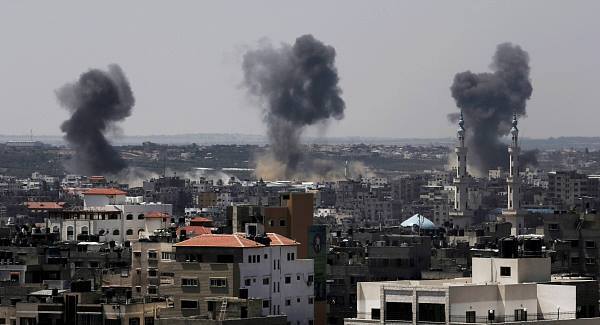
In Gaza, the impact of the conflict is everywhere: 12,000 homes destroyed, 100,000 damaged, and none rebuilt. Thousands are homeless. Two-thirds of Gaza’s 1.8m people are recipients of UN aid in one form or another.
Seventy percent of children in the worst-affected areas suffer nightmares and bed-wetting, the charity Save the Children said. Some 500 children were among the 2,100 Palestinians, most civilians, who were killed. Seventy-three Israelis, all soldiers, were killed.
Wahdan and what remains of his family are sheltering in a home built of wood, blue plastic sheeting and metal panels, a far cry from the four-storey building they once occupied. They have a refrigerator, but little cooking equipment.
Across the frontier, in Israel, where constant mortar and rocket fire from Gaza rained down during the conflict, the impact is less visible, but no less real.
Gadi Yarkoni managed a collective farm near the border with Gaza. On the last day of the war, he was hit by a mortar. Two friends were killed and he lost both his legs. About 500 children in the area are still receiving post-war counselling.
Yarkoni is now the head of the local council and channels his energy into shoring up the regional economy, which, in his mind, includes building up Gaza’s capabilities.
“Let’s embark on a calm period on both sides, development in the Gaza Strip and development in Israel, and then we’ll see that it is much better than continued bloodshed,” he said.
Yet that depends on whether the truce that Egypt hammered out endures. Since the conflict ended last August, militants of smaller factions not allied with Hamas, the Islamist group that controls the Palestinian enclave, have continued to fire occasional rockets into Israel.
In recent months, Salafists claiming allegiance to Islamic State have emerged in Gaza, carrying out attacks against Hamas, firing rockets at Israel and making wider threats.