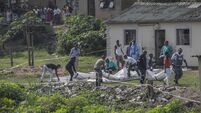
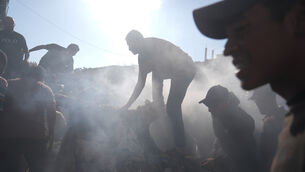
Fears as IS militants destroy historic sites
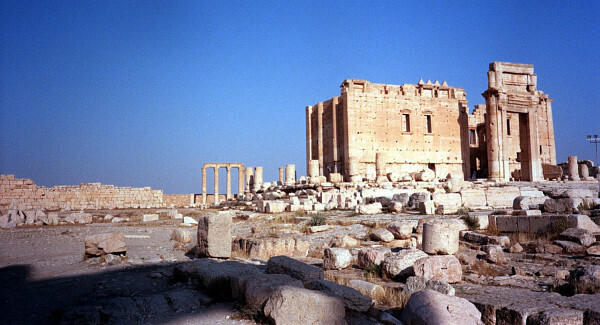
The move raises fears that the extremists could next target the townâs famed Roman ruins.
Maamoun Abdulkarim, the head of the governmentâs Antiquities and Museums Department, said that the extremists destroyed the grave of Mohammad Bin Ali, a descendant of Imam Ali, cousin of Islamâs Prophet Muhammad and a deeply revered Shiâite saint.
The grave was just north of Palmyra.
The second tomb is close to the cityâs famed Roman-era archaeological site and was the final resting place of a Sufi scholar, Nizar Abu Bahaa Eddine, who lived in Palmyra some 500 years ago.
The militants of the Islamic State group are Sunnis who follow a radical interpretation of Islam that views visiting tombs and religious shrines as being tantamount to idol worshipping.
They view Shiâites as heretics and the followers of Islamâs mystical Sufi orders as deviants.
Since the Islamic State group captured Palmyra last month, there have been fears that the extremists, who have destroyed famed archaeological sites in Iraq, would demolish Palmyraâs sprawling Roman-era ruins â which were once one of the most popular tourist sites in the Middle East.
Earlier this week, Abdulkarim said he had received âunofficial newsâ from Palmyra that the militants intended to blow up the townâs main historic site and that he had contacted tribal chiefs in the area to try to dissuade the militants.
The Britain-based Syrian Observatory for Human Rights said it had received information that Islamic State militants have mined the site.
The report could not be independently verified.
Palmyraâs Unesco world heritage site is famous for its 2,000-year-old Roman colonnades, other ruins and priceless artefacts.
Before Syriaâs conflict began in 2011, tens of thousands of tourists visited the remote desert outpost, a cherished landmark referred to by Syrians as the âBride of the Desertâ.
Syrian authorities say they moved hundreds of priceless artefacts to Damascus ahead of the IS takeover last month, but the fate of those ruins too large to move is now in the hands of the extremists.
Islamic State militants have already looted and vandalised a museum in the Iraqi city of Mosul and have massively damaged the ancient cities of Hatra and Ninevah â both Unesco world heritage sites.
Islamic State militants have also blown up dozens of shrines in Iraq and Syria, many belonging to the Sufi sect, a mystical school of Islam opposed by puritanical Salafists from which Islamic State and al Qaeda draws many of its fighters.