IS attacks on US, Paris subways ‘imminent’: Iraq
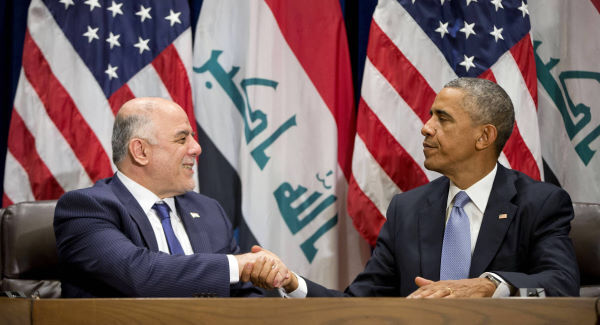
Prime Minister Haider al-Abadi said he was told of the plot by Baghdad, and that it was the work of foreign fighters of the Islamic State group in Iraq.
Asked if the attacks were imminent, he said: “Yes”.
Asked if the attacks had been thwarted, he said, “No”. Al-Abadi said the United States had been alerted.
Abadi said the suspects included extremists from the United States and France who were fighting for IS in Iraq.
“Today, while I’m here, I’m receiving accurate reports from Baghdad that there were arrests of a few elements and there were networks from inside Iraq to have attacks ... on metros of Paris and the US,” Mr Abadi said.
“They are not Iraqis. Some of them are French, some of them are Americans. But they are in Iraq.”
He made the remarks at a meeting with journalists on the sidelines of a gathering of world leaders at the United Nations General Assembly. In addition to the brutality Islamic State has visited on the people of Iraq and Syria, western leaders have voiced concern that the group would turn its terror operations outside the region.
A US-led coalition opened airstrikes inside Syria on Monday, expanding weeks of attacks by the United States on Islamic State targets in Iraq.
Meanwhile, Iranian President Hassan Rouhani blamed the rise of the Islamic State group and other militants on “certain intelligence agencies” but also said the solution to stopping them must come from the Middle East region itself.
“The extremists of the world have found each other and have put out the call, ‘extremists of the world unite’. But are we united against the extremists?” Rouhani asked in a speech to the Assembly.
The comments are among the strongest yet by predominantly Shi’ite Iran on the meteoric rise of the Sunni militant group and suggest arch-foes Iran and the US have a shared interest in confronting the threat after decades of enmity.
They follow a back-and-forth between Tehran and Washington over what role Iran can play in the emerging US-led campaign against Islamic State militants who have seized swathes of Iraq and Syria.
While the US has repeatedly ruled out military “coordination” with Iran against ‘Islamic State’, US Secretary of State John Kerry said he believed Tehran could play some role.
In what was seen as a veiled reference to Israel and the United States, Rouhani blamed the rise of violent extremists on outside influences. “Certain intelligence agencies have put blades in the hand of madmen, who now spare no one,” Rouhani said.
For Iran’s clerical rulers, the crisis over ‘Islamic State’ poses strategic and geopolitical challenges to Tehran’s “dream of forming a so-called Shi’ite Crescent” that extends from Iran to Iraq, Syria, and Lebanon, say analysts and diplomats.
Some Iranian officials see the crisis in Iraq as an opportunity for Tehran, arguing that the hostility between Washington and Tehran has hurt both states and played into the hands of the extremists.
The much-anticipated speech was in contrast to last year when Rouhani appeared at the General Assembly as Iran’s new “moderate” leader, offering immediate talks aimed at removing any “reasonable concerns” over his country’s nuclear programme. Fast-forward a year: nuclear talks have not collapsed but they are at an impasse.
Meanwhile, France is considering whether to extend its airstrikes to Syria and is increasing security in public places after militants linked to the Islamic State group beheaded a French hostage.