Afghan presidential contenders throw hats in ring
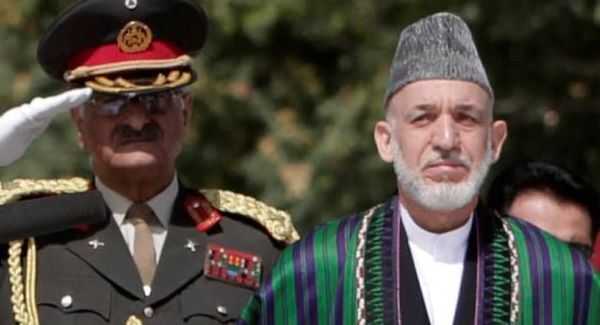
The April 5 presidential vote will be held in a climate of uncertainty as Nato combat forces ready their withdrawal at the end of 2014. If successful, the election will usher in the first handover from one elected president to another in Afghan history.
Karzai, who has led Afghanistan more than 13 years after the intervention to oust the Taliban’s extremist Islamic regime for sheltering al-Qaeda’s leadership after the September 11 attacks on the US, is constitutionally barred from running for a third term.
The election faces many hurdles: allegations of vote-rigging marred the 2009 election and security is a major concern. The eventual winner will face the tough task of continuing to fight the bloody Taliban insurgency, overseeing the end to the international coalition’s mission and possibly deciding if any residual foreign forces will remain next year.
The spectre of violence hangs over the campaign season, with the Taliban vowing to disrupt the poll. On the eve of the campaign launch, two political workers were killed in western Afghanistan.
On a cold and rainy Sunday morning in Kabul, campaign workers hastened to hang posters on lampposts and plaster their candidates’ faces on billboards.
Several political heavyweights including opposition leader Abdullah Abdullah and former finance minister Ashraf Ghani held rallies in wedding halls, while security forces with machineguns guarded the venues. There is no clear frontrunner, though opposition leader Abdullah arguably has an early advantage in name recognition and campaign experience, having gained 31% of the vote as runner-up to Hamid Karzai in the disputed 2009 elections.
Abdullah, who launched his official campaign with the release of several doves symbolising peace, voiced strong support for Afghanistan entering into a security agreement that would allow a few thousand foreign forces to remain to train and equip Afghanistan’s army and police, saying the country still needs outside support.
“God willing, with the signing of this agreement, today or tomorrow, the concerns of our people would be over,” Abdullah told supporters.
Karzai has refused to sign the agreement, and none of the other candidates has spoken out on the issue.
The line-up of other candidates illustrates that patronage and alliances among the elite still form the bedrock of Afghanistan’s politics, where tribal elders and warlords can marshal votes.
The country’s population of 31 million is roughly 42% Pashtun, 27% Tajik, 9% Hazara, and 9% Uzbek along with other, smaller groups. The Taliban are predominantly Pashtun, and Karzai is also Pashtun.
CONNECT WITH US TODAY



Be the first to know the latest news and updates