Series of bomb blasts kills dozens in Baghdad
The apparently coordinated bombings were the first sign of a violent backlash against Shi’ite Muslim prime minister Nuri al-Maliki’s move to sideline two Sunni Muslim rivals, raising the risk of a relapse into the sort of sectarian bloodletting that drove Iraq to the brink of civil war a few years ago.
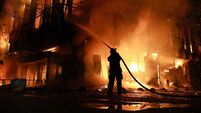
At least 18 people were killed when a suicide bomber driving an ambulance detonated the vehicle near a government office in Baghdad’s Karrada district, sending up a dust cloud and scattering car parts into a kindergarten, according to police and health officials.
“We heard the sound of a car driving, then car brakes, then a huge explosion, all our windows and doors are blown out, black smoke filled our apartment,” said Maysoun Kamal, who lives in a Karrada compound.
In total at least 69 people were killed and over 200 wounded in more than ten explosions across Baghdad, security and police sources said. Most of the targeted districts were Shi’ite.
Iraqi officials quickly branded the attacks a political message sent during the current crisis.
“The timing of these crimes and the places where they were carried out confirm to all . . . the political nature of the targets,” Maliki said in a statement.
Two roadside bombs struck the southwestern Amil district, killing at least seven people and wounding 21 others, while a car bomb blew up in a Shi’ite neighbourhood in Doura in the south, killing three people and wounding six.
More bombs ripped into the central Alawi area, Shaab and Shula in the north, all mainly Shi’ite areas, and a roadside bomb killed one and wounded five near the Sunni neighbourhood of Adhamiya, police said.
An old woman wrapped in black was yelling and calling for her husband lost under the rubble after two bombs struck a wholesale vegetable market where they both worked.
“I cannot find my husband, I don’t know if they took him out or not, I don’t know,” she said.
Violence in Iraq has ebbed since the height of sectarian slaughter in 2006-2007, when suicide bombers and hit squads targeted Sunni and Shi’ite communities in continual attacks that killed thousands of people.
Iraq is still fighting a stubborn, lower-grade insurgency with Sunni Islamists tied to al-Qaida and Shi’ite militias, who US officials say are backed by Iran, staging daily attacks.
“We live in complicated circumstances, a complicated political scene, and there is a conspiracy on Iraq from within,” Baghdad security operations spokesman Qassim al-Moussawi said.
The last few thousand American troops left Iraq over the weekend, nearly nine years after the invasion that toppled Sunni dictator Saddam Hussein. Many Iraqis had said they feared a return to sectarian violence without a US military buffer.
Just days after the withdrawal, Iraq’s fragile power-sharing government is grappling with its worst turmoil since its formation a year ago. Shi’ite, Sunni and Kurdish blocs share out government posts in an unwieldy system that has been impaired by political infighting since it began.
CONNECT WITH US TODAY



Be the first to know the latest news and updates